Why is unit price a risky shortcut when choosing an I-Beam Supplier?
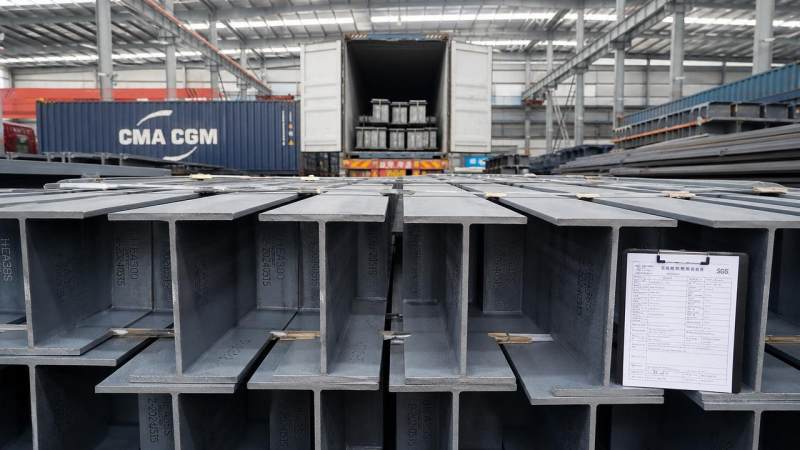
A low quoted price often looks attractive at the RFQ stage. The problem appears later, when quality variation, late delivery, or missing documents start affecting the job.
In steel sourcing, the visible price is only one part of total cost. Rework, site delays, port charges, and claim handling can quickly erase an apparent saving.
That is why many buyers no longer compare suppliers by price alone. A better approach is to assess whether the I-Beam Supplier can support project stability from production to shipment.
For structural steel orders, hidden costs usually come from three areas: inconsistent dimensions, uncertain lead time, and weak export coordination. Each one affects downstream planning.
A dependable I-Beam Supplier should reduce risk, not transfer it. In practical terms, that means clearer specifications, tighter tolerances, better traceability, and realistic delivery commitments.
What should be checked first besides the quoted price?
The first checkpoint is whether the supplier can actually produce what the project requires. This sounds basic, but many sourcing problems begin with capability mismatch.
For example, industrial structure projects may need Carbon Steel sections in grades such as Q235, Q345, A36, SS400, S235J2, or St52. Those grades are not always interchangeable.
Dimensions matter just as much. Some orders need heights from 10 cm to 60 cm, flange widths from 100 mm to 400 mm, and web widths up to 900 mm.
If a supplier cannot maintain tolerance around ±1%, the quoted number becomes less meaningful. Material waste and installation problems usually cost more than a small unit-price difference.
It also helps to confirm value-added processing. Bending, welding, punching, cutting, or decoiling can simplify procurement if they are managed under one quality system.
A practical shortlist usually includes these points:
- Grade availability aligned with project drawings and code requirements.
- Range of sizes, lengths, and thicknesses for the actual order mix.
- Tolerance control, test records, and traceability by heat or batch.
- Processing ability for OEM or cut-to-length requirements.
- Packing and shipping methods suitable for export handling.
When these basics are verified early, comparing one I-Beam Supplier to another becomes much more meaningful.
How do standards and quality documents change the decision?
This is where many buying decisions become clearer. A supplier with steady compliance usually saves time, even if the initial quote is not the lowest.
For exported structural steel, standards such as ASTM, EN, JIS, DIN, and GB shape acceptance criteria. They affect chemistry, mechanical properties, dimensions, and inspection expectations.
If the order serves multiple markets, document quality becomes even more important. Missing mill test certificates or unclear inspection records can delay customs or project approval.
More reliable suppliers usually provide consistent paperwork, not just material. That includes test certificates, packing lists, marking details, and support for third-party inspection when required.
This is one reason experienced exporters from China often stand out. Companies with modern mills and structured QC systems are generally better prepared for international compliance and repeated shipment control.
The table below helps separate a low quote from a low-risk offer.
Can production capacity and lead time tell more than the quote?
Yes, and often more than expected. A supplier may offer a competitive rate but still struggle with schedule discipline during peak periods.
Lead time should be discussed in layers. Production time is only one part. Raw material readiness, processing queue, inspection, packing, truck booking, and vessel space also matter.
In actual sourcing, the better question is not “What is your lead time?” but “How stable is your lead time under mixed specifications and repeat orders?”
This is especially relevant when a project includes customized structural steel components alongside standard sections. Coordination becomes more complex, and weak planning quickly shows.
Suppliers with established export routines usually manage this better. They understand documentation timing, container loading discipline, and regional shipping expectations across North America, Europe, the Middle East, and Southeast Asia.
A useful signal is how clearly the supplier discusses bottlenecks. If answers stay vague on rolling schedules, stock allocation, or shipment windows, the risk is already visible.
When does customization become more important than a cheaper standard offer?
This usually happens when project drawings, fabrication steps, or installation sequence are tightly linked. A standard section may be cheaper per ton, but more expensive overall.
If the supplier can provide cut lengths of 6 to 12 meters, matched flange or web dimensions, and simple processing before shipment, on-site handling becomes easier.
That does not mean every project needs heavy customization. The key is to compare downstream savings against the extra factory work.
For example, an economic section steel profile rolled on a four-roller universal mill may offer good structural efficiency while keeping weight under control. In some applications, lighter sections reduce transport and erection cost.
One practical reference is I-beam supply with flexible dimensions, standard compliance, and processing support under one source. That setup can simplify communication and reduce handoff errors.
The stronger I-Beam Supplier is often the one that understands where customization adds value and where standardization keeps the order efficient.
What warning signs usually appear before quality or delivery problems?
The early signs are rarely dramatic. More often, they show up as incomplete answers, changing commitments, or documents that do not match the quoted specification.
If grade names are used loosely, or if standards are mentioned without test evidence, caution is justified. The same applies when tolerances are discussed only in general terms.
Another warning sign is over-promising on delivery. Reliable exporters usually explain constraints clearly instead of offering the fastest answer to secure the order.
Communication quality also matters. A capable I-Beam Supplier should respond with specific commercial and technical details, not broad assurances.
- Quoted grade differs from the test certificate format offered later.
- Dimensions are accepted without confirming flange and web tolerance.
- Shipment timing is promised before production capacity is reviewed.
- Inspection support becomes unclear after price negotiation.
- Revision control for drawings or packing marks is inconsistent.
In contrast, companies with stable manufacturing and export experience tend to give structured answers early. That usually reflects stronger internal control, not just better sales communication.
So how should the final decision be made?
A sound decision balances price with execution reliability. The goal is not simply to buy cheaper steel, but to secure predictable supply for the full project cycle.
In many cases, the preferred I-Beam Supplier is the one that combines stable production, standards compliance, export readiness, and realistic communication on lead time.
This is where long-term value becomes visible. A supplier experienced in structural steel manufacturing and export can help reduce sourcing risk, especially for repeat or multi-market orders.
Before closing the order, it is worth reviewing four things again: specification match, document readiness, delivery discipline, and response quality during the quotation stage.
If those elements are clear, price comparison becomes more accurate. If they are not, even a low offer may become expensive after production starts.
The next practical step is simple: organize requirements by grade, size, tolerance, processing, documents, and shipment deadline, then compare suppliers against that checklist instead of unit price alone.
Please give us a message


Please enter what you want to find