Choosing a steel sheet manufacturer only by price can lead to hidden costs, quality issues, and supply delays that hurt your project. For procurement professionals, a smarter comparison should include production capability, quality standards, customization support, delivery reliability, and export experience. This guide explains how to evaluate suppliers more strategically and reduce sourcing risk while achieving long-term value.
What should procurement teams compare besides price?
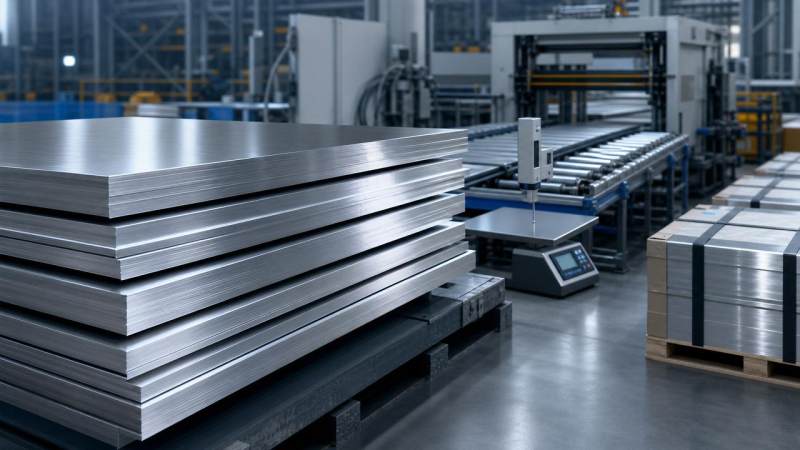
When buyers search for a steel sheet manufacturer, the first quotation often receives too much attention. Price matters, but in steel sourcing, the lowest unit rate can easily become the highest total cost. Rework, inconsistent thickness, coating problems, late delivery, poor packing, and incomplete export documents all create losses that do not appear on the first quote sheet.
For procurement professionals managing construction, industrial fabrication, or manufacturing supply chains, a supplier should be assessed as a production and risk-control partner. The right comparison method looks at whether the manufacturer can deliver stable quality, repeatable specifications, practical communication, and predictable logistics over multiple orders.
- Raw material consistency and traceability, which affect mechanical performance and downstream fabrication.
- Manufacturing capability, including forming, cutting, tolerance control, and volume flexibility.
- Quality management process, especially inspection before shipment and compliance with ASTM, EN, JIS, or GB requirements.
- Delivery reliability, because project schedules often value on-time supply more than a small price gap.
- Export support, such as packing, documents, loading plans, and communication across time zones.
This is where an experienced Chinese structural steel supplier can create value. Hongteng Fengda supports global buyers with structural steel products, customized solutions, and production aligned with major international standards. For sourcing teams, this means one supplier can often support broader project needs rather than only one narrow product line.
How to evaluate a steel sheet manufacturer with a practical scorecard
A structured scorecard helps buyers compare suppliers on measurable criteria instead of relying on sales language. The table below shows a practical framework procurement teams can use when reviewing a steel sheet manufacturer for recurring or project-based purchasing.
Using a scorecard reduces subjective selection. It also helps internal procurement teams justify supplier decisions to finance, engineering, and project management. A reliable steel sheet manufacturer should perform consistently across most of these categories, not just compete on headline price.
Questions that reveal supplier strength quickly
- Can you provide the exact material grade and standard required by the project?
- What tolerance control method do you use for thickness, width, length, and flatness?
- Do you support custom cutting, drilling, welding, or profile fabrication when needed?
- How do you manage urgent orders or mixed-product shipments?
- What export documents and packing standards can you provide for my destination market?
Why quality consistency matters more than a low unit price
In steel procurement, inconsistent quality affects far more than the material itself. It influences welding performance, structural safety, coating durability, fabrication efficiency, and installation speed. If one batch differs from the previous shipment, downstream teams may need to adjust machines, remake parts, or slow production to sort acceptable material from defective pieces.
A professional steel sheet manufacturer should have clear process controls from raw material selection to final inspection. Buyers should ask for details on chemistry verification, dimensional checks, visual inspection, packing method, and whether inspection records can be matched to shipment lots. This is especially important for export projects where replacement material takes time.
Key quality points procurement should verify
- Whether the supplier can align grades and standards with the engineering specification rather than offering “equivalent” material without confirmation.
- Whether surface condition suits the intended use, especially for exposed, painted, galvanized, or further processed components.
- Whether packaging protects edges, corners, and surfaces during inland transport and ocean shipping.
- Whether the manufacturer can maintain consistency in repeat orders, not only in sample approval stage.
Hongteng Fengda’s value for procurement teams lies in combining manufacturing capability with strict quality control and familiarity with global standards. That combination helps reduce the gap between quotation quality and delivered quality, which is where many sourcing problems begin.
Can broader structural steel capability reduce sourcing risk?
Yes. Many buyers start with a search for a steel sheet manufacturer but later discover that the project also needs beams, channels, angle steel, cold formed profiles, or custom structural parts. Working with a supplier that can support multiple product categories may simplify supplier management, quality coordination, loading plans, and schedule control.
For example, some industrial and construction projects require both flat steel products and structural sections. In those cases, cross-product sourcing support is a real procurement advantage. A supplier with broader manufacturing and export experience can help consolidate shipments and reduce coordination costs across different steel items.
A relevant example is H Girder, commonly used in mechanical manufacture, steel structures, shipbuilding, bridging, and automobile chassis projects. It is available in materials such as Q235, Q345B, Q460C, SS400, S275JR, S355JR, A572, and A992, with flange thickness from 8-64mm, web thickness from 5-36.5mm, flange width from 50-400mm, web width from 100-900mm, and length from 1m-12m or as required.
For buyers, this matters because structural sections often need to match project standards and fabrication plans. Products supplied to JIS G3101, EN10025, ASTM A36, ASTM A572, or ASTM A992 can support different market requirements, while features such as strong bending resistance, simple construction, and a practical strength-to-weight ratio help improve project efficiency.
What delivery and export factors separate a reliable supplier from a risky one?
A competitive quote has little value if the material misses the vessel, arrives damaged, or gets delayed at customs because of incorrect documents. For international buyers, delivery reliability is often the real test of a steel sheet manufacturer. It reflects planning discipline, production scheduling, packaging awareness, and export coordination.
The table below highlights common delivery and export checkpoints that procurement teams should review before confirming an order.
Reliable exporters understand that logistics is part of product quality. Buyers across North America, Europe, the Middle East, and Southeast Asia often need not only steel products but also shipment visibility, stable lead times, and practical support when schedules change. That is where export experience adds measurable value.
How should buyers compare total cost instead of purchase price?
A low offer from a steel sheet manufacturer may still be expensive after considering hidden operational costs. Procurement should compare total cost of ownership, especially when sourcing for production lines, infrastructure works, or time-sensitive projects. This approach protects margin and reduces disruption.
Typical hidden costs behind a low quote
- Extra processing because dimensions are inconsistent and need rework before use.
- Project delay costs when promised production time is not realistic.
- Replacement freight and claim handling after receiving damaged or non-conforming material.
- Additional supplier management effort when communication is slow or incomplete.
- Inventory cost caused by unreliable lead times, forcing buyers to hold more safety stock.
A more strategic supplier may not always be the lowest bidder, but it can help lower total landed cost and total operating cost. For many procurement teams, that is the difference between a successful sourcing decision and a recurring internal problem.
Which standards and compliance points matter most?
Standards are not just technical labels. They shape project acceptance, engineering compatibility, and contractual compliance. When comparing a steel sheet manufacturer, buyers should confirm which standards the supplier can align with and whether documentation will match the specification required by the end market.
Procurement compliance checklist
- Confirm the exact grade and standard named in the technical specification, not a general substitute.
- Check whether dimensional tolerances and mechanical expectations match the project or downstream fabrication process.
- Verify whether the supplier can prepare inspection and shipment documents in the format expected by your customer or customs broker.
- Ask early about coating, galvanizing, stainless options, or special processing if the application environment requires it.
Hongteng Fengda supplies structural steel products in line with major international standards including ASTM, EN, JIS, and GB. For procurement teams handling multi-country projects, this ability can simplify sourcing and reduce the need to split orders across too many suppliers.
Common mistakes when selecting a steel sheet manufacturer
Mistake 1: Treating all steel suppliers as interchangeable
Many suppliers can quote similar descriptions, but their actual production scope, inspection discipline, and export readiness differ significantly. Procurement should distinguish between traders, processors, and true manufacturing partners with broader technical support.
Mistake 2: Approving samples without reviewing batch consistency
A good sample does not guarantee stable mass production. Ask how the supplier maintains repeatability across multiple lots and whether the same control process applies to full shipments.
Mistake 3: Ignoring communication quality
Slow or vague communication increases procurement risk. It usually leads to misunderstandings on grades, tolerances, packing, or shipment timing. A professional steel sheet manufacturer should give clear responses, practical options, and transparent updates.
Mistake 4: Comparing quotes without normalizing scope
One quote may include cutting, packing, inspection, or export support while another does not. Buyers should compare equivalent scope before making a price-based decision.
FAQ for buyers comparing steel suppliers
How do I shortlist a steel sheet manufacturer for international procurement?
Start with standards capability, production range, export experience, and response quality. Then review sample quality, document support, and realistic lead times. A good shortlist usually includes suppliers that can explain process control clearly rather than only offer aggressive pricing.
What documents should I ask for before placing an order?
At minimum, confirm the quotation scope, product specification, applicable standard, packing details, production lead time, and shipping terms. For export orders, also discuss invoice and packing list accuracy, marking requirements, and any project-specific documentation expectations early in the process.
Is it better to buy from a specialized sheet supplier or a broader structural steel manufacturer?
It depends on your project. If your order includes only standard sheet products, a focused source may be suitable. If your project also needs beams, channels, angle steel, cold formed sections, or customized structural parts, a broader structural steel manufacturer can reduce sourcing complexity and improve shipment coordination.
What is the biggest risk of choosing based only on low price?
The biggest risk is not a slightly lower material grade on paper. It is the chain reaction of quality variation, schedule disruption, internal claims, customer complaints, and emergency replacement costs. Those costs often exceed the initial savings from a low quote.
Why choose us for your next steel sourcing project?
For procurement teams that need more than a simple quote, Hongteng Fengda offers practical sourcing support as a structural steel manufacturer and exporter from China. We supply angle steel, channel steel, steel beams, cold formed steel profiles, and customized structural steel components for global construction, industrial, and manufacturing projects.
Our advantage is not based on price alone. We focus on stable production capacity, strict quality control, support for international standards such as ASTM, EN, JIS, and GB, and dependable lead times for overseas buyers. This helps reduce sourcing risk while giving purchasing teams a clearer path from specification to shipment.
- Need help confirming grades, dimensions, or standard requirements for your order? We can review technical parameters with your team.
- Need product selection support across multiple structural steel categories? We can recommend matching products based on application and project scope.
- Need lead time planning for urgent or repeat orders? We can discuss production scheduling and shipment coordination.
- Need customized solutions, OEM support, or mixed-product export packing? We can align supply planning with your procurement target.
- Need sample support, quotation communication, or clarification on certification and export documents? We can prepare the information needed for a faster internal decision.
If you are comparing a steel sheet manufacturer and want to reduce risk beyond the quoted price, contact us with your specification, target market, quantity, and delivery timeline. We can help you evaluate parameters, discuss suitable steel solutions, and build a sourcing plan that supports long-term project performance.
Please give us a message


Please enter what you want to find