When comparing an HRC coil offer, the lowest base price rarely means the lowest total cost. Serious buyers need to look at steel grade consistency, width and thickness tolerances, processing options, logistics terms, claim handling, and supplier execution reliability. For procurement teams, technical reviewers, project managers, and commercial decision-makers, the best offer is the one that balances price, quality stability, delivery certainty, and downstream usability. That is how you reduce sourcing risk and gain better long-term value from a dependable China steel supplier.
Why the cheapest HRC coil offer can become the most expensive
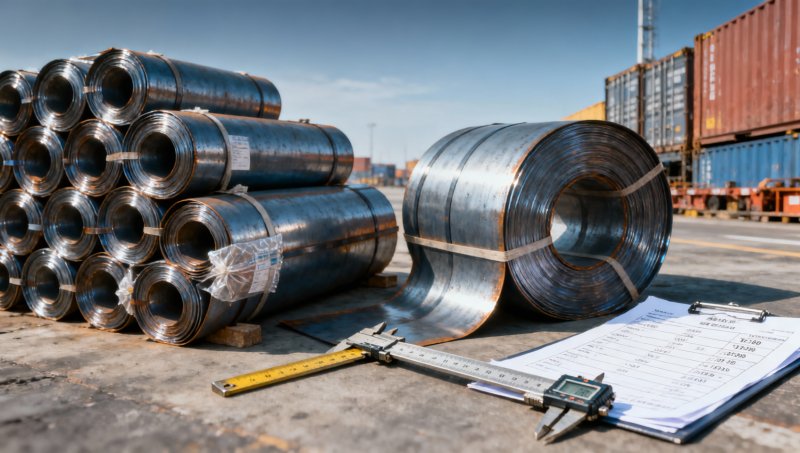
Many buyers first compare HRC coil offers by ton price. That is understandable, but incomplete. In real purchasing decisions, the visible quote is only one part of the total landed and usable cost.
A lower base price can quickly lose its advantage if the material arrives with inconsistent mechanical properties, poor edge condition, excessive thickness deviation, unexpected weight tolerance, or unclear documentation. If coils require rework, create production stoppages, increase scrap, or trigger customer complaints, the initial savings disappear.
For most professional buyers, the real question is not “Which offer is cheapest?” but “Which offer delivers the best usable value with the lowest supply risk?”
Start with the technical fit, not the quoted number
Before comparing commercial terms, confirm that all suppliers are quoting the same technical basis. HRC coil offers often look similar at first glance, but important differences may be hidden in the details.
Check the following points carefully:
- Steel grade and equivalent standard, such as ASTM, EN, JIS, or GB
- Thickness, width, and coil inner diameter
- Tolerance range for thickness, width, and weight
- Mechanical properties, including tensile strength and yield strength if required
- Surface condition, edge condition, and scale level
- Coil weight range and suitability for the buyer’s production line
- Required testing, MTC documentation, and third-party inspection needs
If one supplier quotes commercial-grade material and another quotes a tighter specification, the lower offer may not be directly comparable. This is one of the most common mistakes in steel sourcing.
Understand the full cost structure behind the HRC coil offer
To compare suppliers properly, build a total cost view rather than relying only on FOB or EXW price. A complete evaluation should include:
- Base steel price
- Export packing cost
- Surface treatment or processing charges
- Slitting, cut-to-length, or custom dimensions if needed
- Inland transport to port
- Ocean freight
- Insurance
- Import duty and customs clearance cost
- Financing cost based on payment terms
- Potential scrap, rework, or downtime risk
This matters especially when the offer includes additional processing such as coil coated steel preparation, edge trimming, or special packaging. A supplier with a slightly higher base price may still provide a lower delivered cost if they reduce waste, improve yield, or simplify downstream operations.
Check whether the offer supports your real application
Not every buyer uses steel in the same way. Some need HRC coil for direct fabrication, while others use it as feedstock for structural components, tubes, profiles, or machined parts. That means the best offer depends on downstream requirements.
For example, if the material will be further processed into engineered components, stable quality may be more important than a small price difference. Buyers handling a broad steel portfolio often compare coil sourcing logic with other products such as A36 Carbon Steel Round Bar, where grade compliance, dimensional accuracy, surface protection, and suitability for construction or manufacturing applications directly affect total project performance.
In practical terms, ask whether the offered HRC coil is suitable for your forming, welding, bending, coating, or machining process. If the supplier cannot clearly explain application fit, that is a warning sign.
Evaluate supplier reliability as seriously as product quality
A competitive quote is only valuable if the supplier can execute consistently. For procurement teams and decision-makers, supplier reliability should be part of every comparison model.
Review these areas:
- Production capacity and monthly output stability
- Export experience in your target market
- Familiarity with ASTM, EN, JIS, and other required standards
- Lead time accuracy and shipment performance history
- Ability to provide OEM or customized steel solutions
- Responsiveness in handling claims, replacements, or urgent adjustments
- Quality control process from raw material to final dispatch
A professional structural steel manufacturer and exporter should be able to explain how they control consistency, not just promise that quality is “good.” Reliable suppliers help buyers reduce sourcing uncertainty, especially for large projects, repeated orders, or regional distribution.
Do not ignore delivery terms and payment terms
Commercial terms often change the real competitiveness of an HRC coil offer. Two suppliers may quote similar ton prices but offer very different business conditions.
Pay attention to:
- Incoterms: EXW, FOB, CFR, or CIF
- Port of loading and shipping route
- Estimated production time and vessel schedule
- Partial shipment options
- Payment method: T/T, L/C, OA, or mixed structure
- Deposit ratio and balance timing
- Price validity period in volatile market conditions
For finance approvers and commercial evaluators, cash flow impact is part of cost. Better payment terms can sometimes create more practical value than a small reduction in base price.
Ask the right questions before making a final comparison
If you want to compare HRC coil offers effectively, use a structured question list. This helps technical, purchasing, quality, and management teams evaluate the same decision on a common basis.
Useful questions include:
- What exact standard and grade is being quoted?
- What tolerance and mechanical property range is guaranteed?
- Can the supplier provide recent MTC samples and inspection records?
- What is the acceptable claim process if quality issues occur?
- What is the realistic lead time, not just the promised lead time?
- Can the supplier support custom processing or project-specific requirements?
- What risks could increase the final cost after order confirmation?
This process helps buyers avoid choosing an offer that looks attractive on paper but performs poorly in execution.
A practical framework for comparing HRC coil offers
For better internal decision-making, many companies use a weighted comparison model. Instead of ranking suppliers only by base price, assign scores across several categories:
- Price competitiveness
- Technical compliance
- Quality consistency
- Lead time reliability
- Logistics feasibility
- Payment flexibility
- After-sales support
- Long-term partnership potential
This approach is especially useful for distributors, project buyers, and manufacturing companies that need stable repeat supply. It also helps justify supplier selection to management, finance teams, and quality control departments.
Conclusion: compare value, not just the visible quote
The best HRC coil offer is not simply the one with the lowest base price. It is the one that matches your technical requirements, supports your production or project needs, arrives on time, and reduces the hidden costs that often appear after purchase. Buyers who compare grade consistency, processing options, logistics terms, and supplier reliability make better sourcing decisions and protect both margins and project outcomes.
When evaluating your next quote, focus on total usable value. That is the most reliable way to control cost, reduce risk, and build a stronger long-term supply strategy.
Please give us a message


Please enter what you want to find