Comparing ASTM steel pipe grades is essential for selecting the right material for strength, corrosion resistance, and project compliance. Whether you are sourcing ASTM steel pipe, industrial steel tubing, or related products from a steel profile manufacturer, understanding grade differences helps reduce cost, improve safety, and support better purchasing decisions in construction, manufacturing, and infrastructure applications.
Why does ASTM steel pipe grade comparison matter in real projects?
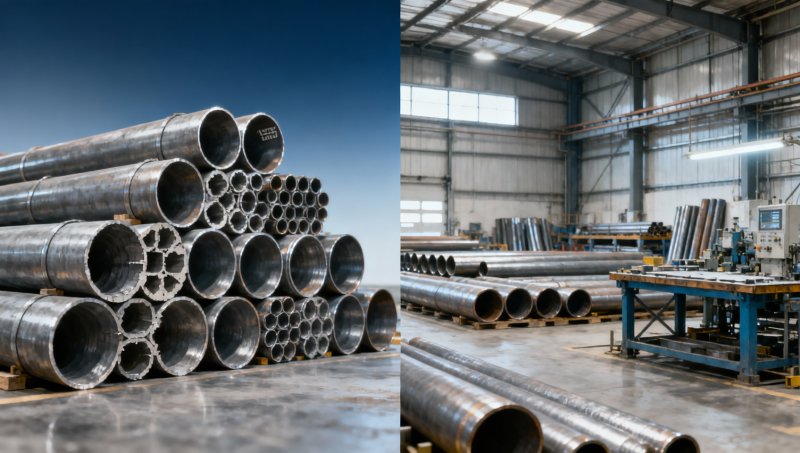
For many buyers, ASTM steel pipe grades look similar at first glance. In practice, however, differences in chemical composition, tensile strength, yield strength, wall thickness tolerance, and manufacturing process can directly affect welding behavior, pressure performance, service life, and inspection acceptance. A wrong grade choice may not fail immediately, but it can increase fabrication difficulty, maintenance cost, or rejection risk during project review.
This issue matters to more than engineers. Procurement teams need to compare price against usable performance. Project managers need delivery reliability within common lead-time windows such as 2–6 weeks for standard sizes and longer for special specifications. Quality control personnel need traceability, mill test documents, and dimensional consistency. Financial approvers also need confidence that the selected ASTM steel pipe grade is not over-specified or under-specified for the job.
In structural, industrial, and infrastructure procurement, grade comparison usually starts with 4 core questions: What load will the pipe carry? Will it face corrosion, heat, or pressure? Which standard is required by the contract? How easy is it to source repeatedly? These questions help narrow choices between common ASTM material families used for structural service, pressure service, mechanical use, and line transport.
As a structural steel manufacturer and exporter from China, Hongteng Fengda supports global buyers who often need more than a catalog answer. Many projects combine ASTM steel pipe with beams, channels, angle steel, or cold formed profiles. In these cases, a supplier with experience across ASTM, EN, JIS, and GB standards can help reduce coordination errors, especially when one project involves 3–5 material categories and multiple approval stages.
What buyers usually compare first
- Mechanical properties such as yield strength and tensile strength, especially when pipe is used in load-bearing frames or support systems.
- Service condition factors including temperature range, internal pressure, outdoor exposure, and corrosion allowance.
- Manufacturing route, such as seamless versus welded, because this affects pressure suitability, dimensional range, and cost.
- Availability in required lengths, schedules, and document packages, including MTCs, inspection records, and marking requirements.
How to compare common ASTM steel pipe grades by use and performance
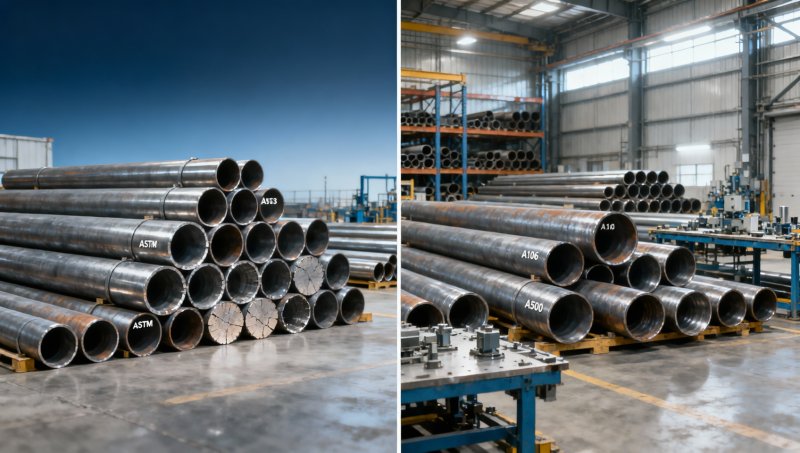
A practical ASTM steel pipe comparison should focus on intended use rather than only grade names. For example, ASTM A53 is widely used for mechanical and pressure applications as well as ordinary structural service. ASTM A106 is commonly selected for high-temperature service in seamless carbon steel pipe. ASTM A500 is often chosen for structural tubing because of its favorable strength-to-weight profile and broad use in fabricated steel structures.
ASTM A252 is frequently specified for piling applications, where load transfer to soil and installation conditions matter more than appearance. ASTM A333 is associated with low-temperature service, where impact performance becomes relevant. ASTM A335 covers alloy steel seamless pipe for elevated temperature service, often seen in more demanding industrial systems. These grades are not direct substitutes, even if some sizes overlap.
The table below gives a decision-oriented view of common ASTM steel pipe grades. It does not replace engineering design, but it helps non-technical and cross-functional teams understand why one grade is quoted higher, why another has a longer lead time, or why a certain pipe is accepted in one bid package but rejected in another.
This comparison shows why ASTM steel pipe grade selection should follow service conditions first, then budget, then supply feasibility. A500 may be more suitable than A53 for some structural assemblies, while A106 is a more logical choice for high-temperature piping. If a project mixes structural steel members and pipe-based supports, alignment across materials becomes important for fabrication efficiency and compliance review.
Key performance dimensions to review
1. Strength and load behavior
For load-bearing service, compare minimum yield and tensile requirements rather than assuming all carbon steel pipe behaves the same. Even a moderate difference in yield strength can affect section selection, support spacing, and welding procedures across 10–20 installation points in one project area.
2. Temperature and corrosion exposure
If the steel pipe will face low-temperature or elevated-temperature service, standard structural grades may not be enough. Corrosive outdoor environments may also require coating, galvanizing, stainless options, or a different system design. Grade comparison should therefore include both base material and surface protection plan.
3. Fabrication and inspection fit
Buyers often overlook fabrication fit. Some grades are easier to cut, weld, bend, or integrate into modular assemblies. Inspection requirements may also differ by project category, with 3 common review layers being dimensional inspection, document review, and visual or process-related quality checks.
Which ASTM steel pipe grade fits procurement, compliance, and fabrication goals?
A good purchase decision balances technical suitability with commercial practicality. In many bids, the lowest quoted ASTM steel pipe is not the lowest total cost. Extra welding hours, delayed approvals, coating mismatch, or rejected documents can erase any initial savings. Buyers should review at least 5 items before placing an order: applicable standard, size range, wall thickness or schedule, inspection documentation, and end-use environment.
The next table is designed for procurement teams, quality managers, and decision-makers who need a fast evaluation tool. It compares grade selection logic with project conditions, which is especially useful when the specification package is spread across civil, structural, and process documents.
This type of selection matrix shortens communication between purchasing, engineering, and site teams. Instead of debating steel pipe grades in abstract terms, stakeholders can compare them against function, risk, and inspection needs. That approach usually prevents unnecessary upgrades and underperforming substitutions.
Where related structural steel products help project efficiency
In many fabrication packages, ASTM steel pipe is only one part of the steel scope. Pipe supports, equipment bases, transition frames, and secondary structures often require beams or profiles with matching standard familiarity. For these mixed-material jobs, buyers may also evaluate Hot Rolled H Beam solutions to coordinate structural performance, fabrication operations, and sourcing under one supplier relationship.
A suitable H beam option may cover grades such as Q235, Q345B, SS400, S275JR, S355JR, A572, and A992, with typical dimensions including flange thickness from 8–64 mm, web thickness from 5–36.5 mm, flange width from 50–400 mm, web width from 100–900 mm, and standard lengths from 1–12 m or as required. For projects involving welding, cutting, punching, or bending, this compatibility can simplify fabrication planning.
This matters commercially because combining steel pipe and structural profiles through one experienced exporter can reduce document mismatch, shipment fragmentation, and approval delays. For distributors and contractors managing 2–3 container loads or multi-item project bundles, integrated sourcing often creates a clearer control path for quality and delivery.
What standards, certificates, and risk points should you check before ordering?
ASTM steel pipe comparison is incomplete if it ignores compliance and documentation. Many purchasing problems start when buyers focus on grade name only and forget product form, process route, dimensions, testing scope, coating requirement, and marking details. Before approving a purchase, quality teams should verify whether the offered material matches the exact standard clause and any project-specific additions.
A practical review usually includes 6 checkpoints: standard designation, size and schedule, heat number traceability, chemical and mechanical property records, surface condition, and packing or marking method. For export projects, document timing also matters. If pre-shipment review takes 3–7 days, missing papers can delay vessel booking or site release.
Hongteng Fengda works with buyers across North America, Europe, the Middle East, and Southeast Asia, where compliance expectations vary by project. Some orders emphasize ASTM only, while others require parallel familiarity with EN, JIS, or GB references for supporting steel items. This cross-standard understanding helps buyers reduce sourcing risk when one project includes both pipe and structural sections.
Common mistakes in ASTM steel pipe purchasing
- Assuming equivalent size means equivalent grade, without checking service intent, test scope, or manufacturing method.
- Ordering by price only, then discovering that coating, cutting length, beveling, or extra documentation is charged separately.
- Ignoring fabrication requirements such as weldability, fit-up tolerance, or matching structural components in the same assembly.
- Failing to confirm delivery batching and inspection sequence, especially when project milestones are split into 2–4 shipment stages.
A simple pre-order checklist
Ask for the full grade and standard reference, not only the trade name. Confirm outer diameter, wall thickness, length tolerance, end finish, coating if any, and required documents. If the steel pipe will be part of a welded structure, also confirm the mating material and fabrication process. These small checks often prevent major cost leakage later.
For larger B2B purchases, it is wise to align 3 functions before order release: engineering validates technical fit, procurement validates supply and price, and QC validates acceptance criteria. This triage process is especially effective when schedules are compressed and replacement lead times may exceed 2–8 weeks.
FAQ: practical answers for ASTM steel pipe buyers and project teams
How do I choose between ASTM A53 and ASTM A500?
Start with application. If the requirement is general pipe service that may include pressure, mechanical, or ordinary structural use, ASTM A53 is often reviewed first. If the requirement is structural tubing for frames, supports, or fabricated assemblies, ASTM A500 is commonly more relevant. The decision should be based on design intent, shape, strength requirement, and fabrication plan rather than price alone.
Is a higher grade always a better buying decision?
Not necessarily. A higher or more specialized ASTM steel pipe grade may increase material cost, lead time, and document complexity without improving project value. If the service condition does not require elevated temperature, low-temperature toughness, or a specific pressure class, a simpler grade may be the more efficient choice. Procurement should compare total installed cost, not just ton price.
What delivery timeline is common for steel pipe orders?
For standard sizes and common grades, production and dispatch planning may fall within roughly 2–6 weeks depending on quantity, finishing requirements, and port schedule. Special dimensions, extra testing, coating, or mixed orders with beams and profiles may extend this timeline. Buyers should confirm whether deliveries will be made in one batch or several milestone-based shipments.
What should distributors and resellers focus on most?
Distributors should prioritize repeatability: stable dimensions, dependable documentation, predictable lead times, and clear standard identification. These factors matter more than a short-term low offer because resale customers often demand quick replenishment and fewer claim disputes. A supplier able to support multiple standards and related structural steel items can also improve inventory flexibility.
Why work with a structural steel exporter that understands both ASTM pipe and project-wide steel needs?
Buyers rarely purchase ASTM steel pipe in isolation. Real projects require coordination among pipe, beams, channels, angle steel, cold formed steel profiles, and custom components. Working with a supplier that understands these links helps reduce compatibility issues during drawing review, fabrication, packing, and site installation. It also simplifies supplier management for project managers and commercial teams.
Hongteng Fengda supports global construction, industrial, and manufacturing projects with standard specifications and OEM-oriented structural steel solutions. With modern manufacturing facilities and strict quality control, the company helps customers align material selection with practical concerns such as delivery stability, inspection readiness, and sourcing risk control across multiple steel categories.
If you are comparing ASTM steel pipe grades for a new tender, replacement order, distribution plan, or engineered project package, a structured discussion can save time and cost. You can consult on 6 key areas: grade confirmation, size and thickness selection, related structural steel matching, delivery schedule, documentation requirements, and sample or quotation arrangements.
Contact us when you need support for ASTM steel pipe selection, mixed steel package sourcing, customized fabrication planning, or export-oriented document coordination. Clear early communication on parameters, compliance requirements, quantity range, and target lead time is often the fastest way to reduce procurement risk and move your project forward with confidence.
Please give us a message


Please enter what you want to find