Selecting the right steel rail is critical for safety, longevity, and cost-efficiency in heavy-haul railway projects — and it’s just one part of a broader structural steel ecosystem. Whether you're evaluating steel rails, steel tubes, steel roof sheets, steel conduits, steel bars, steel piles, steel profiles, steel rebars, steel sheets, or carbon steel solutions, material performance under extreme load and environmental stress must align with international standards (ASTM, EN, JIS, GB). As a trusted Chinese structural steel manufacturer and exporter, Hongteng Fengda delivers certified, customized steel products tailored for global railway, infrastructure, and industrial applications.
Why Rail Selection Matters More Than Ever in 2024
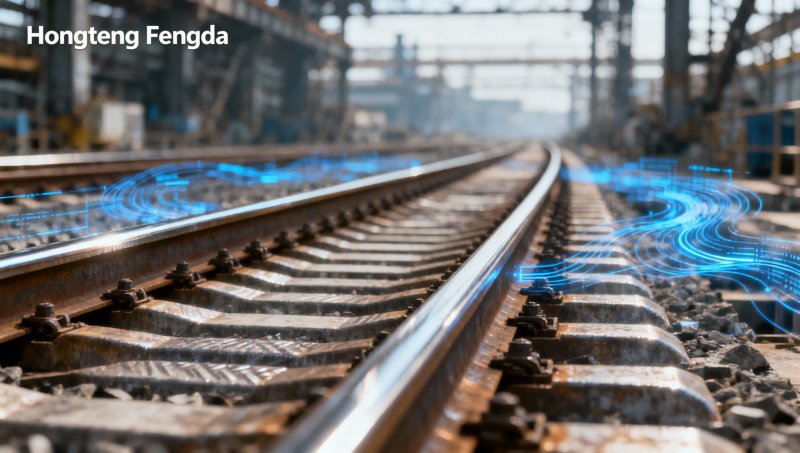
Heavy-haul railways now carry loads exceeding 30,000 tons per train across continents — from Australia’s iron ore corridors to China’s coal transport networks. Such demands push metallurgical limits. A suboptimal steel rail may suffer premature wear, thermal buckling, or fatigue cracking — risking derailments, unplanned maintenance, and multimillion-dollar downtime. Unlike general-purpose carbon steel, high-performance steel rail must balance hardness (for abrasion resistance), toughness (to absorb dynamic impact), and weldability (for seamless track installation).
Today’s procurement decisions go beyond tensile strength. Buyers consider lifecycle cost — not just unit price — factoring in corrosion resistance, rolling contact fatigue life, and compatibility with automated inspection systems. With climate volatility increasing track temperature differentials and moisture exposure, material behavior under combined mechanical and environmental stress has become non-negotiable.
Technical Performance: Key Metrics That Define Rail Quality
Rail performance hinges on three interdependent properties: microstructure homogeneity, surface integrity, and residual stress control. Modern U71MnG and U75V grades — widely adopted for heavy-haul lines — achieve fine pearlitic grain structure through controlled cooling, delivering Brinell hardness of 260–300 HBW and fracture toughness ≥25 MPa√m. Surface decarburization depth must remain below 0.3 mm to prevent subsurface crack initiation.
Thermal stability also matters. Rails exposed to desert heat or arctic cold cycles require low coefficient of thermal expansion (CTE) consistency — ideally ≤12 × 10⁻⁶/°C — to minimize joint gaps and lateral instability. This is where advanced carbon steel formulations, backed by precise ladle metallurgy and vacuum degassing, deliver measurable field advantages over standard rolled sections.
Standards & Certification: Navigating Global Compliance
No single standard governs all rail applications. ASTM A653/A653M covers galvanized steel sheet but is irrelevant for rails; instead, EN 13674-1 (Europe), GB/T 2585–2019 (China), and AREMA M-101 (North America) define dimensional tolerances, ultrasonic testing protocols, and drop-weight test requirements. For transcontinental projects, dual-certification (e.g., EN + GB) is increasingly mandatory — especially when sourcing from China-based manufacturers like Hongteng Fengda.
Certification isn’t paperwork — it’s process traceability. Every rail batch should include mill test reports (MTRs) with full chemical composition (C, Mn, Si, P, S, Cr, V), mechanical test results, and heat treatment logs. Third-party verification by TÜV, SGS, or BV ensures compliance before shipment — reducing rejection risk at destination ports.
Comparison Analysis: Steel Rail vs. Alternative Structural Steel Products
While steel rail serves a singular function — guiding wheels under immense cyclic load — it coexists with other structural steel components in railway infrastructure. Understanding functional boundaries prevents misapplication:
Procurement Guide: What Smart Buyers Verify Before Order
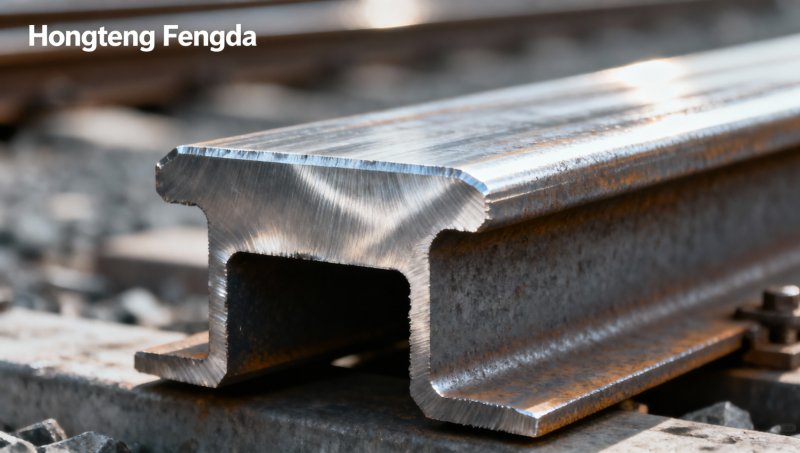
Top-tier procurement teams now audit supplier capability beyond brochures. They request: (1) furnace batch records showing consistent Mn/C ratio control; (2) proof of rail head hardening via induction or flame treatment; (3) ultrasonic inspection reports covering 100% of rail length; and (4) real-world fatigue data from partner railways. Hongteng Fengda provides all four — backed by ISO 9001-certified production lines and in-house metallurgical labs.
Lead time transparency is equally vital. While standard rails ship in 6–8 weeks, custom profiles (e.g., crane rail ASCE-100 or grooved tram rail) require 12–14 weeks. Early engagement with engineering teams avoids schedule slippage — especially when integrating with Color Coated Galvalume Steel Sheet PPGL for station enclosures.
Why Choose Hongteng Fengda for Your Structural Steel Needs
As a professional structural steel manufacturer and exporter based in China, Hongteng Fengda merges deep metallurgical expertise with agile global logistics. We don’t just supply steel rail — we co-engineer solutions: optimizing rail geometry for specific axle loads, recommending compatible steel profile connections, or advising on corrosion-resistant coatings for coastal depots.
Our portfolio spans angle steel, channel steel, steel beams, cold-formed steel profiles, and OEM-grade components — all compliant with ASTM, EN, JIS, and GB standards. Serving clients across North America, Europe, the Middle East, and Southeast Asia, we guarantee stable production capacity, consistent quality batches, and lead times honored within ±3 days. Reduce sourcing risk. Control total project cost. Deliver with confidence.
Contact Hongteng Fengda today for technical consultation, sample requests, or customized quotation — engineered for your next heavy-haul milestone.
Please give us a message


Please enter what you want to find