Choosing the right hot rolled steel plate supplier is becoming more strategic as steel markets face price swings, tighter standards, and shorter project schedules.
Beyond price, the decision now involves quality stability, mill capability, export experience, traceability, and dependable delivery performance.
A reliable hot rolled steel plate supplier can reduce sourcing risk, control hidden costs, and support consistent material performance across construction and industrial projects.
How to Choose a Hot Rolled Steel Plate Supplier in a Changing Steel Market
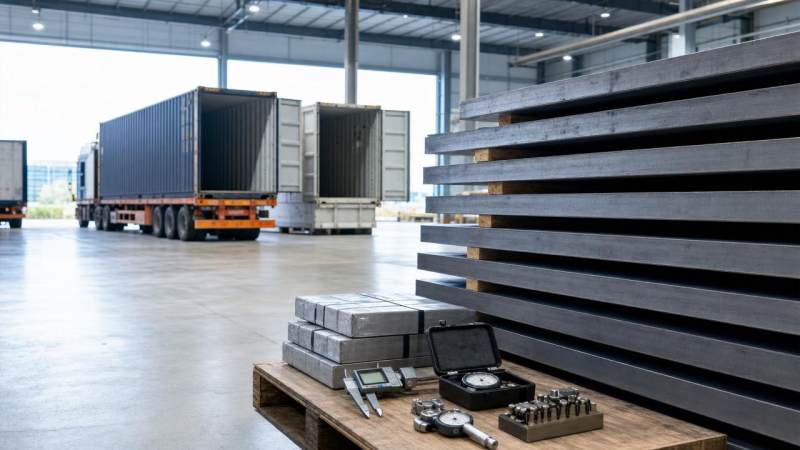
The global steel supply chain is no longer judged only by available tonnage.
Projects now demand verified specifications, predictable lead times, and suppliers able to respond quickly to changing requirements.
This shift makes supplier selection more important than traditional spot purchasing.
A qualified hot rolled steel plate supplier should provide more than plates.
The supplier should offer technical clarity, documentation support, export coordination, and practical solutions for project-based steel demand.
Trend Signals Reshaping Hot Rolled Steel Plate Sourcing
Several visible changes are affecting how buyers evaluate a hot rolled steel plate supplier.
First, infrastructure and energy projects require stronger traceability from raw material to finished steel plate.
Second, international buyers increasingly compare suppliers by standards compliance, not only by quoted price.
Third, delivery reliability has become a measurable factor because delayed steel can affect fabrication, installation, and contract schedules.
Fourth, customized dimensions, surface treatment, and plate processing are becoming common requirements.
These signals show a clear trend: the best hot rolled steel plate supplier must combine manufacturing strength with service capability.
Key Drivers Behind Supplier Evaluation Changes
These drivers explain why a hot rolled steel plate supplier must be evaluated through a broader commercial and technical lens.
The cheapest offer may create higher total cost if quality disputes, shipment delays, or documentation gaps occur.
Quality Stability Is the First Selection Standard
Material quality should be the first checkpoint when choosing a hot rolled steel plate supplier.
Important indicators include chemical composition, mechanical properties, dimensional tolerance, flatness, surface condition, and heat number traceability.
A supplier should provide mill test certificates and clear inspection records before shipment.
For structural steel use, plates may be applied in bridges, buildings, machinery bases, pressure components, and heavy fabrication.
In these applications, inconsistent plate quality can affect welding performance, load-bearing capacity, and downstream processing efficiency.
Quality questions worth asking
- Can the supplier provide original mill test certificates?
- Are chemical and mechanical properties tested consistently?
- Does the supplier support third-party inspection?
- Are tolerances controlled according to agreed standards?
- Is product traceability maintained by batch or heat number?
Standards Compliance Reduces International Sourcing Risk
A competent hot rolled steel plate supplier should understand international standards and project documentation requirements.
Common standards include ASTM, EN, JIS, GB, DIN, and ISO-related quality systems.
Compliance is not only a technical label.
It affects engineering approval, customs clearance, fabrication acceptance, and final project handover.
When comparing suppliers, confirm whether offered grades match the required standard exactly.
Equivalent grades should be reviewed carefully because mechanical properties and chemical limits may differ across standards.
Production Capacity Shows Whether Promises Can Be Delivered
Capacity is another critical factor when selecting a hot rolled steel plate supplier.
A supplier may quote attractive prices but lack stable access to rolling, cutting, storage, or export loading resources.
Reliable capacity includes regular production schedules, inventory planning, processing ability, and shipment coordination.
For large construction or industrial programs, phased delivery may be more valuable than one-time low pricing.
A strong hot rolled steel plate supplier should explain realistic lead times based on grade, thickness, quantity, and finishing requirements.
Related Material Capability Supports Broader Project Needs
Many steel projects require more than hot rolled carbon steel plate.
Related stainless materials, structural sections, and processed components may be needed within the same procurement plan.
For example, 304 Stainless Steel Plate is often used where corrosion resistance, hygiene, or appearance matters.
Typical applications include chemical equipment, food processing, medical equipment, kitchen supplies, vehicles, conveyors, and ship parts.
Available thickness can range from 0.3mm to 200mm, with multiple length and width options.
Surface finishes may include BA, 2B, NO.1, NO.4, HL, 4K, and 8K.
Such capability indicates whether a supplier can support diversified material packages, not only a single steel plate order.
Delivery Reliability Affects Total Project Cost
Delivery performance is often where supplier differences become visible.
A dependable hot rolled steel plate supplier should provide practical schedules, not unrealistic promises.
Lead time should include production, inspection, packing, inland transport, customs documents, and vessel booking.
For export orders, poor coordination can cause demurrage, missed installation windows, and additional storage costs.
Better suppliers communicate early when market, weather, or port conditions may influence shipment timing.
Delivery indicators to verify
- Documented lead time by product category.
- Clear packing and marking requirements.
- Experience with container and bulk shipment.
- Ability to support partial or phased delivery.
- Fast response to schedule changes.
Service Capability Is Becoming a Competitive Advantage
Service capability now strongly influences the value of a hot rolled steel plate supplier.
Good service includes quotation accuracy, grade confirmation, drawing review, tolerance discussion, and after-sales support.
A supplier should help clarify technical details before production instead of solving disputes after delivery.
This is especially important for fabricated steel structures, machinery frames, platforms, and welded components.
Hongteng Fengda supports global steel projects with structural steel manufacturing, export service, and customized solutions.
Its product range includes angle steel, channel steel, steel beams, cold formed profiles, and customized structural components.
This integrated capability helps project teams manage specifications, supply stability, and long-term sourcing efficiency.
How Supplier Choice Influences Different Business Links
These links show why selecting a hot rolled steel plate supplier is a project decision, not only a purchasing action.
Core Points to Check Before Placing an Order
- Confirm steel grade, standard, thickness, width, length, and tolerance.
- Request mill test certificates and inspection documents.
- Review the supplier’s experience with similar applications.
- Check production capacity and realistic delivery cycle.
- Clarify packaging, marking, loading, and export documentation.
- Evaluate communication speed and technical response quality.
- Compare total landed cost instead of unit price alone.
These checks help identify whether a hot rolled steel plate supplier can support both immediate orders and repeat cooperation.
Practical Response Strategy for Future Sourcing
Future steel sourcing will likely remain affected by cost pressure, regional demand shifts, and tighter technical review.
A practical approach is to build a supplier evaluation system before urgent demand appears.
Start with technical qualification, then assess commercial reliability, logistics experience, and service continuity.
This method lowers dependence on emergency sourcing and improves material planning accuracy.
Final Guidance for Selecting a Trusted Supplier
The right hot rolled steel plate supplier should deliver verified quality, stable production, clear documentation, and dependable export execution.
Price remains important, but it should be weighed against risk, service, standards compliance, and delivery certainty.
When a supplier can also support structural steel, customized components, and related material solutions, sourcing becomes more efficient.
For upcoming construction, industrial, or manufacturing projects, prepare specifications early and request a structured quotation.
A professional hot rolled steel plate supplier can then help align grade, quantity, lead time, and shipment plan with project goals.
Please give us a message


Please enter what you want to find