Choosing the right steel wire for construction affects structural safety, durability, and project cost. Whether you are comparing Corrosion Resistant Wire for harsh environments or evaluating material compatibility with Cold Rolled Steel Sheet in Coil and coil coated steel applications, understanding specifications, strength, and standards is essential. This guide helps buyers, engineers, and project teams make informed decisions with confidence.
What should you evaluate first when choosing steel wire for construction?
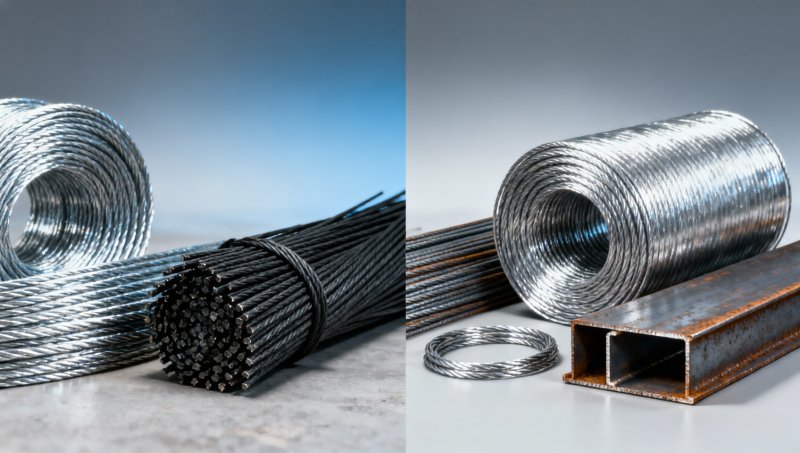
In construction projects, steel wire is rarely a simple commodity. It influences load transfer, reinforcement performance, fastening reliability, and long-term corrosion behavior. For procurement teams, technical reviewers, and project managers, the first step is not price comparison. It is defining the actual function of the wire in the structure, because wire for prestressing, binding, mesh production, fencing, suspension, or anchoring can require very different mechanical and surface properties.
A practical evaluation usually starts with 4 core dimensions: application scenario, wire diameter range, tensile strength requirement, and environmental exposure. In many building projects, diameter may fall within common ranges such as 1 mm to 12 mm depending on use, while coating choice often depends on whether the wire will face outdoor humidity, salt spray, chemical contact, or enclosed dry conditions. These decisions directly affect service life and maintenance frequency.
For technical assessment personnel, standards compliance is equally important. Construction buyers often need wire aligned with ASTM, EN, JIS, or GB related requirements, especially when the project includes cross-border sourcing or third-party inspection. A mismatch between design documents and purchased wire can delay approval by 7–15 days, especially if material test certificates or coating verification reports are missing during incoming quality control.
For financial approvers and commercial evaluators, the key issue is total cost rather than unit price. Lower-cost wire may create hidden expenses through faster corrosion, coating inconsistency, rework, or breakage during installation. In global construction supply chains, reliable exporters with stable production, documented quality control, and consistent lead times help reduce sourcing risk more effectively than short-term low-price offers.
The 5 checks that should happen before comparing quotations
- Confirm the end use: reinforcement support, tying, welded mesh, suspension, cable support, or fabricated component integration.
- Verify the working environment: indoor dry area, coastal zone, industrial atmosphere, or high-humidity exposure.
- Match the required mechanical range: tensile strength, elongation, and forming behavior for bending or fastening.
- Review coating or surface treatment: black annealed, bright, galvanized, or other corrosion-resistant options.
- Request documents in advance: material grade reference, test certificate, dimensional tolerance, and inspection method.
When these 5 checks are completed early, both users and purchasing staff can compare suppliers on a consistent basis. This reduces confusion during technical clarification and helps distributors, contractors, and OEM buyers avoid specification drift between inquiry, order confirmation, and delivery.
How do wire type, coating, and strength affect real construction performance?
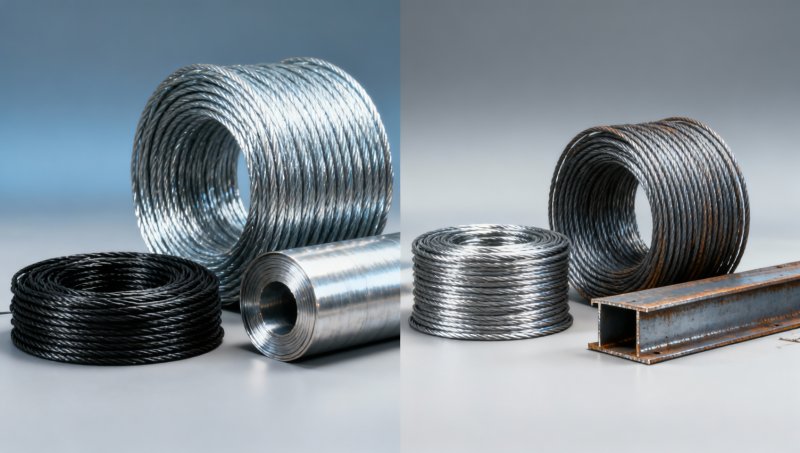
Not all steel wire performs the same under construction conditions. Low-carbon wire is widely used for tying and general fabrication because it offers good ductility and easy handling. Higher-strength wire is more suitable where greater tension resistance is needed. Galvanized wire is commonly selected for outdoor or humid conditions because the zinc layer helps delay corrosion, while uncoated or black wire may be acceptable in controlled indoor environments with limited exposure.
Corrosion resistance should be evaluated as a system issue, not just a coating choice. If steel wire is installed near coil coated steel panels, cold formed sections, or exposed roofing elements, the surrounding moisture cycle and contact conditions matter. In coastal or industrial zones, buyers often review not only the base material but also coating uniformity, handling damage risk, and storage conditions during the first 2–4 weeks after arrival on site.
Strength selection also depends on installation practice. A wire with very high tensile strength may not always be better if the operator needs frequent bending, knotting, or onsite adjustment. For this reason, site users and maintenance teams should assess workability together with engineers. The most effective choice balances 3 factors: sufficient strength, predictable formability, and suitable corrosion protection for the project environment.
For projects involving integrated steel systems, steel wire may need to work alongside structural members, light gauge framing, or fabricated accessories. In those cases, compatibility with other steel products becomes important. For example, when a project also uses purlins, wall beams, or secondary framing, choosing components from a supplier experienced in structural steel coordination can simplify procurement and reduce interface problems during assembly.
Quick comparison of common construction steel wire choices
The table below helps technical and sourcing teams compare common steel wire options by use environment, handling characteristics, and purchasing focus. It is especially useful in early-stage supplier screening and material substitution discussions.
This comparison shows why a single “best” wire does not exist for all jobs. The correct choice depends on exposure level, fabrication method, and performance target. That is why experienced structural steel suppliers usually ask about project use, delivery schedule, and standards before issuing a final recommendation.
Related structural products also matter in system selection
In many projects, wire selection is linked with secondary steel members. If the building uses purlins, wall beams, lightweight roof trusses, brackets, or mechanical light-industry framing, the supporting steel profile should be assessed together with the wire. A coordinated sourcing approach can lower dimensional mismatch and reduce onsite adjustment time by one installation cycle.
For example, buyers looking for cold formed support sections may also review Metal C Beam as part of an integrated structural package. This type of C-shaped section is used in purlins and wall beams of steel structure buildings and can also support lightweight roof trusses, brackets, and mechanical framing components.
Its common material options include Q195, Q235, Q345, A36, SS400, and S235JR, with thickness typically ranging from 1 mm to 12 mm and standard lengths such as 6 m, 9 m, and 12 m. Surface choices like galvanized finish, powder coating, and black varnish allow the section to align with different exposure conditions, while processing services such as bending, welding, punching, decoiling, and cutting support project-specific fabrication needs.
For procurement teams, combining compatible wire and steel profile sourcing through one qualified exporter can simplify documentation, lead-time planning, and inspection coordination. This is particularly useful when the project requires compliance references to ASTM, EN, JIS, or GB and third-party checks such as CE, SGS, BV, or ISO-related documentation review.
Which technical specifications and standards should buyers verify?
Technical review should move beyond a basic material name. Buyers should verify at least 6 specification points before confirming an order: material grade, diameter tolerance, tensile range, elongation or ductility expectation, surface treatment, and packaging method. These details affect not only installation performance but also whether the shipment passes incoming inspection without delays or claims.
For quality control and safety managers, dimensional consistency is especially important in repetitive construction use. Wire outside the specified tolerance may cause binding inconsistency, fabrication defects, or poor fit with automated equipment. While the acceptable tolerance depends on product type and project requirement, reviewing the supplier’s measurement method and batch inspection routine is a practical risk-control step.
Standards alignment is also critical in international purchasing. Construction buyers often request products manufactured in reference to ASTM, EN, JIS, or GB frameworks, depending on the project location and engineering documentation. A reliable supplier should be able to explain what standard is being referenced, what test items are available, and how the shipment documents match the purchase order and packing list.
For global projects, lead-time planning should be tied to inspection milestones. A common process includes 3 stages: pre-production confirmation, in-process manufacturing review, and pre-shipment inspection. This structure is useful for distributors, project owners, and EPC teams because it reduces the chance of discovering specification issues only after cargo arrival.
Technical checkpoints that should appear in your inquiry sheet
The following table can be used as a practical inquiry checklist when sourcing steel wire for construction. It helps technical teams and commercial teams communicate with fewer back-and-forth revisions.
A detailed inquiry sheet saves time for both sides. It reduces quotation ambiguity, improves comparability between suppliers, and supports faster internal approval by engineering, procurement, and finance teams. In projects with tight schedules, this can shorten clarification cycles from several rounds to one structured review.
A practical 4-step verification flow
- Define the use case and environment, including whether the wire is exposed, embedded, or part of a fabricated assembly.
- Confirm the technical specification, including diameter range, strength expectation, coating, and applicable standard reference.
- Review supplier documents, such as material certificates, inspection records, packaging details, and shipment schedule.
- Approve a sample or pre-shipment inspection plan if the order is for repeated supply, distribution stock, or a large project batch.
This process is especially helpful when working with overseas manufacturers. It gives technical evaluators confidence, helps procurement control variation, and allows project managers to align delivery with the construction schedule more accurately.
How can buyers balance cost, lead time, and sourcing risk?
In steel wire purchasing, cost control should consider the full lifecycle of the order. The visible price includes raw material and processing, but hidden cost often comes from coating failure, inconsistent diameter, packaging damage, customs delay, or replacement labor. This is why commercial buyers and financial approvers should compare total landed value instead of focusing only on the lowest offer per ton or per coil.
Lead time is another major decision factor. For standard construction steel products, production and shipment planning often falls into a typical 2–6 week window depending on specification, order volume, and surface treatment. Customized packaging, special coating requests, or coordinated supply with structural sections may extend the cycle, but they can also reduce onsite sorting time and lower the risk of mixed-batch installation errors.
Sourcing risk becomes lower when the supplier has stable manufacturing capability, quality control discipline, and familiarity with export documentation. Hongteng Fengda, as a structural steel manufacturer and exporter from China, supports global buyers with angle steel, channel steel, steel beams, cold formed profiles, and customized structural steel components. This broader supply capability can benefit buyers who need both wire-related coordination and supporting steel products within one procurement framework.
For distributors, contractors, and industrial buyers serving North America, Europe, the Middle East, and Southeast Asia, consistency matters as much as price. Stable production capacity, clear quality control procedures, and dependable lead times help reduce reordering uncertainty. In repeat purchasing, even one avoided shipment problem can protect project margins more effectively than a small initial unit-price difference.
Common cost drivers buyers often overlook
- Surface treatment level: galvanized wire usually costs more than black wire, but it can reduce corrosion-related replacement in exposed use.
- Packaging method: stronger export packaging may add cost, yet it can reduce transit damage during sea shipment.
- Tolerance and inspection requirements: tighter control may increase manufacturing effort but lower rejection risk on site.
- Order structure: mixed products, cut lengths, or coordinated steel components may improve project efficiency even if the line-item price is not the lowest.
A balanced buying strategy usually compares 3 scenarios: lowest initial price, lowest lifecycle cost, and lowest delivery risk. For most B2B construction projects, the second or third option creates better operational results, especially where delays, rework, or compliance issues can affect multiple trades on site.
What are the most common mistakes, and how should decision-makers avoid them?
One common mistake is selecting steel wire only by diameter and ignoring actual use conditions. Two wires with the same diameter can behave very differently if one is intended for easy tying and the other for higher tension applications. This often leads to installation difficulty, excess waste, or premature corrosion. Users and technical evaluators should always review function, environment, and handling requirement together.
Another mistake is assuming all galvanized wire offers the same corrosion performance. In real projects, coating consistency, transport protection, storage exposure, and site handling all affect results. If material is stored outdoors for several weeks before use, the buyer should discuss packaging, unloading practice, and storage recommendations with the supplier in advance rather than after surface issues appear.
A third issue is incomplete documentation. Purchasing teams sometimes confirm an order with only a brief quotation and then face problems during inspection because the material certificate, standard reference, or packing details were never specified. A better approach is to define 5 document items before order placement: product description, size range, surface treatment, inspection basis, and shipping marks.
Finally, many decision-makers separate steel wire sourcing from the rest of the structural steel package. That can work in simple jobs, but in multi-material projects it may create coordination gaps. When wire, channels, beams, and cold formed sections are purchased through disconnected channels, the result may be inconsistent lead times or duplicated inspection effort.
FAQ for buyers, engineers, and project teams
How do I choose steel wire for outdoor construction?
Start by reviewing exposure level, moisture frequency, and expected service duration. For outdoor and humid applications, galvanized or corrosion-resistant wire is commonly preferred. Also confirm whether the wire will contact other coated steel products, whether it is exposed continuously, and whether storage onsite may last 2–4 weeks before installation.
What should procurement teams ask for before placing an order?
Ask for the material description, size or diameter range, surface treatment, referenced standard, inspection documents, packaging details, and delivery schedule. If the order is repeat or project-critical, request a sample review or batch confirmation process. This helps align engineering, purchasing, QC, and finance before commitment.
Is the lowest-price steel wire a good purchasing strategy?
Not always. The lowest price may be reasonable for temporary indoor use, but for exposed or specification-sensitive construction, a cheaper option can create higher replacement, labor, or delay cost. Compare total cost across quality consistency, coating reliability, packaging protection, and supplier response speed.
How long is the typical delivery cycle?
Delivery depends on order volume, finish, and whether the product is standard or customized. In many export cases, a practical planning range is 2–6 weeks for production and readiness, with additional transit time based on destination. Early confirmation of specifications reduces avoidable delay during approval and packing.
Why work with a structural steel manufacturer that understands project coordination?
Construction material purchasing is easier when the supplier understands both product detail and project coordination. Hongteng Fengda serves global buyers with structural steel products and customized solutions for construction, industrial, and manufacturing applications. This matters when buyers need more than a basic quote and want support with specification matching, OEM needs, standards alignment, and lead-time planning.
With modern manufacturing facilities and strict quality control, the company supplies angle steel, channel steel, steel beams, cold formed steel profiles, and customized structural components according to major international standards such as ASTM, EN, JIS, and GB. For project teams, that means one conversation can cover multiple steel categories instead of managing fragmented sourcing across unrelated vendors.
If you are evaluating steel wire for construction, the most efficient next step is to confirm 6 items: application, environment, size range, required strength, coating preference, and delivery target. From there, it becomes easier to discuss matching structural products, inspection expectations, and packaging requirements without losing time in repeated clarification.
You can contact us for parameter confirmation, product selection, delivery cycle planning, customized structural steel solutions, standards and certification review, sample support, and quotation discussion. If your project includes wire plus related steel members, sharing the full use scenario early will help us recommend a more practical and lower-risk sourcing plan.
Please give us a message


Please enter what you want to find