Choosing between hot rolled steel sheet and cold rolled steel for humid coastal construction demands more than just strength—it requires corrosion resilience, dimensional stability, and compliance with global standards like ASTM A572 and ASTM A106 Gr.B. As a trusted Steel Plate Supplier and structural steel manufacturer, Hongteng Fengda delivers mild steel plate, SPCC/SPCD/SPCE steel, and corrosion resistant wire engineered for marine environments. Whether you’re a project manager assessing durability or a procurement specialist comparing cost-performance ratios, this comparison cuts through the noise—backed by real-world performance data, EN/ASTM/JIS-certified quality, and China-based export reliability.
How Humidity & Salt Exposure Drive Material Selection
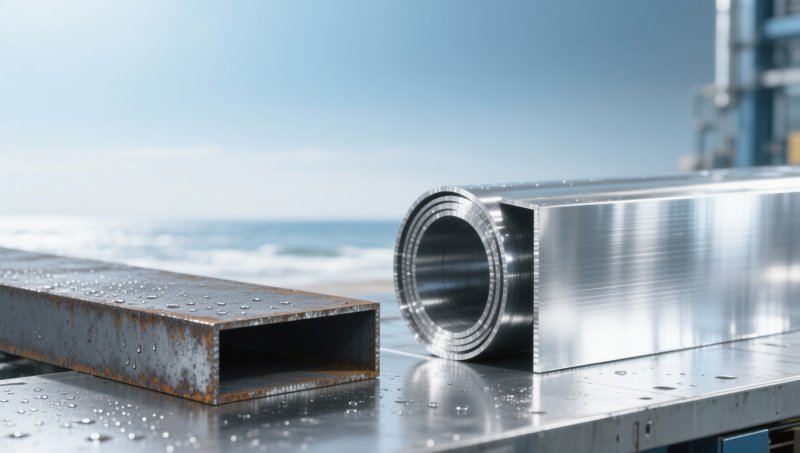
Coastal environments accelerate degradation through three synergistic mechanisms: chloride ion penetration (from sea spray), high relative humidity (>75% year-round in many zones), and cyclic wet-dry conditions that prevent passive film stabilization. Field studies across Southeast Asia and the Middle East show unprotected carbon steel loses 0.12–0.28 mm/year in thickness under continuous exposure—nearly 3× faster than inland industrial zones.
Hot rolled steel sheets (HRSS) form an oxide scale during mill cooling, offering initial barrier protection—but this layer is porous and spalls easily when subjected to mechanical stress or thermal cycling. Cold rolled steel (CRS), while smoother and stronger, lacks inherent oxide coverage and relies entirely on post-processing coatings or alloying for corrosion resistance.
For long-term integrity in projects like port infrastructure, offshore support structures, or coastal power substations, material selection must account for both initial performance and 10–25 year lifecycle maintenance costs—not just upfront price per tonne.
Performance Comparison: Hot Rolled vs. Cold Rolled in Marine Conditions
The following table compares key technical and operational parameters relevant to humid coastal builds:
Note: While CRS offers superior flatness and tensile strength (up to 550 MPa vs. HRSS’s 350–450 MPa), its vulnerability to pitting corrosion in chloride-rich air means it’s rarely deployed uncoated—even indoors near coastal zones. HRSS remains preferred for structural framing where secondary protection (e.g., epoxy primers, concrete encasement) is applied onsite.
Critical Decision Factors for Procurement Teams
- Lead time sensitivity: HRSS standard grades ship in 7–15 days from China; CRS with custom tempering or pre-painting adds 3–4 weeks
- Certification alignment: Both require ASTM A568/A653 verification; CRS needs additional EN 10131 testing for bendability after galvanizing
- Post-fabrication risk: CRS work-hardens rapidly during bending—requiring annealing if >90° bends are needed in field assembly
When to Choose Which — And Where Hybrid Solutions Win
A rigid “either/or” approach overlooks hybrid applications where combining both types optimizes lifecycle value. For example, Hongteng Fengda supplies HRSS beams (Q235B, ASTM A36) with CRS cladding panels (SPCC + 20 g/m² Zn) for modular coastal housing—leveraging HRSS’s structural robustness and CRS’s aesthetic finish.
In fencing and barrier systems, low-carbon Metal Coil Wire (Q195/Q235, 0.25–5.0 mm dia, 8–25 g/m² Zn) bridges the gap: ductile enough for weaving into salt-resistant wire mesh, yet economical for large-scale perimeter security in ports and desalination plants.
Real-world validation: In a 2023 UAE port expansion, HRSS structural supports showed only 0.03 mm average thickness loss after 2 years, while CRS cladding with 25 g/m² zinc maintained Class C5-M corrosion rating per ISO 12944—confirming the synergy of substrate + coating strategy.
Why Global Buyers Trust Hongteng Fengda for Coastal Projects
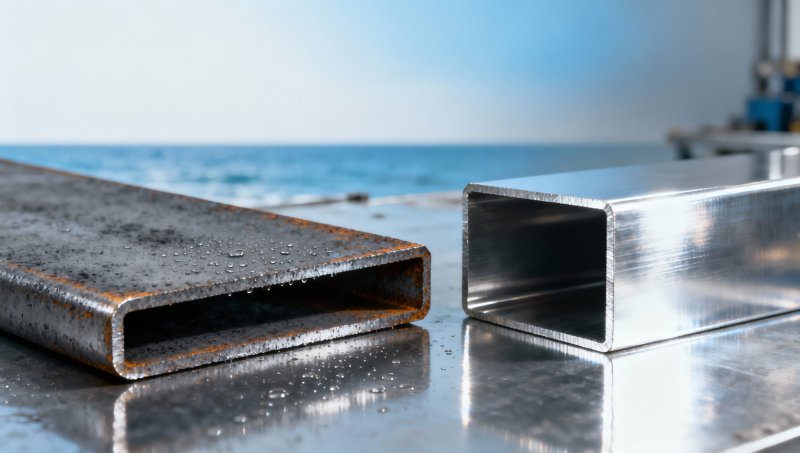
As a structural steel manufacturer and exporter based in China, Hongteng Fengda integrates coastal-grade performance into every stage—from raw billet sourcing (GB/T 700 Q235B certified) to final packaging (plastic film + woven bag, moisture-barrier compliant for ocean freight).
We support procurement teams with: 3-stage inspection (mill certificate review → in-process thickness/coating checks → final salt-spray test report), 4-week guaranteed lead times for standard HRSS/CRS orders, and OEM customization including pre-drilled holes, edge treatments, and dual-standard certification (ASTM + EN).
Whether you need corrosion-resistant wire for marine mesh, angle steel for jetty bracing, or cold-formed profiles for coastal solar mounting systems—our engineering team helps match specifications to your exact environmental severity zone, budget constraints, and delivery timeline. Contact us today for a free material selection consultation, sample support, or ASTM/EN compliance documentation.
Please give us a message


Please enter what you want to find