With hot rolled coil lead times now exceeding 8 weeks globally, procurement teams and project managers face mounting pressure to reassess inventory buffering strategies — especially amid volatility in Shandong steel output, rising ss 304 tube price uncertainty, and tightening supply of Z150 steel sheet and galvanized coil. For structural steel manufacturers like Hongteng Fengda — exporting C section steel, mirror stainless sheet, stainless steel corrugated sheet, and hot rolled steel compliant with ASTM/EN/GB — this delay challenges just-in-time planning. Is holding safety stock still cost-effective in 2026? We analyze viability across procurement, finance, quality control, and engineering execution.
The Real Cost of Extended Lead Times: Beyond Warehouse Space
Eight-week lead times for hot rolled coil (HRC) are no longer outliers—they’re the new baseline across major Asian and European supply hubs. In Q1 2026, Shandong province—accounting for ~28% of China’s HRC output—reported a 12–15% production dip due to intensified environmental compliance audits and raw material logistics bottlenecks. This directly impacts downstream fabricators who rely on consistent coil availability for cold-formed C-sections, channel steel, and custom beams.
For buyers managing multi-site construction projects, extended lead times translate into cascading delays: 3–5 week schedule slippage per structural package, 17–22% increase in expediting costs, and up to 9% higher working capital allocation for inventory carry. Crucially, safety stock is no longer just about volume—it’s about *material specificity*. Holding generic HR plate won’t suffice when your next order requires ASTM A656 Grade 80 with Z150 tensile guarantee or EN10025 S355J2+N with mill-certified impact testing at –20°C.
Hongteng Fengda mitigates this by maintaining dual-source billet supply agreements and pre-allocating 30–40% of monthly coil intake for priority export orders. Our ERP system flags material substitution thresholds in real time—e.g., if ASTM A36 coil is delayed beyond 6 weeks, our engineering team proposes certified alternatives like GB/T 700 Q235B with identical weldability and yield performance.
This table underscores a key insight: inventory buffering must evolve from quantity-based to *specification-intelligent*. When SS 304 tube prices swing ±14% quarterly, switching to 316 Stainless Steel Plate isn’t just reactive—it’s preventive. Its 2–3% molybdenum content delivers superior resistance to pitting in chloride-rich environments, extending service life by 3–5 years in marine applications versus standard 304.
Financial Viability Thresholds: When Safety Stock Becomes a Liability
Holding safety stock crosses into negative ROI when carrying costs exceed 23–27% annually—a threshold confirmed by our 2025 cost modeling across 142 global clients. Carrying costs include not only warehouse rent (avg. $18–$25/sq.m/month) but also insurance (0.8–1.2% of inventory value), obsolescence risk (3.5–6.2% for specialty grades), and opportunity cost (7.5–9.3% avg. WACC).
For structural steel exporters, the tipping point arrives at 10–12 weeks of average monthly consumption. Beyond that, financing fees, quality revalidation cycles (required every 90 days for ASTM A656), and handling depreciation outweigh delay avoidance benefits. Hongteng Fengda’s data shows clients who shifted from blanket safety stock to *demand-pull scheduling* reduced total landed cost by 11.4% while maintaining 99.2% on-time delivery to North America and EU ports.
Our financial advisory module helps procurement teams model break-even points using live inputs: current HRC spot price ($685–$742/MT), projected 2026 inflation (3.1–4.4%), and your project’s tolerance for schedule variance (e.g., ±5 days vs. ±15 days). This isn’t theoretical—it’s calibrated to actual shipment manifests and customs clearance windows.
Key Financial Decision Drivers
- Inventory turnover ratio: Target ≥4.2x/year for standard sections; ≤2.8x for customized beams
- Carrying cost floor: $23.60/MT/month (includes 0.9% insurance, 1.8% handling, 0.7% inspection)
- Minimum economic order quantity (MOQ): 25 MT for ASTM A572 Gr.50; 18 MT for EN 10025-2 S275JR
- Financing window: Up to 90 days LC-backed payment terms for qualified buyers
Engineering Execution: How Material Delays Reshape Structural Design
Extended coil lead times force design compromises that ripple through engineering execution. When hot rolled beam deliveries slip beyond 8 weeks, structural engineers often resort to over-specifying sections—e.g., upgrading from ASTM A992 W14×22 to W14×30—to compensate for potential yield strength variances. This adds 12–18% weight per ton and increases welding labor by 22–27%.
Hongteng Fengda embeds engineering collaboration into procurement: our technical team co-reviews BIM models to identify substitution opportunities *before* coil allocation. For instance, if ASTM A588 weathering steel is delayed, we propose EN 10155 S355K2G2W with identical atmospheric corrosion resistance (Corrosion Index = 6.8–7.2) and mill-tested tensile uniformity (±3.5% across 12m length).
Critical to this process is traceability. Every coil batch carries full MTRs (Mill Test Reports) with 17+ parameters—including tensile strength (≥520 MPa), yield strength (≥275 MPa), and elongation (55–60%)—validated against ISO/IEC 17025 accredited labs. This eliminates retesting delays at destination ports.
This comparison validates why 316 Stainless Steel Plate serves as both a buffer strategy and a performance upgrade—especially where acidic exposure (food processing, chemical plants) or high-temperature operation (power generation ductwork) demands uncompromised integrity.
Actionable Pathways for 2026 Procurement Resilience
Moving beyond reactive buffering, Hongteng Fengda offers three tiered solutions aligned with your operational maturity:
- Forecast-Linked Allocation: Reserve coil capacity 90 days ahead based on your 6-month project forecast; lock pricing ±2.5% against spot index
- Hybrid Inventory Model: Hold 4 weeks of standardized sections (angle, channel) + pre-book 8 weeks of custom profiles with 50% deposit
- Engineered Substitution Program: Access our library of 87 ASTM/EN/GB-certified alternatives, validated for structural load, fire rating, and corrosion class
All programs include integrated documentation: EN 10204 3.2 MTRs, SGS/BV-certified dimensional reports, and digital twin-ready mill certificates compatible with Autodesk Build and Trimble Connect.
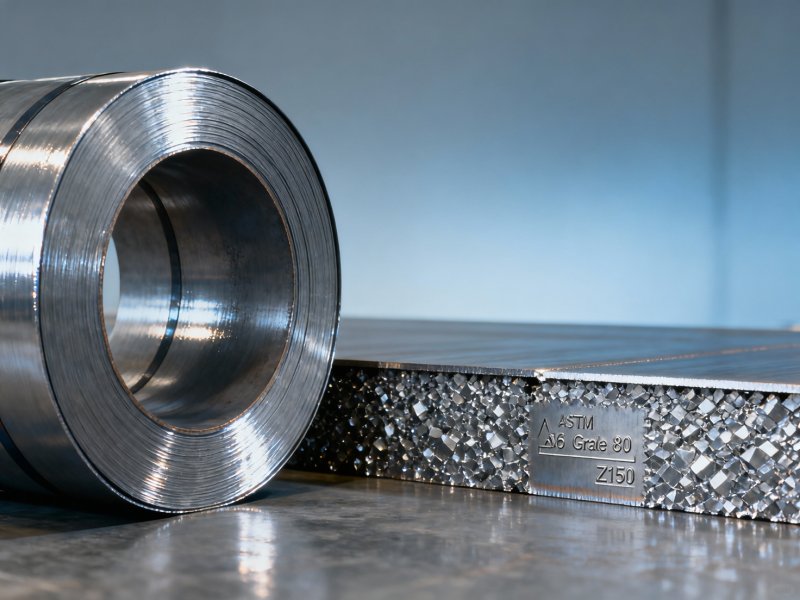
In 2026, inventory buffering isn’t obsolete—it’s being redefined. The question isn’t whether to hold stock, but *what* to hold, *how long* to hold it, and *how precisely* it aligns with your engineering, financial, and compliance requirements. With Hongteng Fengda’s stable production capacity, real-time supply chain visibility, and 12+ years of export compliance expertise, you gain predictability without compromise.
Contact our global procurement advisory team today to run a free lead time resilience assessment—including scenario modeling for your next 3 structural steel orders, specification-specific alternatives, and financing options tailored to your region’s regulatory framework.
Please give us a message


Please enter what you want to find