MOQ requirements for steel products can look simple on a quotation sheet, yet the true expense is rarely limited to the listed price per ton. In structural steel sourcing, minimum order quantities often influence inventory turnover, project scheduling, specification accuracy, payment pressure, inland transport, port handling, and even scrap rates after fabrication. When MOQ requirements for steel products are evaluated only from a unit-price perspective, the final landed cost may rise unexpectedly. A better approach is to examine what the minimum order means for the full supply chain, from production planning in China to on-site consumption in construction, industrial, and manufacturing applications.
What do MOQ requirements for steel products really mean in practice?
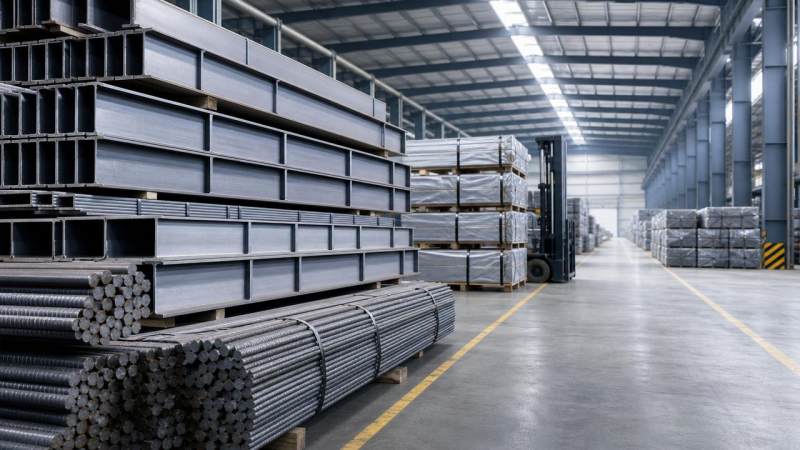
MOQ requirements for steel products are usually set to align production efficiency with raw material allocation, rolling schedules, coating or cutting operations, packaging, and export logistics. In the steel industry, a mill or exporter may define MOQ by weight, by size, by grade, by length, or by the number of pieces that fit a standard production batch. That means a low unit price can still come with a high total commitment if the order must include a full rolling lot or a fixed bundle quantity.
For example, structural sections such as angle steel, channel steel, steel beams, or cold formed profiles often require production grouping by specification. If one project needs a small quantity of several uncommon sizes, MOQ requirements for steel products may force overbuying. The buyer does not only pay for surplus steel. There may also be additional costs for storage, corrosion protection, financing, and later disposal if the extra material cannot be reused.
This is why MOQ should be treated as an operational condition rather than a pricing note. It affects how much flexibility exists in grade selection, custom processing, mixed-container loading, and delivery sequencing. A reliable structural steel supplier will normally explain whether MOQ is driven by mill policy, downstream processing limits, or export packaging rules, because each cause creates a different cost profile.
Why can a lower unit price still create a higher total cost?
One of the most common mistakes in evaluating MOQ requirements for steel products is assuming that a discounted price automatically improves procurement efficiency. In reality, lower pricing tied to a large minimum quantity may increase total cost in at least five ways: excess inventory, cash flow lock-up, handling losses, schedule mismatch, and quality risk from long storage periods.
Excess inventory is the most visible issue. If a project needs 28 tons but the supplier only accepts 50 tons, the remaining 22 tons become a burden unless they can be allocated elsewhere. Warehousing steel for months may require covered storage, rack space, anti-rust measures, recounting, and internal transport. These costs are often ignored when comparing offers.
Cash flow pressure is another hidden factor. MOQ requirements for steel products often increase the upfront deposit, the amount financed through letters of credit, or the working capital tied to stock that has not yet generated revenue. In periods of volatile steel prices, overcommitting to inventory can also expose a business to market downside if replacement prices fall before the material is consumed.
Schedule mismatch can be equally expensive. When minimum quantity forces all material to ship together, site consumption may not match delivery timing. Early arrival can create storage congestion, while late changes in design may leave noncompliant sections unused. On paper, the order met the MOQ efficiently. In practice, the project absorbed unnecessary carrying costs and operational friction.
Which hidden costs are most often overlooked when comparing steel suppliers?
A careful review of MOQ requirements for steel products should go beyond product cost and look at the full commercial chain. The following hidden items are frequently missed during supplier comparison:
- Specification split charges when one order contains multiple grades, lengths, or surface conditions
- Extra processing fees for cutting, punching, beveling, bundling, or marking below standard batch size
- Container inefficiency when MOQ fills weight but not volume, or volume but not weight
- Inland freight waste caused by partial truck utilization or multiple warehouse transfers
- Inspection and testing repetition for mixed-origin or split-batch deliveries
- Inventory aging, corrosion exposure, and rework after extended storage
- Material substitution risk when MOQ pushes a near-match grade instead of the exact required one
These issues become more visible in projects that combine standard structural materials with application-specific steel bars or components. For instance, when reinforcement demand must meet a precise grade and certification combination, ordering by oversized minimums may reduce flexibility. In such cases, integrating a product like Rebar into a broader steel sourcing plan works best when the grade mix, required length, and certification route are confirmed early.
Common options in this category include GB1499.2 HRB400, HRB500, HRB400E, HRB500E, ASTM A615 Grade 60, BS4449 460B, 500B, 500C, and AS/NZS 4671 500N. With carbon steel composition, round shape format, and lengths such as 1-12m or custom request, the material can serve building material needs as well as selected industrial uses. However, if MOQ requirements for steel products are not aligned with the actual bar schedule, excellent formability and weldability alone do not prevent cost overruns caused by leftovers.
How can you judge whether an MOQ is reasonable or risky?
The best way to assess MOQ requirements for steel products is to compare the minimum quantity against actual consumption, not against the supplier’s discount level. A reasonable MOQ usually fits one of three patterns: it matches a real near-term project volume, it can be consolidated with other regular demand, or it supports a clear logistics advantage such as full-container optimization.
An MOQ becomes risky when it forces one-off buying without a reuse path. This is especially true for nonstandard dimensions, uncommon standards, or destination markets with strict compliance documentation. If material cannot be redeployed across projects, the hidden cost of MOQ requirements for steel products rises sharply because every excess ton becomes committed capital.
If several warning signs appear at once, the quoted savings may not be real. In that situation, MOQ requirements for steel products should be renegotiated through mixed loading, rolling schedule coordination, or staged deliveries rather than accepted at face value.
What strategies help reduce the hidden cost of MOQ requirements for steel products?
Reducing hidden cost starts with better order design. Instead of negotiating only for a lower price, focus on order structure. This often delivers greater savings than a small per-ton discount.
- Consolidate demand across projects to make MOQ requirements for steel products fit actual consumption.
- Ask whether mixed models, mixed lengths, or mixed grades can count toward one production lot.
- Use phased shipment plans if production must run once but delivery can be split.
- Confirm fabrication drawings and standards before mass ordering custom structural items.
- Calculate warehouse and financing cost per excess ton to compare against the supplier’s discount.
- Choose exporters with stable production capacity and quality systems that can support tailored batching.
This is where experienced Chinese structural steel suppliers can add value. A manufacturer with modern facilities, control over angle steel, channels, beams, cold formed profiles, and customized structural parts is usually better positioned to coordinate standards such as ASTM, EN, JIS, and GB while balancing production efficiency with export practicality. That coordination helps lower sourcing risk even when MOQ requirements for steel products cannot be eliminated entirely.
When should MOQ be accepted, negotiated, or avoided?
MOQ requirements for steel products are worth accepting when the quantity supports a recurring program, standard stock replenishment, or a major project phase with stable drawings. In these situations, the minimum order may genuinely improve mill efficiency and reduce price per ton without creating waste.
They should be negotiated when the order includes multiple specifications, when the destination requires special testing documents, or when delivery timing is more important than price alone. A supplier may not lower the technical MOQ, but may still offer practical solutions such as combining several items in one export plan, adjusting production sequence, or reserving future release quantities.
They should be avoided when the order is for trial use, uncertain design stages, niche grades, or highly customized steel products with no secondary market value. In these cases, MOQ requirements for steel products can turn a manageable purchase into a long-term inventory problem.
The hidden costs behind MOQ requirements for steel products are not always obvious at quotation stage, but they become very visible once inventory, transport, financing, and project execution are considered together. A sound decision weighs the entire sourcing chain: real demand, standards compliance, loading efficiency, storage burden, and timing. Before placing the next structural steel order, compare not only unit price but also the cost of surplus tonnage, the value of flexibility, and the risk of specification mismatch. That approach leads to more reliable steel sourcing, better cost control, and stronger project outcomes.
Please give us a message


Please enter what you want to find