Galvanized steel price differences can look simple at first glance, but buyers often misread them when coating weight, base metal grade, order volume, and delivery terms are not compared correctly. For importers, contractors, and engineers tracking carbon steel price, steel rebar cost, or sourcing from an h beam manufacturer, understanding what really drives galvanized steel price is essential to avoid hidden costs and make better purchasing decisions.
In the steel trade, a small gap of USD 30-80 per ton may seem minor during quotation review, yet it can signal major differences in zinc coating, substrate thickness tolerance, spangle requirement, packaging method, or inspection scope. For project managers, procurement teams, and quality controllers, the real question is not which quote is lower, but which quote is truly comparable.
This matters even more for international sourcing. A Chinese structural steel manufacturer or exporter may quote on EXW, FOB, CFR, or CIF terms, while another supplier includes edge protection, bundle marking, third-party inspection, or faster lead time in the same number. Without aligning specifications line by line, buyers can misread galvanized steel price levels and expose a project to avoidable risk.
Why galvanized steel price gaps are often misunderstood
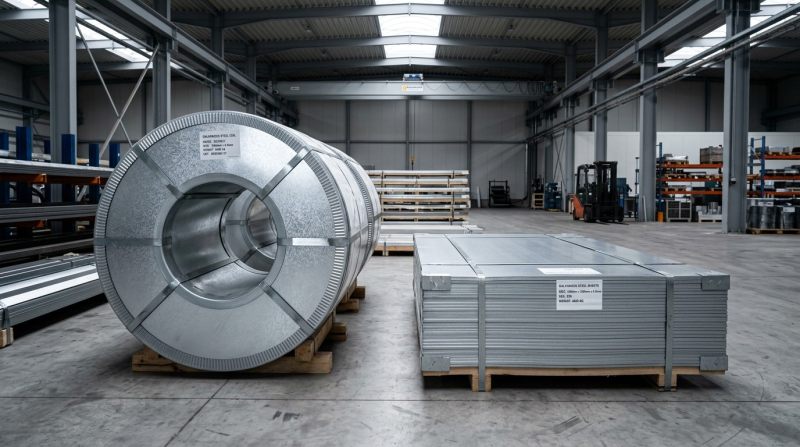
Galvanized steel is not a single-price commodity in the way many first-time buyers assume. Even when two offers carry the same product name, the underlying cost basis may differ across 4 key dimensions: base steel grade, zinc coating mass, dimensional tolerance, and commercial terms. A quote for SGCC with Z80 is not directly comparable to one for S350GD with Z275, even if both are described as galvanized steel sheet or coil.
Price confusion also happens because buyers often compare unit price only, while suppliers price according to production route and order complexity. For example, a standard galvanized section produced in a large batch of 200-500 tons usually carries a lower conversion cost than a customized order of 20-50 tons requiring special punching, cutting, or nonstandard lengths. The material may look similar on paper, but the processing burden is not the same.
Another common issue is mixing domestic reference prices with export transaction prices. A local carbon steel price index may reflect raw material movement, but export galvanized steel price also absorbs ocean freight volatility, export packing, documentation cost, and destination-specific compliance requirements. In a volatile market, freight alone can shift total landed cost by 5%-12% within a few weeks.
For B2B buyers, the safest method is to compare “same material, same coating, same tolerance, same quantity, same delivery term.” If one of those five variables changes, the quote is no longer directly comparable. This is especially important for distributors, industrial users, and engineering buyers working with multi-country tenders.
The most frequent quote comparison mistakes
The table below shows where buyers most often misread galvanized steel price differences during early supplier screening.
The key takeaway is simple: when buyers standardize these variables before negotiation, they usually identify whether a lower offer is genuinely efficient or simply less complete. That step alone can reduce sourcing confusion across multiple suppliers.
The cost drivers behind galvanized steel pricing
The biggest price driver is usually the substrate. Galvanized products begin with carbon steel, so any movement in hot rolled coil, cold rolled coil, billet, or related carbon steel price benchmarks feeds into the finished offer. When steelmaking inputs rise over a 2-4 week cycle, galvanized steel prices normally follow, but not always at the same speed because coating lines, stock levels, and contract timing create lag.
The second major factor is coating weight. A project requiring heavier corrosion protection for outdoor structures, cable trays, purlins, or roofing components may specify Z180, Z200, or Z275 instead of lighter commercial coatings. More zinc means more raw material usage and often a different performance expectation in humid, coastal, or industrial environments. This is where technical evaluation and procurement decisions need to connect.
Processing requirements add another layer. Slitting, cut-to-length, punching, drilling, roll forming, or OEM fabrication changes the value structure from commodity supply to project supply. A structural steel manufacturer serving construction and industrial projects may quote differently for standard channel steel than for galvanized custom-formed profiles with tight tolerance and traceable marking.
Commercial packaging and inspection also affect total cost. Export-worthy packing, moisture barrier, steel pallet use, bundle identification, and third-party inspection can be decisive for shipments moving to North America, Europe, the Middle East, or Southeast Asia. These are not “extra words” in a quote; they are cost items that influence risk, claims, and unloading efficiency.
Typical price drivers buyers should isolate
A structured cost review helps procurement teams identify which component explains the gap and which one is negotiable.
- Base steel grade and thickness tolerance, especially when higher strength or narrower gauge tolerance is required.
- Zinc coating mass, commonly moving from light commercial coatings to heavier anti-corrosion specifications.
- Order quantity, because production efficiency often improves significantly above 100 tons or at full-container loading volumes.
- Surface, spangle, oiling, passivation, and edge condition, all of which can affect usability and downstream forming.
- Export terms and logistics window, including whether the lead time is 15 days, 30 days, or 45 days from deposit or drawing approval.
A useful cross-material reminder
Not every corrosion-sensitive application should default to galvanized carbon steel. In chemical equipment, food processing, marine parts, and medical-related environments, buyers often compare zinc-coated steel with stainless solutions. For applications that need stronger pitting resistance, heat tolerance, and acid exposure performance, 316 Stainless Steel Plate is commonly evaluated because its 2%-3% molybdenum content improves corrosion resistance, with tensile strength of at least 520 and yield strength of at least 275. Typical thickness can range from 0.3mm to 200mm, with finishes such as 2B, BA, NO.1, and HL depending on fabrication and hygiene needs.
This comparison does not mean galvanized steel is the wrong choice. It means material selection should match service environment. For many structural and general industrial uses, galvanized steel remains more cost-effective. But where chloride exposure, acidic cleaning media, or elevated temperature cycles are expected, stainless may reduce lifecycle risk despite a higher initial material cost.
How buyers should compare quotations line by line
A reliable quote comparison process starts with a normalized inquiry sheet. Instead of requesting “best price for galvanized steel,” buyers should define at least 8 items: product type, grade, size, coating, tolerance, quantity, delivery term, and destination port. For fabricated sections, drawing revision number and hole pattern should also be fixed before price benchmarking. This prevents suppliers from quoting on different assumptions.
For project procurement, it is also helpful to separate base material price from processing and logistics. That approach makes negotiations cleaner. If one supplier has stronger production capacity and another has lower freight access, buyers can see where each number comes from and avoid false conclusions based only on the grand total.
Distributors and resellers should pay close attention to dimensional tolerance and coating consistency, because resale claims often emerge from appearance mismatch rather than total weight shortage. A cheaper galvanized lot that creates 3%-5% sorting loss at the warehouse may erase the initial price advantage quickly.
For engineering buyers, the most important habit is checking whether the quotation reflects the actual service condition. Indoor dry-use components, open-air infrastructure, coastal support systems, and temporary construction items do not need the same coating strategy. Over-specification wastes money; under-specification creates maintenance and replacement risk.
Recommended quotation checklist
The following comparison table can be used by procurement teams, technical reviewers, and project managers before approving a supplier shortlist.
When this checklist is used consistently, buyers usually spot where a quote is lower for a valid efficiency reason and where it is lower because something important has been omitted. That distinction is critical in steel procurement.
A practical 5-step review method
- Lock the standard and grade before asking for price.
- Confirm zinc coating in exact terms rather than descriptive words like “heavy” or “standard.”
- Compare the same shipment basis, such as FOB China port versus CFR destination port.
- Separate manufacturing extras such as cutting, drilling, and special packing.
- Request mill test documents and inspection scope before purchase order release.
Common risks for importers, contractors, and distributors
One major risk is underestimating corrosion performance. A lower galvanized steel price can be attractive during budgeting, but if the coating is too light for outdoor exposure, the replacement cycle may shorten significantly. In a dry indoor application, that may be acceptable. In a coastal or chemical-adjacent area, it can become a maintenance issue within a much earlier interval than planned.
Another risk is assuming all factories manage quality the same way. Stable production capacity, coil sourcing discipline, coating line control, and final inspection affect consistency between lots. For distributors, even a small variation in thickness or bundle identification can slow downstream sales. For project contractors, inconsistent lengths or hole alignment can delay site assembly and increase labor hours.
Lead time is also frequently misunderstood. A lower offer with a 35-45 day production window may not actually be cheaper if the project schedule requires delivery in 15-25 days. Delayed steel delivery can affect civil works, erection sequences, and cash flow. Time should be treated as a cost factor, not only as an operational note.
For buyers sourcing from overseas, communication detail matters. If drawings, standards, and acceptance rules are not aligned before production, the cheapest quote can become the most expensive through rework, replacement, or dispute. This is why experienced exporters focus on technical clarification early rather than discussing price in isolation.
Risk control points before placing an order
- Verify standard compliance such as ASTM, EN, JIS, or GB according to project documents.
- Confirm whether quantity tolerance, coating tolerance, and length tolerance are stated in writing.
- Check if the supplier includes packing, marking, and anti-rust transport protection for export shipment.
- Decide in advance whether third-party inspection is needed before loading, especially for high-value or deadline-critical cargo.
- Review shipment batch size and container plan to avoid partial delivery issues on projects with strict installation sequencing.
When working with a structural steel exporter
Global buyers often prefer suppliers that can support both standard structural steel and customized fabrication. A manufacturer with experience in angle steel, channel steel, beams, and cold formed profiles can usually offer better coordination on mixed orders, especially when the project combines galvanized sections with non-galvanized structural components. That improves scheduling, document consistency, and communication efficiency.
Hongteng Fengda, as a structural steel manufacturer and exporter from China, serves this type of demand by supporting standard specifications and OEM supply for construction, industrial, and manufacturing projects. For many buyers, the value is not only product supply but also reduced sourcing risk through stable capacity, international standard familiarity, and dependable lead time planning.
How to make better purchasing decisions in a volatile steel market
Better purchasing decisions come from balancing initial price, technical suitability, and supply reliability. If galvanized steel price moves quickly, buyers should avoid making decisions from a single benchmark alone. Comparing raw material trend, coating requirement, and project schedule together gives a more realistic cost picture than watching one ton-price number in isolation.
A strong sourcing strategy often uses a 3-layer approach: first, define the minimum technical requirement; second, compare 2-3 qualified suppliers on aligned terms; third, estimate total delivered cost including packing, freight, inspection, and delay risk. This helps enterprise decision-makers and business evaluators avoid choosing a quote that is low at order stage but expensive at execution stage.
For repeat buyers and distributors, framework cooperation can sometimes smooth price volatility. Larger or recurring order programs may improve production planning, reduce setup waste, and support more stable lead times. Even when the per-ton quote is not the absolute lowest in one week, the yearly supply performance can be better for inventory control and customer commitments.
The best result is usually achieved when procurement, engineering, and quality teams review the same quote together. Steel purchasing is rarely only a commercial exercise. The final value depends on whether the delivered product matches the intended application, arrives on time, and performs without avoidable claims.
FAQ for buyers comparing galvanized steel prices
How many supplier quotes should a buyer compare?
In most B2B steel purchases, 2-4 qualified quotations are enough if the specification is aligned. More than that often creates noise rather than clarity, especially when suppliers quote against different standards or delivery terms.
Is the lowest galvanized steel price usually the best deal?
Not necessarily. A low quote may exclude heavier coating, stricter tolerance, export packing, or shorter lead time. Buyers should compare total usable value, not just ton price.
What is the minimum information a serious inquiry should include?
At minimum: product type, grade, dimensions, zinc coating, quantity, required standard, delivery term, and destination. For fabricated items, include drawings and tolerance requirements. These 8 points greatly improve quote accuracy.
When should buyers consider stainless instead of galvanized steel?
If the service environment involves chloride exposure, acidic media, hygiene-critical processing, or elevated temperature duty, stainless options may offer better lifecycle value. In those cases, a corrosion-resistant material such as 316 grade can be worth evaluating alongside galvanized carbon steel.
Galvanized steel price gaps are easy to misread because the visible number often hides differences in coating mass, steel grade, processing scope, shipment basis, and delivery commitment. Buyers who normalize specifications, compare commercial terms carefully, and review total landed value usually make stronger decisions and avoid costly surprises.
For importers, contractors, distributors, and project teams looking for dependable structural steel supply from China, working with an experienced manufacturer can improve both cost control and execution confidence. If you need support with galvanized structural steel, angle steel, channel steel, steel beams, cold formed profiles, or OEM project supply, contact Hongteng Fengda to get a tailored quotation, discuss technical details, and explore a sourcing solution that fits your project requirements.
Please give us a message


Please enter what you want to find