Evaluating a galvanized sheet price is not just about finding the lowest number—it is about understanding coating quality, base steel grade, thickness tolerance, order volume, and delivery reliability. For business evaluators, a fair quote should balance cost, compliance, and supply stability. This guide explains how to compare offers more accurately and avoid hidden sourcing risks when buying galvanized steel sheets.
What a galvanized sheet price really reflects
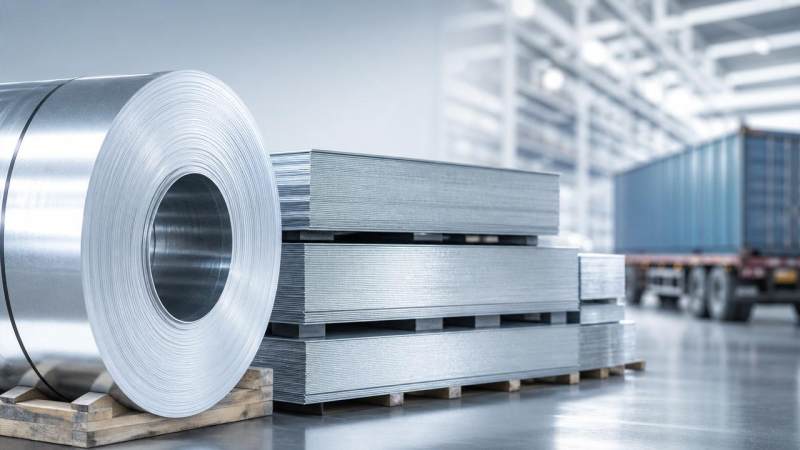
A galvanized sheet price is shaped by more than raw steel cost. It normally includes the base material, zinc coating mass, processing method, surface finish, packaging, inspection, and freight terms. In the steel industry, even a small change in coating specification can alter both performance and pricing. That is why two quotations with similar thickness may still represent very different value.
For business evaluators, the key point is to separate price from value. A quote that looks attractive at first glance may be weak in corrosion resistance, dimensional stability, or delivery certainty. A fair galvanized sheet price should be traceable to clear technical inputs and commercial conditions, not just a lump sum.
Why buyers in steel supply pay close attention
Galvanized steel is widely used across construction and manufacturing because it offers better corrosion protection and a practical balance of strength and processability. Buyers in automotive manufacturing, shipbuilding, petrochemical plants, wind-energy equipment, precision tools, and building material supply all rely on stable sheet performance for downstream production. When specifications shift, the cost impact can spread across fabrication, assembly, and maintenance.
This is why procurement teams often review not only the galvanized sheet price but also the supplier’s manufacturing consistency, export experience, and standards compliance. For international projects, a quote that follows ASTM, GB, EN, DIN, or JIS requirements is easier to approve and less likely to create later disputes.
How to judge whether a quote is fair
A practical evaluation starts with the technical sheet. Confirm the base steel grade, zinc coating level, thickness tolerance, width and length, edge condition, and packaging standard. Ask whether the quotation includes test certificates, mill inspection, and export packing. A low galvanized sheet price is only credible if these details are fully defined.
It also helps to compare quotations on a like-for-like basis. One supplier may quote ex-works, while another includes inland transport and port handling. A fair comparison must normalize these items before judging cost. If the order is urgent or the project schedule is tight, lead time and production stability should carry real weight in the final decision.
Product context that helps evaluate sourcing risk
In broader steel procurement, buyers often compare sheet products with structural bars and reinforcement items to understand how a supplier manages material grades, production discipline, and export readiness. For example, a supplier that can also provide Rebar with models such as GB1499.2 HRB400, HRB500, ASTM A615 Grade 60, BS4449 460B, and AS/NZS 4671 500N usually demonstrates stronger control over carbon steel processing and standard compliance. That cross-product capability can be useful when a buyer needs stable sourcing across multiple steel categories.
This does not mean one product can replace another. Instead, it gives business evaluators a better signal about manufacturing capability. A supplier experienced in carbon steel products, with good formability, weldability, and consistent export packaging, is often more reliable when handling technical quotations for galvanized sheets and related steel materials.
Typical applications and buying priorities
Different end uses place different pressure on a galvanized sheet price. Construction projects may prioritize long-term corrosion protection and large-volume supply. Industrial equipment buyers may focus on dimensional accuracy and fabrication efficiency. Export traders may care more about documentation, standard conformity, and shipping consistency. Understanding the end use makes it easier to judge whether the quote is fair for the intended application.
Practical advice for business evaluators
Before approving a galvanized sheet price, request a complete technical and commercial breakdown. Check whether the supplier can support customized dimensions, export standards, and stable lead times. If your project spans multiple regions, make sure the sheet specification aligns with local code or customer requirements.
It is also wise to review the supplier’s communication quality. A dependable partner should answer coating questions clearly, explain cost drivers transparently, and provide documents without delay. In steel sourcing, the most reliable quote is often the one that is easy to verify.
Conclusion
A fair galvanized sheet price is not the cheapest quote on paper, but the one that matches technical requirements, commercial terms, and delivery expectations. For business evaluators, the best approach is to compare like for like, focus on coating quality and supply stability, and work with suppliers who understand international standards. If you need consistent steel sourcing for construction or industrial projects, a clear quotation process will help you reduce risk and make better long-term decisions.
Please give us a message


Please enter what you want to find