Buying galvanised steel sheet may seem straightforward, but many buyers overlook coating quality, thickness tolerance, and processing suitability, leading to avoidable cost and performance issues. Whether you source galvanised sheet steel for construction, manufacturing, or distribution, understanding common mistakes can help you compare suppliers more accurately, control risk, and make smarter purchasing decisions.
Why do buyers make mistakes when sourcing galvanised steel sheet?
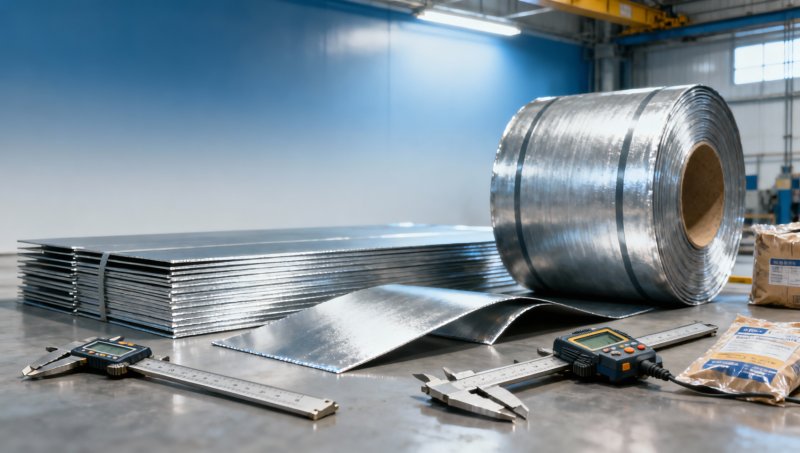
In the steel industry, purchasing errors rarely come from one dramatic problem. More often, they come from small assumptions made at the quotation stage. A buyer compares only price per ton, while a technical team cares about coating uniformity, and the project manager focuses on delivery within 2–4 weeks. When these criteria are not aligned, galvanised steel sheet can become a hidden source of delay, rework, or warranty risk.
This is especially common in B2B procurement where the same material may be used for roofing panels, ducting, cabinets, roll forming, or structural accessories. A sheet that is acceptable for one process may fail in another if the zinc coating, substrate grade, or flatness tolerance is unsuitable. That is why experienced buyers review at least 3 core dimensions before ordering: base steel specification, coating type, and downstream processing method.
For importers, distributors, and project-based contractors, another challenge is communication accuracy. Terms such as galvanised sheet steel, GI sheet, coated steel sheet, and zinc coated sheet are often used loosely in international trade. However, commercial language should not replace technical confirmation. Thickness may refer to total thickness or base metal thickness, and coating may be specified in g/m2 or by local market naming conventions.
Hongteng Fengda supports global buyers by combining structural steel manufacturing experience with strict process control and export-oriented documentation. For customers in North America, Europe, the Middle East, and Southeast Asia, this matters because standards such as ASTM, EN, JIS, and GB are not interchangeable by default. A reliable supplier helps reduce sourcing risk long before the container is loaded.
The most common causes behind poor purchasing decisions
- Price-first evaluation without checking coating mass, tolerance range, or suitability for bending, welding, or stamping.
- Unclear technical specifications, such as requesting “1.0 mm galvanised steel sheet” without confirming whether that means nominal thickness, actual thickness, or tolerance class.
- Ignoring end-use conditions, especially in coastal, industrial, or humid environments where zinc coating level directly affects service life.
- Insufficient supplier assessment, including lack of review of production capability, quality records, packaging method, and delivery consistency.
Which buying mistakes create the highest cost and performance risk?
The first major mistake is treating all galvanised steel sheet as a commodity with no meaningful technical differences. In reality, even a small variation in coating mass can change corrosion performance significantly across mild, medium, and severe exposure conditions. For outdoor use, storage yards, roofing support parts, or industrial enclosures, choosing the wrong coating level may shorten useful life and increase maintenance frequency within the first 12–24 months.
The second mistake is overlooking thickness tolerance. Many buyers compare only nominal values such as 0.5 mm, 1.2 mm, or 2.0 mm. But downstream users and quality teams know that tolerance affects forming stability, load consistency, and even paint adhesion in later processes. If a project requires repeated bending or roll forming, a tolerance issue of even a few tenths can trigger production scrap or fitting problems on site.
The third mistake is failing to define the intended process route. Galvanised sheet used for laser cutting, punching, pressing, welding, or profiling should not be sourced in the same way. Buyers should clarify at least 4 items before confirming the order: final application, forming radius, surface requirement, and whether post-processing such as painting or punching is required. This reduces disputes between purchasing, production, and QC teams.
The fourth mistake is underestimating logistics and packaging. Sheets that meet mill requirements can still arrive with edge damage, white rust, or surface marking if packaging, moisture control, and shipment planning are weak. For export business, stable lead time is not only a factory issue. It also depends on batch planning, rust-prevention handling, and clear inspection records before dispatch.
Key mistakes and their direct consequences
The table below helps procurement teams, engineers, and commercial evaluators identify where galvanised steel sheet buying mistakes usually happen and what the practical impact looks like in daily operations.
For most buyers, the lesson is simple: low visible price does not equal low procurement cost. When galvanised steel sheet must perform across a 6-month inventory cycle or a multi-stage installation schedule, technical consistency becomes a financial issue as well.
What should you check before placing an order?
A disciplined procurement checklist can prevent most avoidable errors. Whether you are a distributor building stock, a project buyer sourcing for phased delivery, or a fabricator ordering for conversion, the first step is to define the operating environment. Indoor dry use and outdoor industrial use do not require the same corrosion protection. In many projects, 5 key checks are enough to separate a suitable offer from a risky one.
Those 5 checks are material grade, sheet thickness and tolerance, zinc coating range, surface condition, and packaging standard. If one of these is missing from the quotation, the buyer is not really comparing equivalent products. This is where commercial teams should work together with quality and technical staff instead of relying on a single inquiry line.
Buyers should also ask how inspection is managed. In export steel business, practical control often includes coil or sheet identification, thickness verification, coating confirmation, visual surface review, and packing inspection. These are not complicated steps, but they matter. A 4-step internal inspection process usually prevents far more cost than it adds.
For companies sourcing multiple steel products, supplier coordination also matters. Many projects use galvanised sheet together with channels, angles, beams, or fabricated structural components. Working with a manufacturer-exporter that understands specification matching across product categories can reduce communication gaps and simplify schedules, especially for orders moving in 2–3 batches.
Practical procurement checklist for galvanised sheet steel
- Confirm whether the application is indoor, outdoor, coastal, or industrial, and match the zinc coating accordingly.
- Specify nominal thickness and acceptable tolerance range instead of using a single value without context.
- State whether the sheet will be bent, roll formed, stamped, laser cut, welded, or painted after delivery.
- Request the applicable standard such as ASTM, EN, JIS, or GB when the project has formal compliance requirements.
- Ask for packing details, export marking, and batch traceability if the goods will travel long distances or stay in storage for several weeks.
A useful comparison matrix before supplier selection
The following table can be used by procurement, finance, QC, and project teams to compare offers on more than just headline price. It is particularly useful when evaluating 2–3 suppliers for the same galvanised steel sheet requirement.
A structured comparison like this often reveals that the best supplier is not the one with the lowest initial quote, but the one with the lowest risk across quality, compliance, and delivery.
How do standards, coating levels, and related products affect your decision?
Standards are not just paperwork. In galvanised steel sheet purchasing, they define the language used for thickness, substrate properties, coating designation, and inspection basis. When buyers switch between ASTM, EN, JIS, and GB without translating requirements correctly, misunderstandings follow. A technical evaluator should always check whether the quoted material matches the project specification in performance terms, not only in familiar naming.
Coating choice should also reflect the service environment. For mild indoor conditions, a lower zinc level may be commercially acceptable. For medium corrosion conditions such as general outdoor use, a higher range is often preferred. In severe corrosion conditions such as marine influence or heavy industrial exposure, buyers should discuss more robust coating strategies and maintenance expectations over the expected service cycle.
Midway through many construction or industrial projects, buyers also realize that galvanised flat products are only one part of the corrosion-protected material package. Lifting, handling, or safety applications may require galvanized rope products with different coating and strength logic. For example, Galvanized Steel Wire Rope is used in mining, loading, elevators, cranes, drilling, agriculture, and cableway systems, with common diameters from 1.0 mm to 22 mm and normal tensile strength from 1470 MPa to 1960 MPa.
That product category also shows why buyers should not generalize galvanizing decisions across all steel products. Thin, medium, and thick galvanized groups can correspond to zinc coating amounts such as 15–135 g/m2, 60–200 g/m2, or 75–260 g/m2 depending on corrosion conditions and use. In other words, the right coating strategy depends on application, handling method, and service environment rather than a single purchasing habit.
What compliance-aware buyers usually verify
- Whether the quotation clearly states the applicable standard and whether the project team accepts equivalent standards.
- Whether the coating designation and test basis are defined in measurable terms rather than informal trade wording.
- Whether the product will be stored, fabricated, or installed in a humidity range or corrosion class that requires upgraded protection.
- Whether related galvanized products in the same project need aligned sourcing, documentation, and delivery planning.
FAQ: what do professional buyers ask before they commit?
The questions below reflect real search and procurement intent. They are relevant for technical reviewers, purchasing teams, distributors, financial approvers, and project managers trying to reduce errors before issuing a purchase order.
How do I choose the right galvanised steel sheet for different applications?
Start with 3 variables: environment, fabrication method, and expected service duration. A sheet for indoor cabinet production may prioritize surface consistency and formability. A sheet for outdoor construction accessories may prioritize coating mass and dimensional stability. If the material will be bent, punched, or welded, make sure the supplier understands the full processing route before confirming grade and coating.
What is the most overlooked issue in galvanised sheet steel procurement?
The most overlooked issue is mismatch between quotation language and actual technical requirement. Buyers often request a common product name and a thickness value, but omit coating range, tolerance, and end use. That creates a gap between the commercial offer and the production reality. In many cases, solving this requires only a short technical checklist completed before order approval.
How long is the normal lead time for export orders?
Lead time varies by specification, quantity, and customization level. In practical trade, standard products may move faster than custom dimensions or project-specific compliance orders. Buyers should ask separately about production cycle, inspection time, and shipping readiness, because a nominal 2–4 week factory schedule can still be affected by packaging preparation and vessel booking.
Should finance teams care about coating and tolerance details?
Yes, because these details affect total cost, not just technical quality. Poorly matched galvanised steel sheet can increase wastage, reprocessing, installation delays, and maintenance exposure. A slightly higher-priced material that meets coating, tolerance, and compliance requirements may lower total project cost over a 6–12 month execution window.
Why work with Hongteng Fengda for steel sourcing and project support?
For global buyers, the real value of a steel supplier is not limited to manufacturing. It includes how well the supplier translates project needs into workable specifications, realistic delivery planning, and stable quality execution. Hongteng Fengda combines structural steel manufacturing and export experience to support customers sourcing for construction, industrial production, manufacturing, and distribution channels.
Our product scope includes angle steel, channel steel, steel beams, cold formed steel profiles, and customized structural steel components, with support for standard specifications and OEM supply. That broader capability helps customers who are not buying a single item, but managing a package of steel materials across one project or multiple procurement stages.
With modern manufacturing facilities and strict quality control, we support requirements aligned with major international standards including ASTM, EN, JIS, and GB. For buyers, this means more practical help in confirming parameters, checking compatibility, managing export documentation, and reducing sourcing uncertainty before production starts. It is especially useful when internal teams need to align technical review, budget approval, and delivery timing within 1 coordinated process.
If you are comparing galvanised steel sheet suppliers, contact us for parameter confirmation, product selection, coating and tolerance discussion, delivery schedule review, custom steel solutions, certification-related questions, sample support, or quotation planning. A clear inquiry with application, size range, coating requirement, target standard, and quantity plan can shorten decision time and improve quotation accuracy from the first round.
Please give us a message


Please enter what you want to find