Galv steel tube price differences often trace back to hidden specs such as coating weight, wall thickness tolerance, steel standards, and testing requirements. For buyers comparing industrial pipes, electrical conduit galvanized products, or ASTM A106 Gr B options, understanding these details is essential to control cost, quality, and project risk before placing an order.
Why do galvanized steel tube prices vary so much?
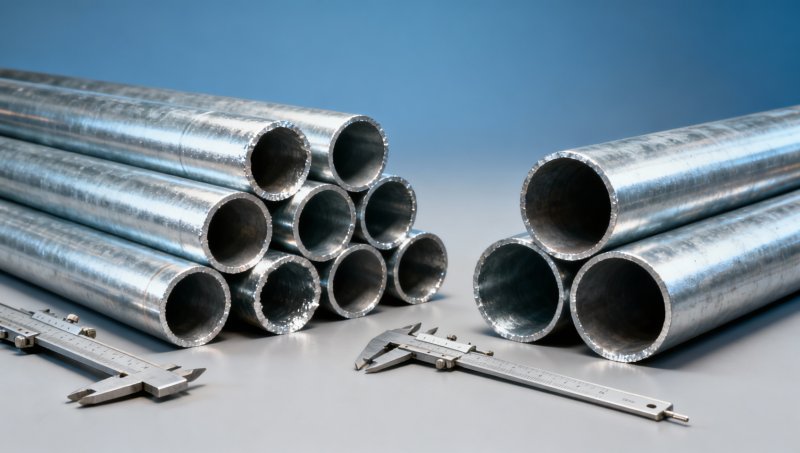
In steel procurement, a low quoted price for a galvanized steel tube often looks attractive at first glance. However, experienced buyers know that the gap between two offers can come from several hidden technical items rather than from supplier margin alone. In many projects, the real difference lies in zinc coating weight, base steel grade, wall thickness tolerance, straightness, end finishing, and testing scope.
For information researchers and purchasing teams, this matters because a tube that looks identical in photos may perform very differently in outdoor construction, conduit protection, fluid transport, or mechanical support. A coating difference such as Z100 versus Z275 can affect corrosion resistance cycles. A wall tolerance of ±0.1 mm versus ±0.3 mm can affect fit-up, welding, and load distribution in fabrication.
Technical evaluators, project managers, and quality control staff also need to look beyond headline unit price. If a quote excludes hydrostatic testing, third-party inspection, or detailed mill test reports, the initial saving may later turn into rework, project delay, or compliance disputes. In international sourcing, even a 7–15 day delay in replacement material can disrupt site schedules and payment milestones.
Hongteng Fengda works with global buyers that need structural steel and related fabricated solutions with stable production, clear specifications, and dependable lead times. For many B2B customers, especially those handling ASTM, EN, JIS, or GB requirements, the practical question is not only “What is the lowest price?” but “What exactly is included in this price, and what risk remains outside it?”
The most common hidden specifications behind price gaps
A galvanized tube quotation usually becomes difficult to compare when one supplier lists only size and weight, while another includes coating class, chemical composition limits, mechanical properties, inspection items, and packing terms. That is why two quotes for the same nominal OD and thickness can differ by 5%–20% without either one being “wrong.” They are simply not offering the same scope.
- Coating mass and process: pre-galvanized and hot-dip galvanized tubes have different corrosion performance, surface appearance, and cost structure.
- Wall thickness tolerance: thinner actual walls reduce weight and price, but may weaken structural or conduit performance.
- Steel standard and grade: ASTM, EN, JIS, and GB references affect chemistry, yield strength, and test obligations.
- Inspection package: visual checks, dimensional checks, coating tests, flattening tests, and MTC documentation all add value and cost.
Which specifications should buyers compare before approving a quote?
When comparing galvanized steel tube offers, procurement and finance teams should align technical and commercial terms in one evaluation sheet. This is the easiest way to avoid approving a low price that later causes hidden cost. In most projects, 5 core checkpoints should appear before final comparison: standard, actual dimensions, coating level, test scope, and delivery condition.
The table below highlights where price gaps usually come from in practical steel buying. It is especially useful for buyers comparing industrial pipes, electrical conduit galvanized products, and structural support tubes sourced from multiple regions.
A useful rule is to compare total delivered value, not just ex-works or FOB price. A quote that is 8% higher may still be commercially better if it includes tighter tolerance, stronger coating, and a complete inspection set. For project owners and commercial evaluators, that often means lower risk across the full 2–4 week procurement and installation cycle.
How technical teams can check a tube quotation quickly
For technical assessment personnel and site users, a quick review process can prevent mismatches early. Instead of reading every line of a long offer, use a 4-step check. First, confirm the governing standard. Second, confirm nominal versus actual dimensions. Third, confirm galvanizing type and coating requirement. Fourth, confirm what tests and documents are included before shipment.
- Match the application to the correct tube category, such as structural tube, conduit tube, or pressure-related pipe.
- Check whether ASTM A106 Gr B or another standard is actually appropriate, since not all galvanized applications use the same base standard.
- Review tolerance, length, end treatment, and bundle packing to avoid handling or installation problems.
- Ask for MTC, coating details, and any third-party inspection requirement before PO release.
This disciplined process helps distributors, contractors, and OEM buyers compare offers on the same basis. It also supports finance approval because the cost increase, if any, can be tied to measurable quality content rather than vague claims.
How hidden specs affect cost, service life, and project risk
A galvanized steel tube is rarely judged only by purchase price after installation. End users care about corrosion resistance, cut and weld behavior, dimensional consistency, and whether the tube passes site inspection without dispute. In practical terms, a lower-cost tube can become more expensive if it requires additional coating repair, on-site sorting, or replacement after receiving inspection.
For example, in coastal, humid, or exposed industrial environments, the coating requirement usually deserves more attention than in dry indoor applications. The cost difference between a lighter coating and a heavier coating may be acceptable if the expected service interval is longer and maintenance frequency is lower. For maintenance teams, reducing one extra replacement cycle over 3–5 years can justify a stronger initial specification.
The same logic applies to dimensional accuracy. A small variance in OD, wall, or straightness may not matter for low-demand usage, but it matters a lot in assemblies that require repeatable fit-up. Fabricators, installers, and project managers often see the downstream cost first: slower assembly, more grinding, more rejects, and additional labor hours that were never reflected in the original tube price.
Companies sourcing from China often look for a balance between competitive manufacturing cost and predictable delivery quality. Hongteng Fengda supports this need with modern production capability, strict quality control, and familiarity with international standards. That combination helps buyers reduce sourcing uncertainty, especially when the order must move from technical review to production planning and shipping within a limited project window.
A practical cost view for different buyer roles
Not every department sees tube pricing in the same way. Procurement may focus on unit cost, engineering on compliance, operations on usability, and finance on budget protection. A good steel sourcing decision connects all four views so that the final order reflects total project economics rather than one isolated metric.
The table below summarizes how hidden specs influence total cost in real buying situations.
This is why the best buying decision is often the quote with the clearest technical definition, not the cheapest headline number. Clear specification reduces hidden cost at receiving, fabrication, installation, and later maintenance stages.
What can be learned from related structural steel products in specification control?
The same principle applies across other steel categories. When buyers source rails, beams, channels, or custom structural components, hidden differences in material, tolerance, surface condition, and certification can also change the true value of a quotation. That is why disciplined specification review is not only for galvanized tube procurement.
As one example, Rail products used in railway systems, bridge railings, or deck handrail applications require the same close attention to material and dimensional details. Available grades can include U74, U71Mn, PD2, PD3, Q235, 55Q, 50Q, U71, and 45Mn. Typical technical ranges include thickness from 3 mm to 24 mm, rail height from 134 mm to 170 mm, head width from 68 mm to 73 mm, bottom width from 114 mm to 150 mm, and tolerance around ±1%.
For project managers and technical buyers, these numbers matter because product function depends on precise geometry and material behavior. Length may range from 12 m to 30 m based on project demand. Surface condition may be oil, black, galvanized, or painted. Common specifications include 4 kg/m to 50 kg/m and heavy sections such as QU70, QU80, QU100, and QU120. If these details are missing from a quote, price comparison becomes unreliable.
Hongteng Fengda’s broader structural steel experience is useful here. A supplier that regularly handles angle steel, channel steel, steel beams, cold formed profiles, and customized structural components is usually better positioned to understand why tolerances, standards, and surface treatments must be clearly defined at quotation stage. This helps reduce sourcing risk across mixed-product projects where several steel items are purchased under one schedule.
Specification transparency is the real comparison baseline
Whether the product is galvanized tube or another structural steel item, experienced buyers create a comparison baseline before they negotiate price. That baseline should include 6 key lines: grade, standard, dimensions, tolerance, surface treatment, and inspection documents. Once these are fixed, negotiation becomes more meaningful because the offers refer to the same deliverable.
- Use one approved technical sheet for all suppliers in the RFQ stage.
- Separate mandatory requirements from optional upgrades, such as stronger coating or extra inspection.
- Ask suppliers to mark deviations clearly instead of hiding them in footnotes.
- Review logistics, packing, and delivery schedule together with product specs.
This method is practical for distributors, OEM buyers, EPC contractors, and end users. It gives technical clarity to engineering teams and commercial clarity to procurement and finance teams at the same time.
FAQ: what do buyers ask most about galvanized steel tube pricing?
Below are the questions that usually appear when companies compare galvanized steel tube quotes from multiple suppliers. These are especially relevant for B2B imports, project tenders, and repeat industrial procurement.
Is the lowest galvanized steel tube quote usually the best deal?
Not necessarily. If the lower quote uses lighter coating, wider thickness tolerance, or reduced testing, it may create additional cost later. The better deal is the one that meets the project requirement with the lowest total risk. In many cases, a small price increase at purchase stage can prevent rework, rejection, or maintenance cost during the next 12–36 months of service.
What should I ask a supplier before I compare offers?
Ask for 5 items in writing: applicable standard, actual dimensional tolerance, galvanizing method and coating level, inspection scope, and document package. If needed, also confirm delivery term, packing, and production lead time. A common lead time for standard steel orders may be around 2–4 weeks, but it depends on quantity, customization, and shipping method.
Are ASTM A106 Gr B and galvanized tube always the same purchasing category?
No. ASTM A106 Gr B is commonly associated with seamless carbon steel pipe for high-temperature service, while galvanized tube selection depends on actual application and finishing requirement. Buyers should not assume that every pipe standard, structural tube, and conduit tube is directly interchangeable. The correct standard must be matched to pressure, fabrication method, corrosion exposure, and approval requirement.
How can distributors and project buyers reduce sourcing risk?
Start with a specification checklist, then request clear deviations from each supplier. For medium and large orders, consider pre-shipment inspection or third-party verification when required by contract. It is also wise to confirm whether the supplier has experience with ASTM, EN, JIS, or GB compliance and whether they can support OEM dimensions, custom fabrication, or mixed structural steel supply in one shipment.
Why work with a structural steel manufacturer that understands specification-driven buying?
For global buyers, steel sourcing becomes easier when the supplier can explain where price differences come from and how each specification affects use, compliance, and delivery. Hongteng Fengda supplies structural steel products and customized solutions for construction, industrial, and manufacturing projects, with experience serving North America, Europe, the Middle East, and Southeast Asia.
This matters for purchasing managers, technical reviewers, and decision makers because steel orders often involve more than one product family. A supplier with modern manufacturing facilities, strict quality control, and familiarity with ASTM, EN, JIS, and GB standards can support standard specifications as well as OEM requirements with clearer communication and lower sourcing friction.
If you are comparing galvanized steel tube prices, the most productive next step is to review the quotation line by line before making a price-only decision. You can discuss coating requirement, dimensional tolerance, base steel standard, testing scope, delivery schedule, packaging method, sample support, and whether a customized solution is more suitable for your project.
Contact Hongteng Fengda for practical support on parameter confirmation, product selection, lead time planning, certification alignment, OEM fabrication, and quotation comparison. If needed, you can also ask for assistance in reviewing hidden specification gaps across competing offers so your team can make a more confident technical and commercial decision.
Please give us a message


Please enter what you want to find