Choosing the right equal angle steel is critical for ensuring structural stability, load performance, and cost efficiency in construction and industrial projects. For project managers and engineering leaders, matching size to actual support needs helps reduce overdesign, avoid material waste, and improve procurement decisions. This guide explains how to evaluate dimensions, thickness, and application requirements for better project results.
How should project teams evaluate equal angle steel before ordering?
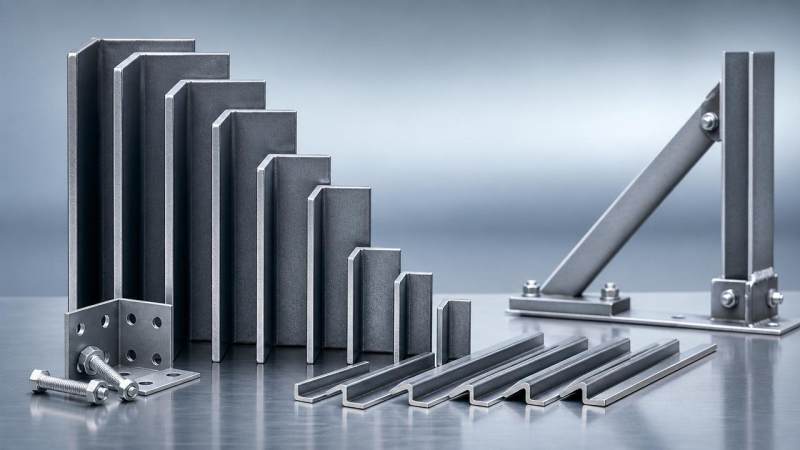
Equal angle steel is an L-shaped structural section with two legs of the same length. It is widely used in frames, brackets, supports, edge reinforcements, towers, equipment bases, walkways, and secondary steel structures. For project managers, the challenge is not simply buying angle steel, but selecting a size that matches actual support demands without creating unnecessary steel tonnage.
In real projects, equal angle steel selection affects more than member strength. It also influences welding volume, bolt layout, transport efficiency, installation speed, and total procurement cost. When the size is too small, deflection, instability, or connection weakness may appear. When the size is too large, budgets increase, fabrication becomes heavier, and the project may suffer from avoidable overdesign.
This is especially important in international sourcing. Buyers often compare ASTM, EN, JIS, and GB-based specifications while also balancing lead time, corrosion conditions, and fabrication requirements. A reliable structural steel supplier should support that process with dimensional consistency, material traceability, and practical selection advice instead of just offering a price list.
- Define the member function first: brace, shelf support, equipment frame, lintel angle, or connection element.
- Check loading conditions: dead load, live load, wind load, vibration, impact, and possible future load increase.
- Confirm connection details early, because bolt edge distance, hole spacing, and weld length can limit usable angle sizes.
- Match specification to project standards and destination market requirements before production starts.
What size factors matter most when matching equal angle steel to support needs?
When engineers discuss equal angle steel size, they usually focus on three primary dimensions: leg length, thickness, and section length. Each one changes load capacity and fabrication behavior. Leg length affects bearing area and eccentricity control. Thickness influences local strength, weldability, and resistance to deformation at connections. Member length changes slenderness and therefore stability.
The same equal angle steel may perform well in a short bracket but fail to meet serviceability requirements in a long unsupported span. That is why project teams should review not just the section size itself, but also the support spacing, restraint condition, fixing method, and load direction. In many site conditions, the support detail is the deciding factor rather than the steel weight alone.
The table below helps project managers quickly connect common size variables with practical support decisions for equal angle steel procurement.
For project execution, these factors should be reviewed together rather than separately. A thicker section may solve a local connection issue, but if the unsupported length remains too long, the equal angle steel still may not meet performance expectations. Good selection comes from load path review, not isolated dimension checking.
Typical support conditions that change the right size
A wall-mounted support bracket usually requires attention to bolt pull-out, plate stiffness, and local bending. A roof purlin restraint angle needs better corrosion planning and dimensional accuracy. A machinery platform brace may require tighter tolerance and better resistance to vibration. The correct equal angle steel size depends on where and how the load enters the member.
- Short, fixed-end brackets often benefit from thicker legs to improve bolt and weld performance.
- Long braces require checks for buckling and connection eccentricity, not only nominal section weight.
- Outdoor framing should consider coating, drainage, and corrosion allowance from the start.
Which equal angle steel sizes fit common project applications?
Project managers often need a fast screening method before sending a request for quotation. While final section selection should follow structural calculations and applicable standards, application-based grouping helps narrow options early. This approach improves communication between procurement teams, design engineers, and suppliers.
The following table shows a practical reference for matching equal angle steel to different support roles. It is not a replacement for engineering verification, but it helps teams shortlist sizes based on common project conditions.
This table also highlights a frequent sourcing mistake: teams focus on nominal dimension but ignore service conditions. In many factory, utility, and exterior applications, durability strategy matters as much as section size. A lower initial steel price can become more expensive if coating performance, installation efficiency, or replacement cycles are weak.
For some projects, equal angle steel works alongside sheet and coil materials in enclosure or support systems. For example, when structural framing interfaces with roof or wall packages, corrosion-resistant products such as DX53D Galvalume Steel Coil may be specified in associated building elements. That does not replace angle steel, but it improves the overall durability strategy of the project envelope.
How do load, connection, and environment change the final choice?
A sound equal angle steel decision always combines structural demand with fabrication reality. Load magnitude alone is not enough. A lightly loaded member with poor connection geometry may still fail in service. Likewise, a member that is structurally adequate in dry indoor conditions may lose performance faster in marine, agricultural, or industrial environments if corrosion protection is not addressed.
Load-related checks
Project teams should classify whether the equal angle steel carries tension, compression, bending, or a combination. Compression members require more attention to slenderness and restraint. Eccentric loading is common in angle applications because the load often does not pass through the shear center. This can create torsional effects that smaller sections may not handle well.
Connection-related checks
Bolted angles need sufficient leg width for edge distance and washer seating. Welded angles must account for heat input and accessible weld paths. If the support assembly includes gusset plates, base plates, or slotted holes, the detail can quickly rule out certain sizes even before structural capacity becomes the main concern.
Environmental checks
Corrosive and high-humidity environments may justify a stronger coating strategy, thicker sacrificial allowance, or even a different integrated material plan around the steel support system. In enclosure-linked projects, specifying compatible products matters. In some roof, wall, agricultural, or appliance-related assemblies, DX53D Galvalume Steel Coil is valued for corrosion resistance, heat reflectivity, adhesion, and formability, with typical thickness options from 0.4 mm to 3 mm and compliance references such as GB, AISI, ASTM, JIS, and DIN.
For project managers, the lesson is simple: section size selection should support the entire system. The best equal angle steel choice is the one that works structurally, fits fabrication, meets standards, and aligns with the project environment over time.
What procurement mistakes increase risk and cost?
Many sourcing problems come from incomplete technical communication rather than steel quality itself. When the purchase order only lists a generic equal angle steel size without grade, standard, tolerance expectation, length requirement, coating, or inspection scope, the risk moves downstream into fabrication and installation. That often creates delays, rework, and claims.
- Ordering by habit instead of actual load case, which leads to either overdesign or underperformance.
- Ignoring standard differences between markets, especially when converting between metric and imperial specification systems.
- Failing to align angle length, hole pattern, and cutting needs with the fabricator before mass production.
- Comparing suppliers only by base steel price without reviewing dimensional consistency, packaging, documentation, and shipment reliability.
For global projects, supplier capability matters because equal angle steel is rarely a standalone item. It often ships with channels, beams, cold formed profiles, plates, or custom components. Working with a manufacturer that understands integrated structural packages can reduce coordination cost and simplify delivery planning.
Why do standards, tolerances, and supplier capability matter so much?
Project success depends not only on nominal equal angle steel dimensions, but also on repeatability and compliance. International projects may require conformance to ASTM, EN, JIS, or GB-related specifications, depending on design basis and destination market. Even when different standards are technically comparable, substitution should never be assumed without engineering confirmation.
Tolerance control is equally important. If leg length varies too much, bolted assemblies may misalign. If thickness variation exceeds expectation, weld procedures and connection detailing can be affected. These issues become more visible in modular construction, prefabricated industrial frames, and projects with tight installation windows.
- Ask for the applicable manufacturing standard and material grade at quotation stage.
- Confirm mill testing, dimensional inspection, and marking method before order release.
- Clarify whether you need standard lengths, cut-to-length supply, punching, or OEM fabrication support.
- Review export packaging and container loading plans when long sections or mixed steel products are involved.
Hongteng Fengda supports global construction, industrial, and manufacturing projects with angle steel, channel steel, steel beams, cold formed steel profiles, and customized structural steel components. For project leaders, this matters because a supplier with modern production facilities, strict quality control, and experience across North America, Europe, the Middle East, and Southeast Asia can help reduce sourcing risk and improve delivery predictability.
FAQ: what do project managers ask most about equal angle steel?
How do I know if equal angle steel is better than another section?
Equal angle steel is often a strong choice for braces, supports, frames, and connection members because it is versatile, available in many sizes, and relatively easy to fabricate. However, if torsion, major-axis bending, or architectural exposure is critical, channels, rectangular tubes, or other profiles may provide better efficiency. The right answer depends on load path, connection detail, and total installed cost.
What should be included in an RFQ for equal angle steel?
A good RFQ should include section size, material grade, applicable standard, quantity, length requirement, surface treatment, destination country, inspection need, and any fabrication details such as punching or cutting. If the equal angle steel will connect to other steel members, share drawings or at least a connection sketch. This reduces quotation gaps and avoids disputes later.
How can I reduce cost without creating structural risk?
Start by reviewing whether all members truly need the same equal angle steel size. Many projects can optimize by grouping supports according to actual load zones. Also review whether standard lengths can reduce cutting waste, whether coating strategy matches the actual environment, and whether a combined order with other structural items can improve logistics efficiency.
What lead time issues should I watch in imported structural steel?
Lead time is affected by rolling schedule, customization level, coating or secondary processing, documentation, and shipping space. Mixed orders with beams, channels, and custom structural components need early coordination. For tight project schedules, confirm production capacity, inspection timing, and shipment split options before finalizing the order.
Why choose us for equal angle steel sourcing and project support?
For project managers and engineering leaders, the main goal is not simply to buy equal angle steel. It is to secure a section that fits the load case, meets the standard, arrives on time, and works smoothly with the wider steel package. Hongteng Fengda focuses on that full project perspective through stable production, quality consistency, and support for both standard and customized structural steel supply.
If you are evaluating equal angle steel for construction, industrial equipment, manufacturing lines, utility supports, or export projects, you can contact us for practical assistance on key decision points. These include parameter confirmation, section selection, material standard matching, delivery schedule review, custom processing options, coating coordination, sample support, and quotation discussion based on your drawings or bill of materials.
A clearer technical review at the start usually prevents costly changes later. Share your required size range, application scenario, target standard, and project timeline, and our team can help you assess the most suitable equal angle steel solution for performance, compliance, and procurement efficiency.
Please give us a message


Please enter what you want to find