Custom steel profiles pay off when standard sections cannot meet exact load, fit, or installation demands. For buyers comparing custom steel profiles with angle steel, hot dip galvanized angle steel, or cold formed options, the real value lies in reduced waste, faster assembly, and better structural steel benefits. This article explains when customization improves project performance, cost control, and long-term reliability for construction and industrial applications.
When Do Custom Steel Profiles Actually Pay Off?
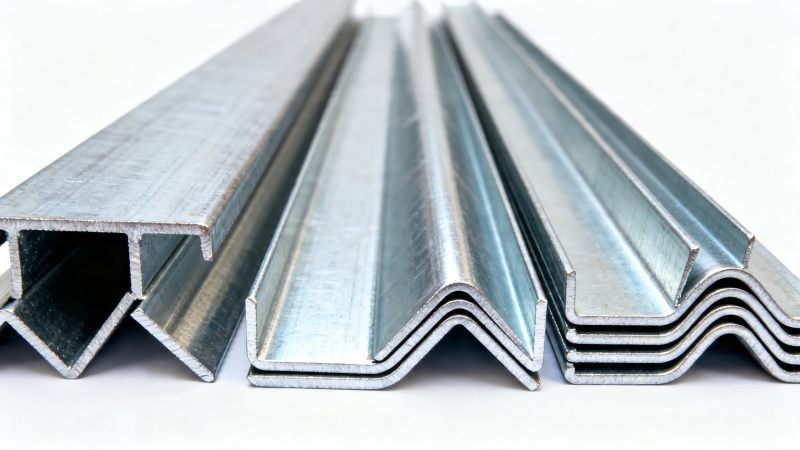
The core search intent behind this topic is practical: buyers, engineers, and project teams want to know whether custom steel profiles create enough value to justify higher upfront tooling, design, or procurement effort. In most cases, the answer is simple: custom sections make sense when they solve a costly problem that standard profiles cannot solve efficiently.
That usually happens in projects with one or more of the following conditions:
- Non-standard load requirements that standard angle steel, channel steel, or beams cannot optimize
- Tight installation space or connection constraints
- High-volume projects where material savings repeat across many units
- Fabrication-heavy projects where custom geometry can reduce welding, cutting, drilling, or rework
- Corrosive or outdoor environments that require special surface treatment or profile design
- OEM or modular production where consistency and assembly speed directly affect total cost
If a standard section can do the job safely, economically, and without extra fabrication, custom design may not be necessary. But when standard steel leads to waste, difficult fitting, excess labor, or performance compromises, custom profiles often become the better business decision.
What Decision-Makers Care About Most Before Choosing a Custom Section
Different stakeholders evaluate custom structural steel from different angles, but their concerns often overlap.
- Engineers and technical evaluators focus on load performance, section efficiency, dimensional accuracy, and compliance with ASTM, EN, JIS, or GB standards.
- Procurement and commercial teams care about unit cost, tooling cost, MOQ, lead time, and supply stability.
- Project managers look at installation speed, coordination risk, and whether the design reduces on-site problems.
- Quality and safety teams want consistency, traceability, surface quality, coating reliability, and predictable performance.
- Financial approvers and business leaders want proof that higher initial cost leads to measurable lifecycle savings or better project outcomes.
Because of that, the best way to evaluate custom steel profiles is not by comparing price per ton alone. A smarter comparison looks at total installed cost, operational efficiency, failure risk, and long-term maintenance impact.
How Custom Steel Profiles Create Real Value Beyond Material Cost
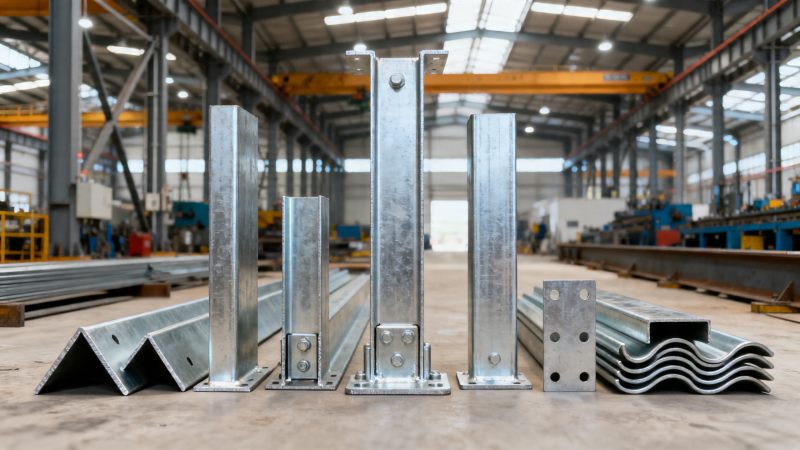
Custom sections usually pay off through savings elsewhere in the project. This is where many sourcing decisions become clearer.
1. Lower material waste
Standard steel sections are made for broad market demand, not for your exact geometry. That often means overdesign. A custom profile can place steel where strength is needed and reduce unnecessary mass where it is not. In repetitive projects, even small weight reductions can produce significant savings.
2. Faster fabrication and assembly
If a standard profile requires extensive cutting, welding, stiffening, drilling, or fitting, the apparent lower purchase price can disappear quickly. A custom section can arrive closer to final-use condition, reducing shop work and field labor.
3. Better structural efficiency
Custom geometry can improve stiffness, load distribution, connection performance, or fit within constrained spaces. This matters in industrial structures, equipment frames, support systems, and modular construction.
4. Improved installation reliability
Profiles designed for the actual connection method and installation sequence can reduce alignment issues and on-site modifications. That lowers delay risk and helps projects stay on schedule.
5. Stronger long-term durability
In outdoor, marine, industrial, or humid environments, the right profile design combined with proper galvanizing or surface treatment can support better corrosion performance and lower maintenance needs.
In related applications, buyers often apply the same logic to other steel components where environment, tensile strength, and coating performance directly affect service life. For example, projects in lifting, mining, marine, drilling, and infrastructure sectors may also evaluate Galvanized Steel Wire Rope 1470Mpa to 1960Mpa when they need specific tensile strength ranges, diameters from 1.0 mm to 22 mm, and coating options such as plain, electro galvanized, or hot dipped galvanized. Depending on corrosion conditions, different zinc coating levels can be selected, while standards such as GB/T 20116-2008, DIN, ISO 9001, EIPS, and ABS help support quality expectations.
When Standard Steel Sections Are Still the Better Choice
Custom does not automatically mean better. Standard sections remain the right option in many scenarios.
- Project quantities are low and tooling cost cannot be spread effectively
- Lead time is urgent and custom production would slow procurement
- The structural requirement is simple and standard profiles already meet it efficiently
- Fabrication changes are minimal, so custom geometry offers little labor reduction
- The buyer wants easier multi-source availability in local markets
For many general construction uses, standard angle steel, channel steel, steel beams, or cold formed steel profiles remain cost-effective and practical. The key is not to customize by default, but to customize only where the value is measurable.
How to Tell If the ROI of a Custom Steel Profile Is Worth It
A useful evaluation method is to ask five practical questions:
- Will a custom profile reduce total installed cost?
Include cutting, welding, labor, fitting, scrap, transport efficiency, and maintenance, not just mill price. - Will it improve project speed?
Faster assembly and fewer site adjustments can be worth more than small material savings. - Will it reduce technical or quality risk?
If custom design improves tolerance control, fit, or coating durability, it may prevent expensive downstream issues. - Is the project volume high enough?
Repeated use across many units, buildings, or product lines improves the business case. - Does the supplier have the capability to deliver consistently?
Custom steel only pays off when manufacturing, quality control, and lead times are reliable.
If the answer is “yes” to at least several of these questions, custom profiles often make strong commercial sense.
Typical Applications Where Custom Steel Profiles Deliver the Best Return
Custom structural steel is especially valuable in applications where geometry, repetition, or performance demands are specific.
- Modular buildings and prefabricated construction systems
- Industrial equipment frames and machine supports
- Warehouse, logistics, and conveyor support structures
- Solar mounting and infrastructure systems
- Transportation, agricultural, and utility support components
- OEM steel parts requiring repeatable dimensions and efficient assembly
In these cases, custom cold formed steel profiles or specialized structural components can reduce secondary processing and improve consistency from one unit to the next.
What to Ask a Structural Steel Supplier Before Moving Forward
Choosing the right supplier is as important as choosing the right profile. Buyers should confirm:
- Which standards the supplier can produce to, such as ASTM, EN, JIS, and GB
- Whether they can support both standard and OEM/customized structural steel solutions
- What tolerances, coating options, testing, and inspection procedures are available
- How they manage production capacity and lead time for export orders
- Whether they have experience serving construction, industrial, and manufacturing customers in international markets
A capable manufacturer should be able to review drawings, recommend practical section optimization, and explain where customization adds value and where it does not. That kind of support helps buyers control sourcing risk and make better cost-performance decisions.
Conclusion: Custom Steel Profiles Pay Off When They Remove Hidden Costs
Custom steel profiles are worth the investment when they solve a real technical or commercial problem that standard sections cannot solve efficiently. Their biggest advantage is not simply uniqueness, but better fit, lower waste, faster assembly, improved performance, and more predictable project execution.
For buyers, engineers, and project teams, the right question is not “Is custom steel more expensive?” but “Does custom steel reduce total cost and risk across the whole project?” When the answer is yes, customization can deliver clear structural steel benefits and stronger long-term value.
For construction, industrial, and OEM applications, the best results usually come from working with a supplier that can offer both standard sections and customized solutions, backed by stable production, strict quality control, and international export experience.
Please give us a message


Please enter what you want to find