Choosing the right corrosion-resistant pipe for seawater systems is critical to long-term safety, cost control, and performance. For most buyers, the key question is not simply “which pipe resists seawater,” but “which material offers the best balance of corrosion resistance, mechanical reliability, fabrication practicality, compliance, and total lifecycle cost.” From stainless steel square pipe and welded stainless tubing to seamless steel tube, carbon pipe, and API 5L pipe, the right answer depends on chloride exposure, flow conditions, operating pressure, maintenance strategy, and project budget. This guide helps engineers, purchasers, and project teams compare practical pipe options for demanding marine applications and make better sourcing decisions.
What buyers really need to know before selecting seawater pipe
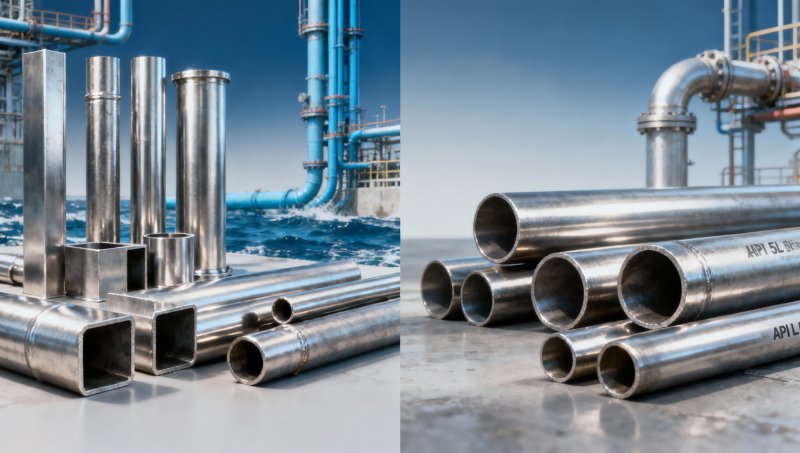
The core search intent behind corrosion-resistant pipe for seawater is evaluation and decision-making. Readers are usually trying to determine which pipe material is actually suitable for seawater service, how long it will last, where lower-cost options become risky, and what standards or specifications should be checked before purchase.
For technical teams, the biggest concern is localized corrosion. Seawater is highly aggressive because it contains chlorides, dissolved oxygen, biological activity, and often suspended solids. These conditions can trigger pitting, crevice corrosion, erosion-corrosion, galvanic attack, and under-deposit corrosion. A pipe that performs well in freshwater or mild industrial service may fail much faster in marine duty.
For procurement, project management, and commercial decision-makers, the concern is broader: initial price versus total installed and operating cost. A cheaper pipe may appear attractive at tender stage but create costly shutdowns, leaks, frequent replacement, coating failure, or inspection burden later. That is why seawater pipe selection should be based on lifecycle value rather than unit price alone.
In practical terms, the most useful evaluation questions are:
- What is the actual seawater exposure level: full immersion, splash zone, buried line, intake system, cooling circuit, or offshore processing?
- Is the system continuous-flow or intermittent service?
- What are the pressure, temperature, velocity, and solids content?
- Will welding, bending, or field fabrication affect corrosion performance?
- What inspection, maintenance, and replacement interval is acceptable?
- Which international standards and testing requirements must be met?
Which pipe materials are commonly considered for seawater systems
There is no single best material for every marine application. The most common options each have strengths and limitations.
Stainless steel square pipe and stainless steel tubing
Stainless steel is often considered first because of its corrosion resistance and clean surface. However, not all stainless grades are equally suitable for seawater. Standard 304 stainless is generally not recommended for long-term direct seawater exposure because chloride attack can lead to pitting and crevice corrosion. Higher-alloy grades such as 316/316L perform better, but even they may struggle in stagnant seawater or warm, high-chloride conditions.
For more demanding duty, duplex stainless steel or super duplex grades are often preferred. These offer stronger resistance to chloride-induced corrosion and higher mechanical strength, which can reduce wall thickness in some designs. Welded stainless tubing can be a good solution when weld quality, heat treatment practice, and corrosion-grade selection are properly controlled.
Seamless steel tube
Seamless steel tube is valued for pressure integrity, structural uniformity, and reliability in critical service. In seawater systems, however, the term “seamless” alone does not guarantee corrosion resistance. The corrosion behavior still depends on the base material, alloy chemistry, internal lining, coating, or cathodic protection strategy. Seamless stainless or alloy tube may be appropriate for critical high-pressure or high-integrity applications, while plain carbon seamless tube in raw seawater requires strong protective measures.
Carbon pipe and API 5L pipe
Carbon steel pipe and API 5L pipe are widely available, cost-effective, and commonly used in industrial piping and pipeline systems. They may be selected for seawater service when project economics are tight or when a proven corrosion-control system is part of the design. This typically includes internal lining, external coating, corrosion allowance, inhibitors in some closed systems, and cathodic protection.
Without proper protection, carbon steel corrodes too quickly in direct seawater exposure. It is usually more suitable for applications where the environment is controlled, design life is shorter, replacement is easier, or a robust protection system is validated.
Specialty alloys and non-metal alternatives
Depending on project conditions, engineers may also consider duplex stainless, copper-nickel, titanium, GRE/GRP, or lined piping systems. These are often chosen when corrosion risk is very high, maintenance access is difficult, or long design life justifies a higher upfront investment.
How seawater actually damages pipe systems
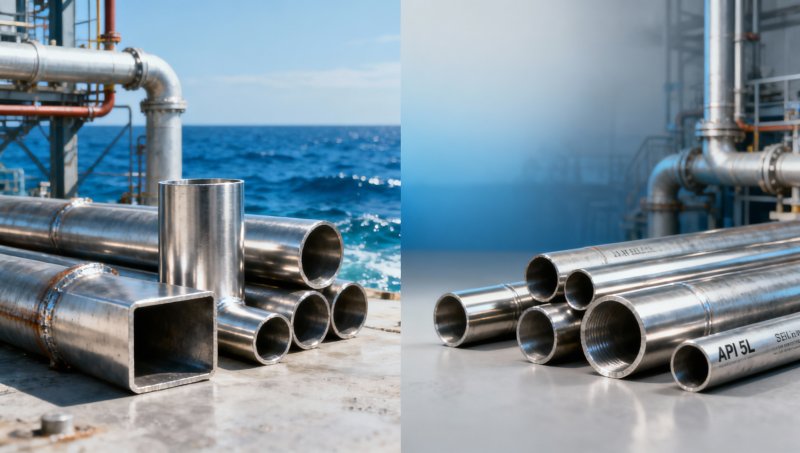
Understanding the main corrosion mechanisms helps buyers avoid expensive material mismatches.
- Pitting corrosion: Common in chloride-rich environments. It starts at small surface defects and can penetrate quickly.
- Crevice corrosion: Often occurs at flanges, gaskets, clamps, deposits, and shielded zones where oxygen concentration differs.
- Galvanic corrosion: Happens when dissimilar metals are electrically connected in seawater. The less noble metal corrodes faster.
- Erosion-corrosion: High-velocity seawater or suspended particles can wear away protective films and accelerate attack.
- MIC: Microbiologically influenced corrosion can occur in stagnant sections, dead legs, or systems with biofouling.
This is why material selection should never be based only on mechanical strength or nominal grade. Flow pattern, weld geometry, crevice design, shutdown frequency, and connection materials all affect real service life.
How to compare corrosion-resistant pipe options by application
The best choice depends on where and how the pipe is used.
Seawater intake and cooling systems
These systems often face continuous chloride exposure, variable temperatures, biofouling, and high flow. Duplex stainless, higher-alloy stainless, copper-nickel, or lined systems are commonly considered. If carbon steel is used, internal protection must be designed carefully and monitored throughout service life.
Marine structures and offshore platforms
For offshore and coastal applications, designers must consider not only seawater immersion but also splash zone exposure, which can be even more severe. In these cases, external coatings, cathodic protection, and material compatibility become essential. API 5L pipe may be used structurally or for line service where specification, coating system, and environmental controls match the project requirement.
Desalination and process piping
Desalination plants and process systems can expose materials to concentrated brine, elevated temperature, and chemically treated water. Corrosion risk may be much higher than in normal seawater. Stainless selection should therefore be more conservative, and full process chemistry should be reviewed before material approval.
Low-risk auxiliary service
For secondary systems with easier maintenance access, shorter service expectations, or lower corrosion exposure, more economical pipe solutions may still be acceptable if total risk remains manageable.
In many marine and shipbuilding projects, corrosion-resistant piping is only one part of the materials package. Buyers may also need anti-slip structural surfaces for access platforms, equipment zones, or deck-related fabrication. In such cases, products like 235JR Patterned steel plate can be integrated into the wider procurement plan where anti-skid performance, bending resistance, and reliable supply are important. With thickness options from 2-8mm, widths from 600mm-1800mm, and compliance references such as ASTM, JIS, DIN, GB/TC, ISO, SGS, and BV, it is relevant for transportation, construction, machinery, and shipbuilding support structures rather than direct seawater pipe duty.
What standards and quality checks should be reviewed before purchase
For technical assessment and procurement approval, documentation matters as much as the material itself. Buyers should ask suppliers to confirm:
- Applicable manufacturing standards such as ASTM, EN, JIS, GB, or API requirements
- Material grade and chemical composition
- Mechanical property test reports
- Corrosion-related qualification where required
- Weld procedure qualification and NDT records for welded pipe
- Dimensional tolerances and pressure test results
- Surface condition, passivation status, coating details, or lining information
- Traceability, inspection certificates, and third-party verification if required
Quality control is especially important for stainless and alloy pipe because improper welding, contamination, poor pickling/passivation, or mixed heat numbers can seriously reduce corrosion performance. For carbon steel seawater systems, coating adhesion, lining integrity, holiday testing, and cathodic protection compatibility should be checked carefully.
How to balance cost, service life, and sourcing risk
Many seawater piping decisions fail because the comparison is too narrow. The lowest material price does not mean the lowest project cost. A better framework includes:
- Initial procurement cost
- Fabrication and welding cost
- Installation complexity
- Expected maintenance frequency
- Inspection burden
- Shutdown or leakage risk
- Replacement interval
- Supplier consistency and lead time
For example, stainless or duplex pipe may cost more initially but reduce failure risk and maintenance over the project lifecycle. Conversely, protected carbon steel may still be a practical choice where the environment is less severe, inspection is accessible, and corrosion-control systems are proven.
This is where working with a supplier that understands global standards, manufacturing consistency, and export quality control becomes important. For international buyers, stable production capacity, dependable lead times, and clear technical documentation can reduce sourcing risk just as much as the material choice itself.
A practical selection approach for engineers and purchasers
If you are evaluating corrosion-resistant pipe for seawater, use this sequence:
- Define the exact service environment, including chloride level, temperature, pressure, flow, and downtime pattern.
- Identify the main corrosion risks: pitting, crevice, galvanic, erosion-corrosion, or MIC.
- Shortlist suitable materials based on real marine performance, not generic corrosion claims.
- Compare fabrication needs, including welding, bending, joining method, and field installation conditions.
- Review applicable standards, inspection requirements, and client specifications.
- Calculate lifecycle cost, not only purchase price.
- Verify supplier quality systems, traceability, and export capability.
This approach helps technical teams, commercial evaluators, and financial approvers align on a decision that is both technically sound and commercially defensible.
Conclusion: the right seawater pipe is the one that fits the real service condition
When selecting corrosion-resistant pipe for seawater, the most important takeaway is simple: material choice must match the actual marine environment, not just the nominal pipe category. Stainless steel square pipe, welded stainless tubing, seamless steel tube, carbon pipe, and API 5L pipe can all have a place in seawater-related projects, but their suitability depends on corrosion mechanism, design detail, fabrication quality, and protection strategy.
For buyers and project teams, the best decision usually comes from combining technical fit, standards compliance, supplier reliability, and lifecycle cost analysis. If those factors are evaluated together, it becomes much easier to choose a pipe solution that delivers safe performance, longer service life, and better value in marine applications.
Please give us a message


Please enter what you want to find