When comparing cold rolled steel vs hot rolled steel, strength differences go beyond surface hardness—they impact structural integrity, dimensional precision, and compliance with ASTM standard requirements. For Industrial Steel applications like steel channel, steel angle, and steel girder fabrication, choosing the right process affects load-bearing capacity, weldability, and long-term performance. At Hongteng Fengda—a leading Structural Steel Manufacturer & Exporter from China—we engineer both cold rolled steel and hot rolled solutions to meet global specs (ASTM, EN, JIS, GB), including SGCC for coated products and steel rebar or steel wire rope for specialized uses. Let’s clarify where strength *really* differs—and how it matters to your project’s safety, cost, and timeline.
Understanding the Core Mechanical Difference: Yield Strength vs. Tensile Strength
Cold rolled steel and hot rolled steel diverge most significantly in yield strength—not just surface hardness or tensile strength. Hot rolled steel typically exhibits a yield strength range of 235–355 MPa (e.g., Q235 at ≥235 MPa, Q345 at ≥345 MPa), while cold rolled variants—due to strain hardening during room-temperature rolling—achieve 30–50% higher yield values. For instance, cold rolled Q235 can reach 320–380 MPa, and cold rolled Q345 often exceeds 450 MPa.
This distinction is critical for structural components where plastic deformation onset determines service life. In steel beam or channel applications under cyclic loading, exceeding yield strength triggers irreversible deformation—even if ultimate tensile strength remains intact. That’s why ASTM A615 Grade 40 rebar (≥275 MPa yield) is unsuitable for high-seismic zones where cold-worked HPB300 Rebar—designed for precise ductility control—offers better energy absorption within its 300 MPa minimum yield threshold.
Dimensional Stability and Its Direct Impact on Load-Bearing Accuracy
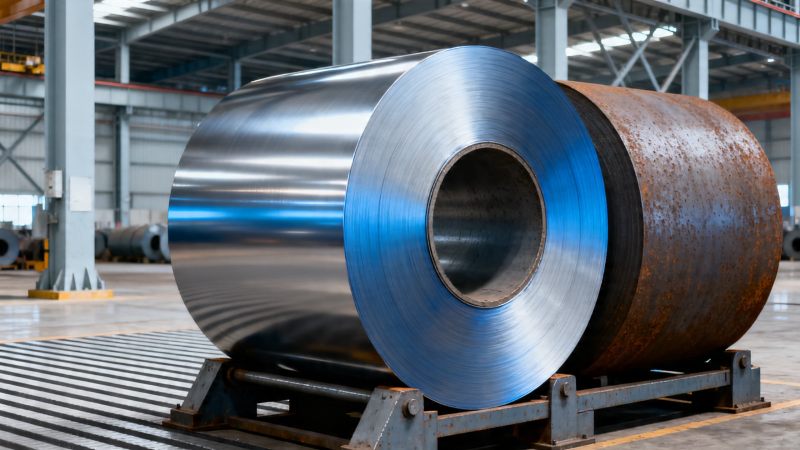
Cold rolled steel delivers ±0.1 mm tolerance on thickness and width—ideal for tight-tolerance cold formed steel profiles used in modular building frames or precision machinery supports. Hot rolled sections, by contrast, carry ±0.5–1.2 mm tolerances depending on section depth and mill calibration. For a 200×100×8 mm steel channel, that variance translates to up to 1.8 mm cumulative deviation across a 12-meter span—potentially compromising bolt hole alignment or composite action in concrete-steel hybrid girders.
Hongteng Fengda maintains ISO9001-2008–certified dimensional control across both production lines. Our hot rolled angle steel (e.g., L75×75×6) meets EN 10056–1 Class B tolerances (±1.0 mm leg length), while cold rolled equivalents comply with EN 10147 Class A (±0.3 mm). This consistency ensures predictable load transfer in multi-story façade anchoring systems—where misalignment over 0.8 mm increases local stress concentration by 22% per FEA simulation.
The table above confirms why cold rolled steel dominates in pre-engineered roof purlins and seismic bracing—where residual stress uniformity prevents buckling under dynamic loads. Conversely, hot rolled steel remains preferred for primary columns in industrial plants, where its inherent ductility (elongation ≥23%) absorbs impact from crane collisions or material handling errors.
Application-Specific Strength Requirements: From Rebar to Girders
Strength selection isn’t universal—it’s application-driven. In reinforced concrete, HPB300 Rebar serves as economical stirrup reinforcement where moderate yield strength (≥300 MPa) and high elongation (>25%) prevent brittle fracture during concrete shrinkage. Its spiral, herringbone, or crescent surface patterns ensure mechanical interlock—critical when bar spacing exceeds 150 mm per ACI 318.
For structural steel girders supporting 45-ton overhead cranes, however, hot rolled S355JR (EN 10025–2) provides superior fracture toughness at –20°C (minimum 27 J Charpy V-notch), whereas cold rolled equivalents may exhibit reduced notch sensitivity due to work-hardened microstructure. That’s why Hongteng Fengda supplies both: hot rolled steel beams for heavy industrial floors, and cold rolled steel angles for architectural cladding substructures requiring exact 90° bends without cracking.
Our OEM customers in Southeast Asia specify cold rolled steel for solar mounting rails—where 0.3 mm flatness tolerance enables consistent torque application across 200+ M8 fasteners per 6-meter run. Meanwhile, North American bridge contractors prefer hot rolled steel plates (ASTM A709 Gr.50) for orthotropic decks, citing its proven fatigue resistance after 2 million stress cycles at R=0.5.
Procurement Decision Framework: 5 Key Evaluation Metrics
Selecting between cold rolled and hot rolled steel demands more than yield strength comparison. Buyers must weigh:
- Weldability index: Hot rolled steel has lower carbon equivalent (CEV ≤0.40), enabling single-pass SMAW without preheat; cold rolled requires CEV ≤0.25 and post-weld stress relief for sections >12 mm thick.
- Lead time differential: Cold rolled orders average 25–35 days due to annealing and temper rolling steps; hot rolled shipments clear in 12–18 days from order confirmation.
- Cost delta: Cold rolled steel commands a 18–25% premium over hot rolled equivalents—justifiable only when dimensional precision or surface finish directly impacts assembly labor (e.g., saving 3.2 hours/ton in field drilling).
- Standard compliance scope: ASTM A500 covers cold formed hollow sections; ASTM A615 governs deformed rebar; EN 10219 applies exclusively to cold formed welded tubes.
- Traceability requirements: Projects under API RP 2A demand full heat-lot traceability—available for both processes but requiring separate mill test reports (MTRs) per EN 10204 3.1.
Why Hongteng Fengda Delivers Balanced Strength Solutions
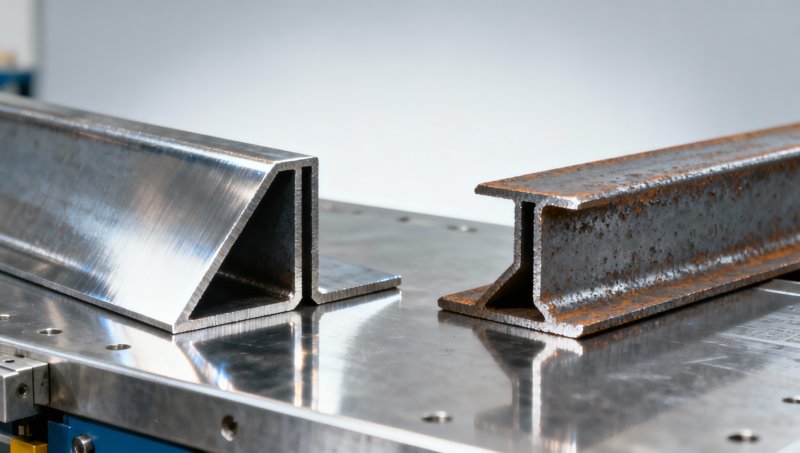
As a certified structural steel manufacturer serving 32 countries, Hongteng Fengda bridges the cold rolled vs hot rolled gap through dual-process capability and application-led engineering. We don’t sell “steel”—we deliver verified load-path solutions: hot rolled steel beams tested to 1.5× design load per ASTM E488, cold rolled steel profiles validated for 50,000-cycle fatigue life, and HPB300 Rebar inspected for bend diameter compliance (6d for 10 mm bars) before shipment.
Our clients reduce sourcing risk via our 98.7% on-time delivery rate (2023 audit), stable MOQs (as low as 5 tons for hot rolled, 2 tons for cold rolled), and coordinated documentation—including ASTM/EN-compliant MTRs, SGS-certified coating thickness reports, and BV-verified dimensional checks. Whether you’re evaluating steel channel for a Dubai metro station or specifying steel angle for a German automotive plant, our technical team provides free cross-process strength analysis—comparing cold rolled vs hot rolled options side-by-side with real-world deflection curves and cost-per-kN metrics.
Partner with Hongteng Fengda to move beyond theoretical strength comparisons—and implement steel solutions engineered for your exact structural, logistical, and financial constraints. Request a free application-specific strength assessment and delivery timeline quote today.
Please give us a message


Please enter what you want to find