Choosing the right Wire Products means balancing strength, flexibility, and budget without compromising performance. For buyers comparing options such as Rebar, H-beam, Z-beam, Stainless Steel Welded Mesh, and Profile solutions, understanding material quality and sourcing risks is essential—especially when asking, is cheap steel from China reliable. This guide helps engineers, purchasers, and project decision-makers evaluate cost-effective steel products with greater confidence.
In steel sourcing, the answer is rarely about choosing the cheapest item on a quotation sheet. It is about selecting the right product for load requirements, fabrication methods, environmental exposure, and service life. A wire-based product, profile, beam, or pipe that looks economical at purchase can become expensive if it fails dimensional tolerance, coating quality, weldability, or delivery consistency.
For global buyers, especially those managing construction, industrial, and manufacturing projects, evaluation usually involves at least 5 factors: mechanical performance, flexibility in processing, corrosion resistance, compliance with ASTM/EN/JIS/GB standards, and total landed cost. Suppliers with stable production capacity and disciplined quality control help reduce the real risks behind low initial pricing.
Understanding Strength, Flexibility, and Cost in Steel Product Selection
In practical steel procurement, strength refers to how well a product handles load, pressure, impact, or structural stress over time. Flexibility does not simply mean bending easily; it also includes formability, fabrication adaptability, cutting performance, welding suitability, and the ability to meet custom dimensions. Cost should be measured across the full project cycle, not just by ton price.
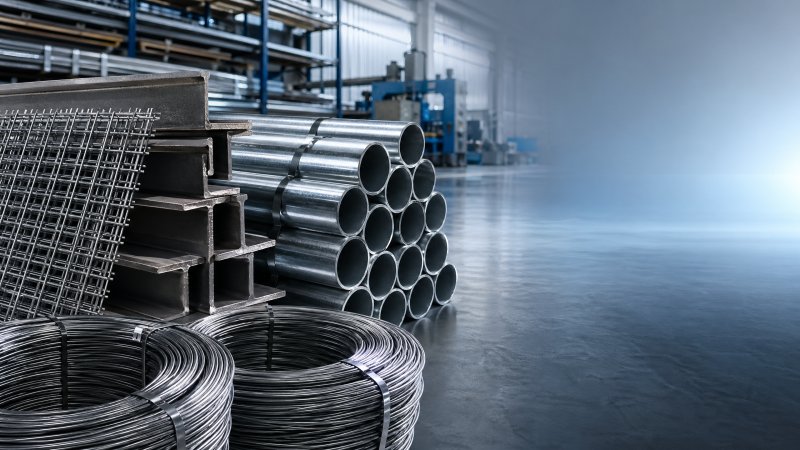
For example, rebar for reinforced concrete, H-beams for primary load-bearing frames, Z-beams for lightweight structural support, and welded mesh for reinforcement or enclosure all serve different engineering purposes. In many projects, the correct decision is not one universal steel product, but a coordinated combination of 3 to 4 categories that balance structural demand and budget control.
A common mistake is comparing products by thickness alone. A 4 mm product with tighter tolerance, better galvanizing, and more reliable material consistency may outperform a nominally thicker option that varies by more than ±0.15 mm. This is especially important in automated processing lines, prefabrication workshops, and export projects where fit-up accuracy affects labor time.
Why buyers should evaluate total performance
When technical teams, procurement managers, and finance approvers review steel offers, they should align around total cost of ownership. That includes procurement price, machining loss, coating life, transportation efficiency, and replacement frequency. A product that lasts 10 to 15 years in outdoor use may be more economical than a lower-priced alternative requiring early maintenance after 3 to 5 years.
This is where supplier capability matters. A manufacturer with controlled production, standard inspection points, and export experience is better positioned to support dimensional consistency, traceability, and dependable lead times. For international projects, even a 7 to 10 day shipment delay can affect site sequencing, labor allocation, and cash flow planning.
Core evaluation dimensions
- Mechanical suitability: yield strength, structural role, load path, and deformation tolerance.
- Processing flexibility: cutting, bending, drilling, welding, and cold forming requirements.
- Surface protection: galvanizing, painting, or other anti-corrosion treatment for 1 environment or multiple exposure conditions.
- Commercial control: MOQ, lead time, packing method, container optimization, and replacement risk.
The table below shows how strength, flexibility, and cost interact across common steel product choices used in construction and industrial projects.
The key takeaway is that no single metric can define value. In most steel purchasing decisions, the best result comes from matching the product to the actual duty cycle, fabrication method, and service environment rather than chasing the lowest upfront price.
How to Judge Reliable Steel from China Without Overpaying
The question, “is cheap steel from China reliable,” should be reframed. The real question is whether the supplier can provide verifiable quality, stable specification control, and predictable delivery at the quoted price. China’s steel supply base is large and diverse. That means buyers can find both high-value manufacturers and high-risk traders in the same market segment.
Reliable sourcing starts with documentation and production visibility. Buyers should ask for material grade confirmation, applicable standards such as ASTM, EN, JIS, or GB, coating details, dimensional tolerance, and inspection scope before placing an order. For structural or industrial use, a quotation without these details is incomplete, even if the price looks attractive.
A professional structural steel manufacturer and exporter typically supports projects with standard products and OEM solutions. This is important when a buyer needs angle steel, channel steel, steel beams, cold formed steel profiles, or customized structural components in one supply plan. Consolidating these items can reduce sourcing complexity, improve packing efficiency, and shorten coordination time by 1 to 2 procurement cycles.
6 checks before approving a supplier
- Confirm product standard and grade match the project specification, not just the product name.
- Review tolerance capability, especially for thickness, length, and straightness.
- Check coating method, such as hot-dip galvanized versus electroplated finish.
- Ask for inspection records covering dimensions, appearance, and material traceability.
- Verify export packing and logistics capability for North America, Europe, the Middle East, or Southeast Asia.
- Assess lead time realism; standard production may take 2 to 4 weeks, while custom orders can require longer.
The table below helps procurement and technical teams compare reliable and risky sourcing signals when evaluating steel offers from overseas suppliers.
For many global buyers, the most dependable approach is to work with an export-oriented manufacturer that combines modern production facilities, consistent quality control, and familiarity with international standards. That model reduces the hidden costs of rework, delay claims, and non-conforming goods.
Matching Product Type to Project Demands
Different steel products solve different engineering problems. Rebar is selected for tensile reinforcement inside concrete. H-beams support heavy structural loads. Z-beams are common in roof purlins and light framing. Welded mesh supports reinforcement, fencing, and enclosure needs. Pipes and profiles often bridge the gap between load-bearing duty and fabrication flexibility in industrial layouts.
This is why project managers and purchasers should begin selection with application conditions: load type, exposure environment, fabrication route, and maintenance expectation. In many industrial facilities, a product exposed to water, gas, oil mist, or outdoor weathering requires stronger corrosion resistance than one used in dry indoor assembly. That difference can change the preferred finish from plain carbon steel to galvanized steel.
In the middle of this selection process, pipe products often deserve more attention than they receive. For fluid transport, support frames, storage systems, and fabrication structures, buyers may consider Galvanized Pipe Manufacturers as part of a broader steel sourcing strategy. Typical specifications include DX52D material options, hot-dip galvanized or electroplating dipped finishes, lengths from 1–12 m, thickness from 0.1 mm to 300 mm, and thickness tolerance around ±0.15 mm depending on requirement.
Where galvanized pipe fits best
Galvanized steel pipe is widely used in construction, machinery, agriculture, transportation, general low-pressure fluid pipelines, and supporting structures. Common applications include water, gas, and oil transport, oil well pipe support roles, condensation cooler lines, trestle pile support frames, and even shed construction or agricultural machinery assemblies. The anti-corrosion layer helps extend service life in humid or exposed conditions.
For buyers comparing pipe with other structural products, the decision often comes down to three questions: Does the design require hollow-section efficiency? Is corrosion resistance necessary from day 1? Will the project benefit from standard lengths such as 6 m or 12 m to reduce cutting waste? These questions can improve material planning and reduce site losses by a meaningful margin.
Application-oriented comparison
The following table summarizes how common steel products match specific applications and operational priorities.
For buyers handling multiple categories, sourcing from a manufacturer that can provide structural sections together with customized components simplifies technical alignment. It also helps distributors, EPC contractors, and project owners avoid mismatched standards across different vendors.
Procurement Strategy: Balancing Budget, Risk, and Delivery
Budget control in steel purchasing is most effective when it focuses on risk-adjusted value. A lower ex-works price does not always produce a lower final project cost. Freight mode, packing density, coating damage during transport, inspection delays, and replacement lead time can all affect the total outcome. In many cross-border orders, one specification error can cost more than a 3% to 5% unit price difference.
Procurement teams should establish a practical review process across technical, commercial, and operational functions. Technical staff validate standards and dimensions. Quality teams review tolerance and inspection scope. Commercial teams confirm pricing terms and shipment arrangements. Project managers check whether lead time aligns with site milestones. Finance approvers assess cash flow, batch size, and risk exposure.
For medium to large projects, dividing procurement into 3 stages often works well: sample or drawing confirmation, production approval, and pre-shipment verification. This structure is especially useful when ordering customized structural steel components, cold formed profiles, or mixed-product packages for overseas delivery.
A practical 5-step sourcing workflow
- Define end-use conditions, required standards, and acceptable tolerance ranges.
- Request a detailed quotation with product grade, finish, dimensions, packing, and lead time.
- Compare at least 3 commercial variables: unit price, estimated logistics cost, and expected service life.
- Approve production after drawing, sample, or specification alignment where needed.
- Inspect before shipment and verify marking, quantity, surface condition, and packing integrity.
Common purchasing mistakes to avoid
- Buying by price per ton without checking coating type or standard equivalence.
- Ignoring tolerance, which can disrupt automated fabrication or on-site assembly.
- Assuming all galvanized surfaces perform the same in coastal, humid, or industrial environments.
- Overlooking lead time for custom components, which may be longer than stock items by 1 to 3 weeks.
A dependable structural steel partner can reduce these risks by offering stable production capacity, consistent quality, and clear communication. For buyers in North America, Europe, the Middle East, and Southeast Asia, this matters not only for compliance, but also for schedule reliability and reduced sourcing friction across repeated orders.
Hongteng Fengda’s business profile fits this type of B2B requirement: structural steel manufacturing and export from China, standard and OEM supply capability, and familiarity with major international standards. For purchasers and project teams, that kind of support can make the difference between simply receiving steel and receiving steel that is ready for practical use.
FAQ: Technical and Commercial Questions Buyers Often Ask
Below are several questions frequently raised by engineers, procurement managers, distributors, and project decision-makers when selecting steel products for strength, flexibility, and cost control.
How do I know whether galvanized steel is necessary?
If the product will operate outdoors, in humid conditions, or around water, gas, or industrial pollutants, galvanized steel is often a practical choice. The additional coating cost can be justified when the expected service life improvement reduces maintenance or replacement frequency over 5 to 10 years or longer, depending on the environment.
What should I focus on besides steel grade?
Beyond grade, focus on dimensions, thickness tolerance, coating method, straightness, weldability, and compliance standard. For fabricated assemblies, buyers should also confirm hole locations, cut lengths, and painting or blasting requirements. These details often matter more in real-world use than the nominal grade alone.
What is a realistic delivery expectation for export steel orders?
Standard items may move faster, while customized structural steel or mixed-product orders usually require a defined production window. A common planning approach is to allow 2 to 4 weeks for production plus shipment time depending on destination. Buyers should always confirm whether the quoted lead time starts from deposit, drawing approval, or final specification lock.
Can one supplier handle multiple steel categories efficiently?
Yes, and this can be beneficial when the supplier has real manufacturing and export experience. Bundling beams, channels, angle steel, cold formed profiles, and customized components into one sourcing plan can reduce coordination effort, simplify quality tracking, and improve packing utilization in container shipments.
Choosing wire products and related steel solutions for strength, flexibility, and cost is ultimately a project decision, not just a product decision. The most effective buyers evaluate performance, corrosion resistance, tolerance control, standards compliance, and delivery reliability together. That is how low-cost sourcing becomes cost-effective sourcing.
If you are comparing structural sections, profiles, welded mesh, or pipe solutions for construction or industrial use, working with an experienced Chinese structural steel manufacturer can help reduce sourcing risk while keeping budgets under control. Contact Hongteng Fengda to get a customized solution, discuss product details, or request support for your next steel procurement plan.
Please give us a message


Please enter what you want to find