Choosing a reliable carbon steel manufacturer goes beyond price—it means verifying quality consistency, standards compliance, and delivery performance. For buyers comparing structural steel beams for construction, Steel Channel supplier options, angle steel price, or steel sheet for construction, the real indicator is a supplier’s ability to provide stable production, certified materials, and dependable support for every project.
In the steel industry, unstable quality rarely appears as a single dramatic failure. More often, it shows up as inconsistent chemistry, uneven dimensions, coating defects, weldability issues, delayed documentation, or shipment-to-shipment variation that disrupts fabrication and installation. For project managers, purchasing teams, technical evaluators, distributors, and safety personnel, these small deviations can quickly turn into higher rework costs, schedule pressure, and compliance risks.
A dependable structural steel manufacturer should therefore be judged through measurable signals: process control, inspection discipline, standards alignment, traceability, and delivery reliability. For global buyers sourcing from China, stable quality is not a slogan; it is a system that must be visible from raw material selection to final packing. That is especially important when products will be used in construction, infrastructure, industrial fabrication, or OEM manufacturing where tolerance, strength, and corrosion resistance matter over years of service.
Hongteng Fengda, as a structural steel manufacturer and exporter from China, serves buyers across North America, Europe, the Middle East, and Southeast Asia with angle steel, channel steel, steel beams, cold formed steel profiles, and customized structural steel components. The following guide explains what truly reveals stable quality in carbon steel manufacturing and how buyers can make lower-risk sourcing decisions.
Why Stable Quality Matters More Than the Lowest Quote
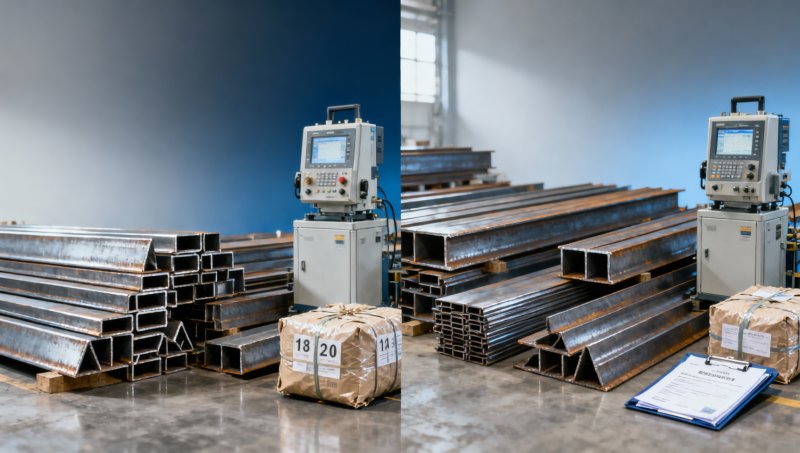
Carbon steel purchasing decisions often begin with unit price, but total project cost depends far more on consistency. A price difference of 2%–5% may look important during quotation review, yet a single batch with out-of-tolerance dimensions or missing certificates can create much larger losses through cutting adjustments, welding delays, site rejection, or repeat freight. For construction and industrial projects working on 4–12 week schedules, quality instability directly affects installation sequencing and cash flow.
Stable quality also supports predictable downstream processing. Fabricators need steel with repeatable mechanical performance, straightness, surface condition, and coating behavior. If one shipment bends differently, drills harder, or welds inconsistently from the previous lot, machine settings, labor efficiency, and scrap rates are all affected. This is why experienced buyers compare not only price per ton, but also process capability, tolerance control, and batch uniformity.
For quality control teams and safety managers, the risk is even broader. Structural applications require confidence that the delivered steel meets agreed standards such as ASTM, EN, JIS, or GB. In many projects, 3 core checks are mandatory before acceptance: material grade verification, dimensional inspection, and supporting documentation review. If any of these fail, the resulting delay can affect contractors, subcontractors, and final project handover.
From a commercial perspective, stable quality reduces hidden sourcing costs. It lowers the frequency of claims, reduces urgent replenishment orders, and improves inventory planning. For distributors and OEM buyers handling recurring monthly or quarterly orders, this consistency is often more valuable than a short-term discount because it supports customer retention and brand trust in their own markets.
Typical impacts of unstable steel supply
- Dimensional deviation beyond drawing tolerance, leading to rework in fabrication or fit-up problems on site.
- Mechanical property variation between heats, which can affect forming, welding, and load-bearing performance.
- Surface defects or poor galvanizing quality, reducing corrosion resistance in outdoor or marine-adjacent environments.
- Incomplete mill test certificates or traceability gaps, delaying inspection approval and commercial clearance.
The table below shows why professional buyers look beyond quoted price when evaluating a carbon steel manufacturer.
The key conclusion is simple: the best carbon steel manufacturer is usually the one that protects the full project outcome, not just the first invoice line. Stable quality becomes visible through repeatability, documentation, and reduced operational disruption.
What Reveals Stable Quality in Carbon Steel Manufacturing
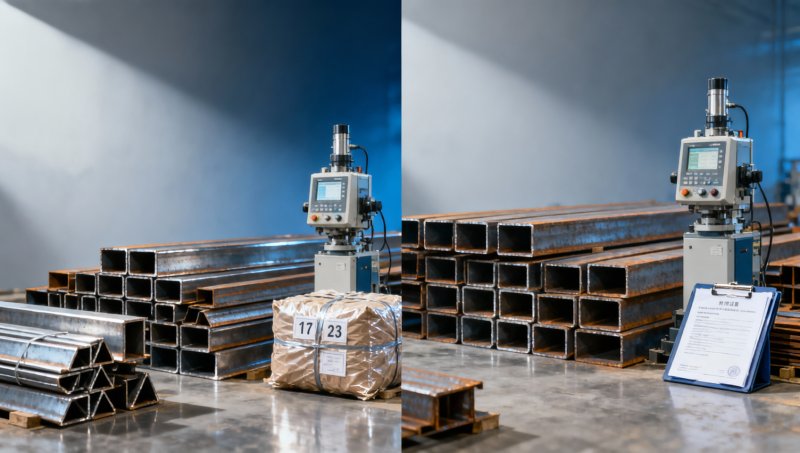
Stable quality is revealed by process evidence. Buyers should examine how the manufacturer manages raw materials, forming, cutting, galvanizing, straightening, and final inspection. A professional supplier does not rely on visual checks alone. Instead, it builds quality through multiple checkpoints, often 5 or more, from incoming material verification to packing and marking. This approach is especially important for structural steel used in towers, buildings, transportation infrastructure, and equipment frames.
One strong signal is standards coverage. Manufacturers serving global markets should be familiar with ASTM, EN, JIS, and GB requirements because export buyers often need cross-market compliance. Stable quality is easier to trust when a supplier can discuss tolerance classes, mechanical ranges, coating requirements, and test methods without ambiguity. That capability also helps procurement and technical teams compare offers on an equal basis instead of relying on broad marketing claims.
Another signal is equipment and inspection capability. In real steel production, consistency depends on line control, straightening precision, surface inspection, and traceability practices. For example, when round steel or profiles require tighter tolerances, the supplier should be able to explain whether cold drawing, grinding, ultrasonic inspection, or spectro testing is available. If a manufacturer can only discuss final appearance but not process control, the quality system may not be mature enough for demanding projects.
Documentation is equally important. A stable carbon steel manufacturer should provide material identification, test reports, packing marks, and clear linkages between order specification and delivered goods. For distributors and project owners, this reduces uncertainty at receiving, customs clearance, and final installation. In many export transactions, response time within 24–48 hours for technical clarification can also indicate whether the supplier is truly prepared to support commercial execution.
Quality signals buyers should verify
1. Production discipline
Ask whether the supplier follows fixed production routes for standard products and separate control plans for customized items. This matters because customized structural steel often introduces extra risk in hole position, camber, length tolerance, and surface treatment.
2. Inspection depth
Inspection should cover chemistry, dimensions, surface condition, and mechanical properties where required. For some products, out-of-roundness, straightness, chamfer quality, and coating appearance are also key acceptance points.
3. Traceability and packing
Stable exporters use marking and packaging methods that reduce mixed batches and damage during inland transport and ocean shipment. This is especially important for orders moving across 1–2 transshipment points before reaching the project site or warehouse.
A practical example can be seen in DC01 Galvanized Round Steel, which is suitable for applications ranging from electric power towers and communication towers to highway protection, marine components, light industry parts, office equipment, and precision accessories such as screws, nuts, and terminal pins. Its typical tensile strength range of 570–820 MPa, galvanized surface, and diameter range of 16–250 mm or customized options show how product stability must combine both structural performance and processing adaptability.
For this type of galvanized round steel, buyers should also pay attention to manufacturing details such as hot dip galvanizing, cold drawing for smaller diameters, possible ISO h8 or h9 tolerance classes, surface control by Circograph or Circoflux, ultrasonic control devices, antimixing control by spectrotest, and optional heat treatments including normalising, spheroidising, stress relieving, quenching, or tempering. These details reveal whether the supplier can support both general-purpose demand and more exact industrial processing requirements.
How to Evaluate a Steel Supplier Before You Place an Order
A reliable evaluation process should combine technical review, commercial review, and delivery review. Many buyers make the mistake of checking only sample appearance or only the quoted price. A better method is to assess the supplier across at least 4 dimensions: standards compliance, manufacturing capability, inspection transparency, and lead-time reliability. This is especially useful when comparing multiple steel channel suppliers or structural steel beam sources for a live project.
For technical evaluators, the first task is to match the required application with the right grade and process route. Construction use, machine parts, galvanized outdoor structures, and stamped components do not all require the same surface quality or tolerance level. For procurement teams, the next step is confirming whether the supplier can maintain the same specification over repeat orders of 1 container, 5 containers, or ongoing monthly demand.
For finance approvers and business decision-makers, supplier evaluation should include cost of quality. An offer with a shorter lead time, lower claims risk, and more complete inspection support may deliver better overall value than a lower quote with uncertain execution. In export steel sourcing, even a 7-day shipment delay can influence labor scheduling, crane booking, and site readiness in costly ways.
For project managers, one more practical check is communication quality. Can the supplier confirm production status, inspection completion, and dispatch arrangements at defined milestones? A manufacturer with disciplined communication usually also shows stronger internal coordination between production, quality, warehouse, and export teams.
A 5-step supplier assessment method
- Confirm standards, grade, dimensions, and end use before quotation comparison.
- Review available test methods, tolerance capability, and product traceability practices.
- Request sample documents such as mill test certificates, packing lists, and inspection records.
- Evaluate delivery planning, including normal production cycle, peak-season capacity, and export handling.
- Start with a controlled trial order when the project is high risk or specifications are customized.
The comparison table below can help buyers make more objective sourcing decisions.
This approach allows buyers to move from subjective impressions to measurable supplier selection. It is especially effective for companies managing construction steel procurement, industrial fabrication inputs, or repeat export distribution programs.
Common Risks, Misunderstandings, and Control Points in Steel Procurement
One common misunderstanding is assuming that compliance with a named grade automatically guarantees project suitability. In practice, buyers must verify not only the grade, but also the condition of supply, dimensional tolerance, coating requirement, and expected processing method. Two suppliers may both quote a similar product description, yet the actual usability can differ once cutting, drilling, welding, or galvanizing performance is tested in production.
Another risk is placing large-volume orders before verifying communication and inspection responsiveness. For new suppliers, a pilot order is often the safer route. This is especially true for custom lengths, non-standard hole patterns, or special packaging requirements. A trial order can reveal whether the supplier can maintain agreed details over the full workflow, including 3 critical stages: production, pre-shipment inspection, and export documentation.
Buyers also sometimes focus heavily on the steel product itself but overlook packaging and shipment protection. Structural steel and round bar products can suffer surface damage, mixed bundles, or mark loss during handling if packing is weak. For export orders moving long distances, packing method, bundle labeling, and loading control can be as important as the material test report in preventing receiving disputes.
Finally, some teams underestimate how much delivery stability matters for total procurement performance. Even when the steel meets specification, repeated schedule slippage can force site idling, emergency sourcing, or inventory imbalance. That is why experienced importers often score suppliers on on-time readiness, not just final shipment date.
Risk control checklist for buyers
- Check whether the quotation clearly defines grade, size, length, standard, and surface treatment.
- Confirm acceptable tolerance range in writing before order confirmation.
- Request sample inspection documents for similar products or processing routes.
- Align packing, marking, and loading details for export and warehouse receiving.
- Set milestone reviews for orders with lead times longer than 3 weeks.
Who benefits most from stable quality sourcing?
Stable sourcing benefits nearly every stakeholder: operators gain easier processing, QC teams gain clearer acceptance criteria, procurement gains fewer claims, finance gains more predictable total cost, and project leaders gain schedule confidence. For distributors, it also reduces customer complaint frequency and improves repeat-order potential.
FAQ: Practical Questions Buyers Ask About Carbon Steel Manufacturers
When comparing carbon steel manufacturers, buyers often need direct answers rather than general promises. The questions below reflect common search intent from technical teams, procurement departments, distributors, and project decision-makers.
How can I tell if a manufacturer can keep quality stable across repeat orders?
Look for repeatable controls rather than one-time samples. Ask about raw material verification, inspection frequency, tolerance capability, marking methods, and document consistency. If the supplier can explain its process in 4–5 clear steps and provide matching records for previous shipments, that is a stronger indicator than a single attractive sample.
What lead time is typical for structural steel and related carbon steel products?
Lead time depends on product type, customization level, and order volume. Standard items may move in about 2–4 weeks, while customized structural steel components or special surface treatments may require 4–6 weeks or more. Buyers should always separate production time from inland transport and ocean shipping time when planning projects.
Is galvanized round steel suitable for both structural and industrial parts applications?
Yes, depending on grade, diameter, tolerance, and process route. Galvanized round steel can be used in outdoor support structures, towers, infrastructure components, and also in light industrial parts, fastening systems, and metal processing applications. The correct choice depends on whether the priority is corrosion resistance, machining performance, strength, or dimensional accuracy.
What documents should I request before shipment?
At minimum, request the commercial invoice, packing list, product marking details, and applicable mill test certificate or inspection report. For higher-risk projects, buyers may also request dimensional inspection summaries, coating-related information where relevant, and pre-shipment photos showing bundle marks and packing condition.
Stable quality in carbon steel manufacturing is revealed through evidence: controlled production, compliance with recognized standards, reliable inspection, clear traceability, and dependable delivery performance. For buyers sourcing structural steel beams, steel channels, angle steel, steel sheet for construction, or specialized round steel products, the safest decision is to choose a supplier that supports the full project process rather than only the purchase order.
With modern manufacturing facilities, strict quality control, and experience serving international markets, Hongteng Fengda supports global customers with structural steel products and customized solutions designed to reduce sourcing risk and improve execution efficiency. If you are evaluating a carbon steel manufacturer for construction, industrial, OEM, or distribution needs, contact us now to get technical details, discuss specifications, or request a tailored sourcing solution for your next project.
Please give us a message


Please enter what you want to find