Choosing the right can making machine requires more than comparing prices—it demands a practical checklist covering output, precision, maintenance, and material compatibility. For buyers and technical teams working with steel inputs such as SPCC steel, stainless steel square pipe, seamless steel tube, and steel sheet supplier resources, this guide highlights the key factors that reduce risk, improve efficiency, and support smarter investment decisions.
In can manufacturing, machine selection directly affects material yield, wall consistency, seaming quality, line stability, and long-term production cost. This is especially important when the line must process steel-based inputs with different thickness ranges, coatings, hardness levels, and surface requirements. A poor match between machine capability and steel material can lead to frequent stoppages, unacceptable scrap rates, and quality claims after shipment.
For procurement teams, operators, quality managers, project leaders, and business decision-makers, a structured checklist creates a common evaluation standard. It helps compare not only the machine itself, but also tooling, steel compatibility, after-sales support, installation needs, and integration risk. For companies sourcing structural steel and industrial steel products from reliable Chinese exporters such as Hongteng Fengda, this evaluation mindset also improves broader capital equipment planning and plant efficiency.
Define Production Targets Before Comparing Machine Models
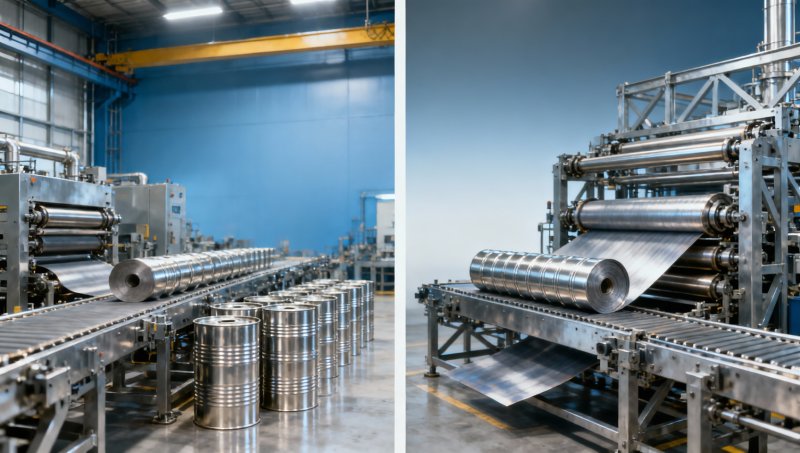
The first step in any can making machine buying checklist is to define production targets in measurable terms. A line designed for 80–120 cans per minute serves a very different purpose from one built for 300–600 cans per minute. If expected volume is unclear, buyers often overpay for capacity they will not use or underinvest and create bottlenecks within 6–12 months.
Technical teams should also define can diameter range, height range, material thickness, and acceptable tolerance. In many practical cases, body wall thickness control and seaming consistency are more important than nameplate speed. For steel cans, even a deviation of ±0.05 mm in forming or feeding performance can influence final assembly quality and coating performance.
A good evaluation process separates three core questions: what the machine can produce, what the upstream steel material requires, and what the downstream quality target demands. This approach is particularly useful when the operation relies on multiple steel sources, including cold rolled sheet, coated steel, and stainless grades with different forming characteristics.
Key capacity and product range questions
Before requesting a quotation, define at least 5 measurable items: hourly output, can size range, steel grade compatibility, changeover time, and target scrap rate. For mixed production plants, changeover time under 30–60 minutes can make a major difference in daily efficiency. For high-volume single-size production, uptime above 85% is often a more practical benchmark than nominal top speed.
The table below helps organize the production-side checklist before supplier comparison.
This table shows why buying decisions should start with process requirements instead of brochure claims. A machine with 20% higher speed may still be the weaker investment if it causes 2% more scrap, takes longer to switch sizes, or cannot run the steel specification already used by your supply chain.
Check Material Compatibility With Steel Inputs and Supporting Structures
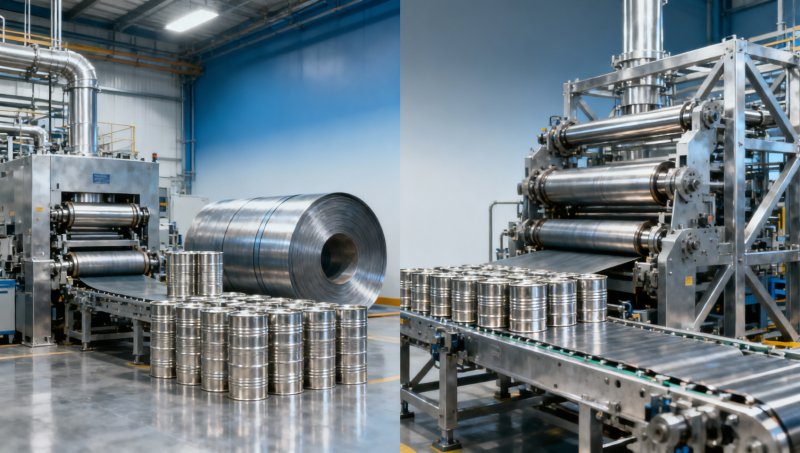
Material compatibility is one of the most overlooked parts of a can making machine buying checklist. Buyers often confirm only whether a machine can process “steel sheet,” but this is not enough. You need to verify the acceptable thickness range, hardness condition, surface finish, coating sensitivity, and whether the feeding system handles variation from different steel sheet supplier batches.
When the production site handles SPCC steel, stainless steel components, or other industrial steel materials nearby, equipment planning should also consider workshop layout, support frames, guarding structures, and storage racks. In these supporting areas, structural steel products play a practical role. For example, H Section Beam can be used in machine platform structures, mezzanine support, maintenance walkways, and heavy-load storage arrangements in can manufacturing plants.
For industrial support applications, the product is available in grades such as Q235, Q345B, Q460C, SS400, S275JR, S355JR, A572, A992, and stainless options including 201, 202, 304, 310, and 316. Technical ranges include flange thickness of 8–64 mm, web thickness of 5–36.5 mm, flange width of 50–400 mm, web width of 100–900 mm, and length from 1 m to 12 m or as required. These specifications are relevant when planning structural load paths around high-speed equipment lines.
Why steel input consistency affects machine selection
If incoming steel sheet varies in flatness, yield strength, or coating adhesion, the machine must have stable feeding, correct alignment control, and adjustable forming pressure. Without these features, even a new line may produce uneven bodies, edge defects, and seam problems within the first 2–4 weeks of operation. That is why technical evaluation should involve both equipment engineers and material quality personnel.
Steel-related checks to include in RFQ review
- Confirm the supported steel thickness range and whether the stated range is proven in continuous production, not only in trial conditions.
- Ask whether the machine can handle coated steel, plain cold rolled steel, and stainless variants without major hardware changes.
- Verify tooling wear rate when processing harder materials and request expected maintenance intervals in hours or cycles.
- Check whether the line requires tighter sheet flatness or burr control than your current steel supplier can consistently deliver.
These checks reduce the risk of blaming either the machine or the steel supplier later. In many failed projects, the real problem is not one component but a mismatch between machine sensitivity and raw material variation.
Evaluate Precision, Maintenance, and Total Operating Cost
A practical buying checklist must move beyond purchase price and examine total operating cost over 3–5 years. For a can making machine, cost drivers include energy use, tooling life, spare parts availability, lubrication frequency, operator skill requirement, and production losses during maintenance. A lower initial quotation can become the more expensive option if downtime is frequent or critical parts have lead times of 4–8 weeks.
Precision matters because small dimensional errors multiply at production speed. A machine running 250 cans per minute with weak alignment control can produce thousands of nonconforming units in a single shift. Buyers should therefore request measurable data such as repeatability, seam consistency range, cutter accuracy, and reject detection capability instead of relying on general claims like “high precision.”
Maintenance design should be reviewed with operators and quality teams, not only with management. Ask whether key wear parts are standardized, whether daily checks take 15 minutes or 90 minutes, and whether replacement requires specialist support. Practical maintainability often determines whether the line remains stable after the first year.
Cost and maintenance comparison points
The following comparison framework helps teams evaluate long-term cost exposure, especially where steel prices, labor cost, and unplanned shutdown risk all affect profitability.
The key message is that maintenance and precision are financial issues, not just technical ones. Even a 1% improvement in scrap reduction can significantly offset steel material cost over a year, especially in lines using large volumes of coated or specialty sheet.
A simple 4-point maintenance review
- List all parts that wear within 3, 6, and 12 months.
- Confirm whether operators can perform routine replacement safely.
- Check if lubrication points are accessible without major disassembly.
- Review supplier response time for remote support and onsite service.
This review often reveals hidden cost differences that are not visible in the quotation sheet.
Assess Supplier Capability, Quality Control, and Delivery Reliability
A machine is only as dependable as the supplier behind it. Buyers should evaluate manufacturing capability, inspection procedures, packaging method, installation support, and communication efficiency. In B2B industrial purchasing, delays of 2–3 weeks can disrupt plant launch schedules, while unclear documentation can slow acceptance and create disputes between procurement, engineering, and finance departments.
The same discipline applies across steel procurement. Companies that already work with organized structural steel exporters often understand the value of standard compliance, traceable production, and consistent lead times. Hongteng Fengda, for example, supplies angle steel, channel steel, beams, cold formed profiles, and customized structural steel components for global industrial and construction use, with products aligned to standards such as ASTM, EN, JIS, and GB. That kind of quality mindset is equally important when reviewing machine suppliers.
Supplier assessment should include document quality as well as production capability. Request machine drawings, electrical diagrams, recommended foundation data, spare parts list, and acceptance criteria before signing. If documentation is incomplete during quotation stage, it rarely improves after payment.
Supplier due diligence checklist
- Check whether the supplier can explain inspection points for feeding, forming, seaming, and final can quality in clear technical terms.
- Confirm realistic production and delivery periods, such as 30–90 days depending on customization level.
- Ask what pre-shipment testing is included and whether trial video, dimensional records, or sample output can be provided.
- Verify after-sales support coverage, including remote troubleshooting within 24–48 hours where possible.
A reliable supplier should be able to discuss risk openly: material limitations, setup sensitivity, maintenance burden, and operator training needs. Buyers should treat overly vague promises as a warning sign rather than a sales advantage.
What project managers should confirm before approval
Project managers and financial approvers should confirm four final items: installation timeline, utility requirements, acceptance test method, and downtime responsibility during commissioning. This prevents late-stage confusion and helps align equipment budgets with civil work, structural support, and operating readiness.
Common Buying Mistakes and a Smarter Decision Process
One common mistake is choosing a machine based mainly on price per unit of output. This ignores material losses, maintenance effort, and steel compatibility. Another mistake is allowing only procurement staff to lead the purchase. A better process involves at least 5 stakeholders: production, maintenance, quality, purchasing, and finance. For larger projects, engineering and safety teams should also participate.
Another frequent issue is failing to plan the surrounding production environment. A can making machine may require floor reinforcement, access platforms, steel-framed utility supports, or rack systems for coils and finished goods. In such cases, structural components like H Section Beam are useful because of strong bending resistance, economical section design, and simple construction advantages across steel structure, mechanical manufacture, shipbuilding, bridging, and automobile chassis-related support applications.
A smarter decision process uses a weighted checklist instead of informal discussion. For example, some companies assign 30% to technical fit, 25% to output and precision, 20% to maintenance and spare parts, 15% to delivery and service, and 10% to commercial terms. The exact ratio may differ, but the principle is the same: score decisions on factors that affect production reality.
Recommended 6-step buying process
- Define can specifications, production volume, and steel material range.
- Shortlist suppliers based on technical compatibility, not only price.
- Review drawings, tooling scope, utilities, and maintenance demands.
- Compare lifecycle cost, expected scrap rate, and delivery schedule.
- Conduct trial review or sample verification before final approval.
- Align installation, training, spare parts, and acceptance standards in contract form.
This process reduces decision risk for distributors, end users, plant managers, and corporate buyers alike. It also makes internal approval easier because each department can see where technical and financial assumptions come from.
FAQ
How important is steel sheet quality when buying a can making machine?
It is critical. Variations in thickness, flatness, hardness, or coating can affect feed stability and seam quality. If your steel input variation is wide, choose a machine with stronger adjustment capability and ask suppliers to define acceptable material tolerance clearly.
What delivery time is typical for an industrial can making machine?
For standard configurations, 30–60 days is a common planning range. For customized lines with special tooling, integration requirements, or larger capacity, 60–90 days or longer may be more realistic. Always confirm whether commissioning support is included in that timeline.
Which teams should participate in the buying decision?
At minimum, include purchasing, maintenance, production, and quality control. For larger investments, engineering, safety, project management, and finance approval teams should review the proposal together. This prevents gaps between technical needs and budget expectations.
What is the most useful document to request before purchase?
Ask for a full technical specification package: process scope, supported material range, utility demand, foundation reference, spare parts list, and acceptance standards. A detailed document package often tells you more about supplier reliability than the quoted price alone.
A strong can making machine buying checklist helps buyers compare options with fewer blind spots. It connects output targets, steel material compatibility, precision, maintenance, delivery reliability, and plant support requirements into one decision framework. For businesses that also need dependable structural steel for platforms, supports, and industrial layouts, working with an experienced Chinese manufacturer and exporter can simplify project coordination and reduce sourcing risk.
If you are planning a new production line, plant upgrade, or steel-supported industrial installation, contact Hongteng Fengda to discuss structural steel supply, customized support solutions, and practical procurement advice. Get a tailored solution, review product details, and explore more efficient ways to support your manufacturing project.
Please give us a message


Please enter what you want to find