Should you buy stainless steel pipe online for speed and price visibility, or source direct from a mill for tighter quality control and customized specs? For buyers comparing a steel tube supplier, stainless steel tube manufacturer, or seamless stainless steel tube options, the right choice depends on project scale, standards, lead time, and total sourcing risk.
How should buyers compare online sourcing and direct mill purchasing?
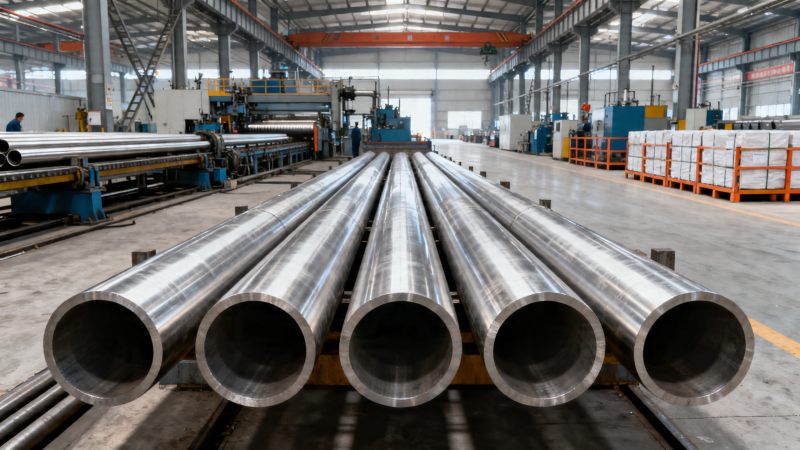
In the steel industry, the buying route affects far more than price. It can influence specification accuracy, documentation quality, packaging, inspection consistency, logistics planning, and even project delay risk. For stainless steel pipe procurement, online channels are often attractive for urgent inquiries and small to medium repeat orders, while direct mill purchasing is usually considered for larger volumes, tailored dimensions, or stricter compliance requirements.
Different stakeholders evaluate the same purchase differently. Operators care about weldability, handling, and fit-up on site. Technical reviewers focus on grade, surface condition, dimensional tolerance, and standard alignment. Procurement teams compare lead times such as 7–15 days for stock-based supply versus 3–6 weeks for mill production. Finance and management often look at total landed cost, not only ex-works pricing.
This is why the question is not simply whether buying stainless steel pipe online is better than buying direct from a mill. The more practical question is which route fits your order size, quality threshold, risk tolerance, and project schedule. A distributor order for 2–5 tons is not managed the same way as an EPC package requiring multiple heats, MTC traceability, and staged delivery.
For global buyers, supplier capability also matters. Hongteng Fengda, as a structural steel manufacturer and exporter from China, supports international projects with stable production planning, quality control, and customized supply solutions. Although many buyers start with visible online offers, long-term value usually comes from a supplier that can align standards such as ASTM, EN, JIS, or GB with practical delivery execution.
The table below helps decision-makers compare the two sourcing routes in terms that matter for real steel purchasing.
The comparison shows a clear pattern: online purchasing works well when speed and simplicity are the priority, while mill sourcing becomes stronger as technical demands, volume, and quality accountability increase. In many cases, the most effective strategy is not choosing one route forever, but matching the route to the project stage.
Which purchasing route fits different project scenarios?
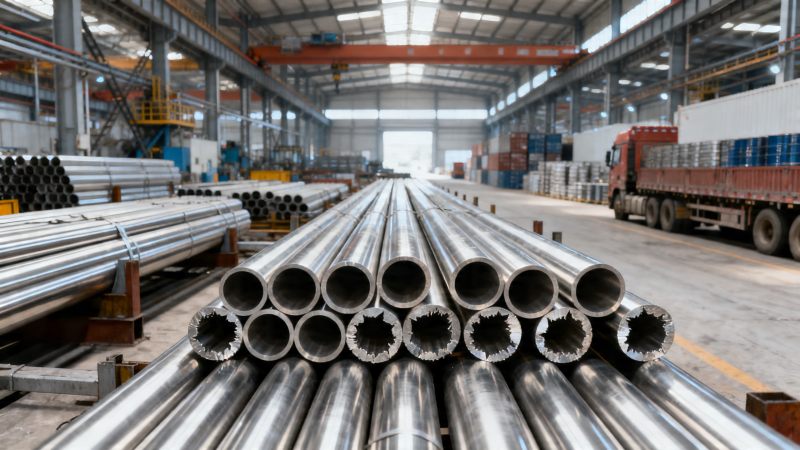
A maintenance team replacing a damaged line section has very different priorities from a project manager planning a 3-month installation schedule. If your requirement is standard stainless steel pipe in common sizes, online sourcing may shorten the inquiry cycle from several days to 24–48 hours. That speed matters when shutdown time is expensive or when distributors need to replenish mixed inventory quickly.
However, once the order involves non-standard wall thickness, special end treatment, dual verification, or repeated deliveries across multiple project phases, the direct mill route usually becomes more reliable. A mill can control raw material input, production scheduling, dimensional inspection, and packing method more tightly. That control is especially important when the buyer needs consistency across 2–4 lots rather than a one-time shipment.
In steel procurement, application context also shapes the route. For food processing lines, chemical handling systems, architectural fabrication, and industrial structures, buyers must check both service environment and downstream processing method. Corrosion exposure, welding procedure, polishing needs, and forming operations may all change whether a stock-based offer is sufficient.
This is also where adjacent stainless products matter. Mid-project buyers often need more than pipe alone. For fabrication, enclosure work, or component manufacturing, it can be practical to source coil, profile, and structural steel from a coordinated supplier. For example, 304 Stainless Steel Coil is widely used in high temperature and electrical industry applications, medical equipment construction, chemical processing, food industry equipment, kitchen supplies, vehicles, and transport-related fabrication where corrosion resistance and formability are required.
Typical scenario-based decision logic
The list below summarizes when each purchasing route is usually more practical for procurement teams, technical evaluators, and business decision makers.
- Choose online sourcing when you need standard specifications, quick quote comparison, small-batch purchasing, or immediate replenishment within a short planning window of 1–2 weeks.
- Choose direct mill supply when the order includes custom dimensions, repeated lots, stricter tolerances, project documentation, or material verification tied to contract obligations.
- Use a hybrid approach when you need a sample or trial order first, then move to volume supply after technical approval and budget release.
- Prioritize suppliers with broader steel capability when your project may later require angle steel, channel steel, beams, cold formed sections, or OEM structural components in the same procurement chain.
A hybrid strategy is often underrated. Technical teams can validate a small online or stock-based sample, then transfer volume purchasing to a qualified manufacturing source once dimensions, processing behavior, and compliance documents have been confirmed.
Why product data still matters in cross-category sourcing
Even when the initial discussion centers on stainless steel pipe, procurement often expands into sheets, coils, structural members, or fabricated components. A product with clear parameter disclosure helps buyers judge whether the supplier understands technical communication. In the case of stainless coil, common reference points include thickness ranges such as 2.5mm–10.0mm, width options from 610mm–2000mm, and finishes like BA, 2B, NO.1, NO.4, HL, and 8K.
For technical review, details such as tensile strength of at least 520, yield strength of at least 275, elongation around 55–60, and hardness limits up to 183HB or 100HRB indicate whether the supplier provides usable engineering information rather than only sales language. This same discipline should be expected when evaluating a stainless steel tube manufacturer or steel tube supplier.
What should technical teams and procurement inspect before placing the order?
Many purchasing problems do not start at the factory. They start with incomplete inquiry data. When buyers ask for price without stating grade, OD, wall thickness, length, standard, quantity, finish, and destination port, they make comparison unreliable. A low unit price can quickly become expensive if the actual specification requires retesting, repacking, rework, or split shipment.
For stainless steel pipe, at least 5 key checks should be completed before order confirmation: material grade, manufacturing route, dimensional tolerance, applicable standard, and document package. If the material will be welded, formed, or exposed to corrosive media, users should also review surface quality, consistency between batches, and any project-specific inspection requirements.
Procurement teams should also ask whether the supplier can support the full communication chain. That includes technical clarification, sample support when necessary, packaging suitable for sea freight, and a realistic production timeline. For international steel purchasing, a promised lead time of 10 days means little unless the supplier can explain whether that covers production only, or production plus inspection and export preparation.
Hongteng Fengda supports this kind of disciplined sourcing process by combining manufacturing capability with export coordination. For buyers handling structural and industrial steel procurement, that means fewer gaps between quotation, technical review, production, and shipment scheduling. The benefit is not only operational convenience, but also lower sourcing risk over the life of the project.
Key checks before you approve a stainless steel pipe order
The following table can be used by engineers, QC staff, purchasing officers, and project managers during supplier evaluation.
A disciplined pre-order review reduces avoidable cost. In practice, many disputes are linked to missing confirmations rather than hidden defects. Clear inquiry input often saves more money than aggressive price negotiation alone.
A practical 4-step buying workflow
- Define the service condition and technical requirement, including standard, size range, quantity, and required documents.
- Screen suppliers by manufacturing capability, export experience, and communication accuracy within the first 24–72 hours.
- Confirm production route, inspection scope, and delivery schedule before PO release.
- Review packing, shipment documents, and batch consistency before final logistics execution.
This workflow works for both online orders and mill-direct projects. The difference is that larger orders usually require deeper technical and contractual confirmation at each step.
How do cost, compliance, and risk change between the two options?
Buyers often compare only visible unit price, but stainless steel pipe sourcing involves at least 4 cost layers: material price, processing or customization cost, logistics and packing cost, and risk cost. Risk cost includes late delivery, unusable tolerances, missing certificates, or inconsistent batches. For many industrial buyers, this hidden layer can exceed the initial price difference between a trader offer and a mill offer.
Compliance should also be assessed early. Depending on destination market and project contract, buyers may need alignment with ASTM, EN, JIS, or GB standards, plus routine export documentation and third-party inspection coordination if requested. A stainless steel tube manufacturer may be technically capable, but if documentation handling is weak, approval can still be delayed by 1–2 weeks.
This matters to financial approvers and project leaders because delay has a measurable cash-flow effect. A shipment that arrives late can interrupt installation sequencing, labor utilization, and invoicing milestones. In contrast, a slightly higher but better-controlled supply route may reduce total project exposure. The right sourcing decision therefore depends on cost certainty, not just nominal price.
For cross-border steel supply, experienced exporters add value by reducing coordination friction. Hongteng Fengda serves buyers across North America, Europe, the Middle East, and Southeast Asia with stable production capacity and practical export support. For companies sourcing structural steel and related stainless products together, integrated planning can improve consistency in both quality control and shipment timing.
Common risk points buyers should not ignore
- Price without specification is not a valid comparison. Always match grade, dimensions, tolerance, and documentation scope.
- Short lead times should be checked against stock source, not only supplier promise.
- For project orders, missing traceability can create approval issues even when the material itself is usable.
- Low-cost packing may increase freight damage risk during sea shipment over several weeks.
A strong sourcing strategy balances technical fit, compliance readiness, and delivery realism. That balance is especially important when procurement is reviewed by engineering, QA, commercial, and finance teams at the same time.
FAQ: what do buyers ask most before choosing a steel tube supplier?
The questions below reflect typical concerns from researchers, end users, procurement teams, distributors, and project decision makers who are comparing online offers with direct mill supply.
Is buying stainless steel pipe online safe for industrial use?
It can be safe if the specification is standard and the supplier can provide clear documentation, traceability, and dimension control. Online sourcing is more suitable for replacement orders, smaller quantities, and stock items. For critical industrial use, buyers should verify grade, standard, tolerance, and MTC details before payment or shipment release.
When is direct mill purchasing the better option?
Direct mill purchasing is usually better when the order volume is larger, the specification is customized, or project compliance is strict. It is also the better option when the buyer needs stable repeated supply over 2–4 batches, or when dimensions and inspection requirements go beyond common stock ranges.
What is the usual lead time difference?
Stock-based online supply may move within 7–15 days depending on packing and export readiness. Mill production often requires 3–6 weeks depending on quantity, size, testing scope, and shipment planning. Buyers should also separate production time from logistics time, especially for export cargo.
What should distributors and resellers care about most?
Distributors should focus on batch consistency, packaging durability, repeat availability, and response speed for mixed orders. A supplier that can support both standard steel products and custom structural components is often more useful than a single-item trader, especially when customer demand changes month by month.
Can one supplier support both stainless products and structural steel items?
Yes, and this can simplify procurement. Buyers working on construction, industrial manufacturing, or infrastructure packages often need stainless products alongside angle steel, channel steel, beams, and cold formed profiles. A coordinated supplier can help reduce communication gaps, consolidate quality checks, and improve delivery planning.
Why work with a supplier that understands both steel manufacturing and export execution?
The real procurement challenge is rarely price alone. It is the coordination of specification, production, inspection, packing, documents, and delivery. A supplier with manufacturing and export experience can support buyers at each stage, from early parameter confirmation to shipment scheduling. This is especially valuable when teams from engineering, procurement, QA, and finance all need answers before approval.
Hongteng Fengda provides structural steel products and customized solutions for global construction, industrial, and manufacturing projects. With experience in angle steel, channel steel, steel beams, cold formed steel profiles, and OEM structural components, the company helps buyers match product selection with real project conditions rather than generic catalog assumptions.
If you are comparing a steel tube supplier, a stainless steel tube manufacturer, or a broader project steel partner, it helps to start with a clear technical and commercial checklist. You can consult on 6 core areas: material grade confirmation, dimension selection, relevant standards, lead time planning, document requirements, and packing or shipment method. These points often determine whether the sourcing route will be smooth or costly.
Contact us if you need support with parameter confirmation, product selection, delivery cycle review, custom steel solutions, certification alignment, sample discussion, or quotation comparison for your next stainless or structural steel order. A focused review at the inquiry stage can save weeks of delay and reduce sourcing uncertainty before the project moves forward.
Please give us a message


Please enter what you want to find