Choosing the best metal wire for fencing starts with understanding strength, corrosion resistance, and project cost. Whether you are comparing metal wire for fencing for agricultural, industrial, or perimeter use, the right material can improve safety and reduce maintenance. This guide also connects fencing needs with broader steel sourcing considerations, helping buyers and project teams evaluate quality, specifications, and long-term value.
For operators, purchasing teams, technical reviewers, and project managers, fencing wire is not just a low-value accessory. In many steel-related projects, it directly affects boundary security, livestock control, equipment protection, and maintenance budgets over 3-10 years of service. A poor wire choice can lead to early rust, wire breakage, repeated tightening, and higher labor costs.
In B2B sourcing, the best solution is rarely defined by price alone. Wire diameter, tensile strength, coating type, environmental exposure, installation method, and compliance with ASTM, EN, JIS, or GB standards all influence lifecycle value. This is especially important when fencing is part of larger construction, infrastructure, utility, or industrial supply programs.
Key Factors That Define the Best Metal Wire for Fencing
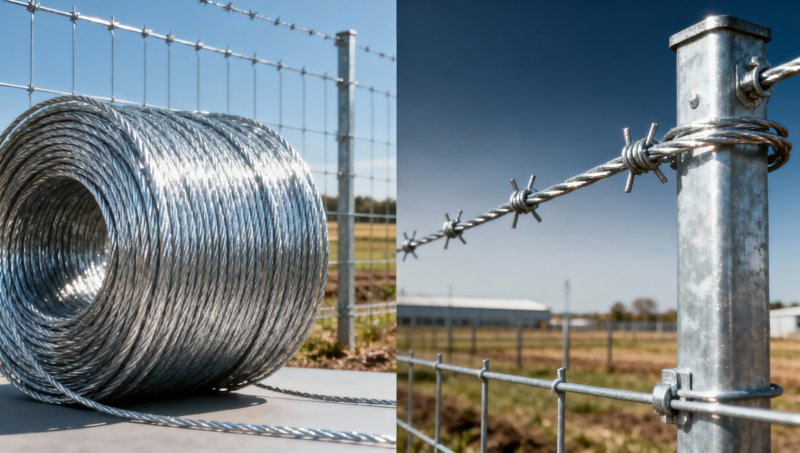
When buyers search for the best metal wire for fencing, they are usually balancing 4 core variables: mechanical strength, corrosion resistance, ease of installation, and total cost over time. These factors matter differently across farms, warehouses, highways, substations, and industrial compounds. A wire that performs well in a dry inland area may fail much faster in coastal or high-humidity zones.
Strength is the first technical checkpoint. Fencing wire must resist tension during installation and remain stable under wind loads, livestock pressure, or accidental impact. In practical terms, many project teams compare wire by tensile range, elongation behavior, and whether the fence line can maintain shape over spans of 2-4 meters between posts. Lower-quality wire may save money at purchase, but it often increases maintenance frequency within 12-24 months.
Corrosion resistance is equally critical. For outdoor steel applications, zinc coating, galvanizing quality, and surface uniformity are major indicators. In agricultural fencing, standard galvanized wire may be sufficient for moderate climates. In marine, roadside, or chemical exposure environments, buyers should evaluate heavier zinc coating, more robust surface treatment, or additional protective specifications to achieve longer service life.
Cost should be measured across the full service cycle rather than the initial invoice. If one wire type lasts 6-8 years and another requires replacement after 2-3 years, the cheaper option can become more expensive once labor, downtime, transport, and reinstallation are included. This is why experienced procurement teams often review both unit price and expected replacement interval before approving a fencing package.
How Application Changes the Wire Requirement
Different fencing jobs require different priorities. Agricultural users may focus on flexibility, moderate cost, and quick field installation. Industrial users usually prioritize perimeter integrity, anti-cut performance, and compatibility with welded mesh or chain link systems. Infrastructure projects such as highways and railways need stable long-term outdoor performance and consistent supply for large-volume procurement.
- Farm and livestock fencing: often uses medium-diameter galvanized wire for balance between flexibility and corrosion resistance.
- Industrial perimeter fencing: typically requires stronger wire with predictable tolerances and better coating consistency.
- Road, rail, and utility protection: benefits from repeatable mechanical properties and stable batch quality for large runs.
- Coastal or wet locations: should prioritize anti-corrosion life over minimum purchase price.
The table below gives a practical comparison of common wire selection logic across major fencing applications.
The key takeaway is simple: there is no single universal fencing wire for every job. The best metal wire for fencing is the one that matches load conditions, exposure environment, and service expectations while staying within project budget.
Material Options, Coating Choices, and Performance Trade-Offs
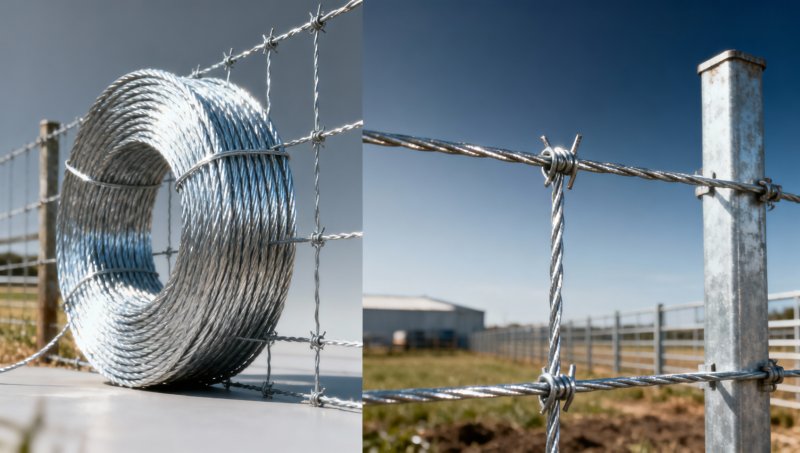
Most fencing projects compare several metal wire categories, including plain carbon steel wire, galvanized steel wire, stainless steel wire, and application-specific drawn products. In the steel industry, galvanized steel remains the most widely adopted option because it offers a practical balance between corrosion protection, mechanical performance, and cost efficiency across large quantities.
Plain steel wire can be suitable for temporary use or controlled indoor conditions, but it usually lacks the durability needed for long-term external fencing. Stainless steel offers strong corrosion resistance, yet its higher material cost can be difficult to justify for wide agricultural boundaries or large industrial perimeter lengths of 500-5,000 meters. Galvanized products often sit in the middle, delivering solid performance without the premium price of stainless grades.
For buyers already sourcing steel components for towers, road protection, lighting poles, or structural assemblies, it can be efficient to work with suppliers that understand both fencing requirements and broader steel fabrication standards. This allows better control of tolerance, surface treatment, packaging, and delivery coordination across multiple product categories.
Why Galvanized Steel Is Common in Fencing Supply
Galvanized steel is popular because zinc coating acts as a protective layer against moisture and atmospheric corrosion. In many outdoor projects, this extends usable service life and reduces repainting or replacement work. For distributors and project contractors, consistent galvanizing quality matters more than marketing language. The real checkpoints are coating uniformity, adhesion, surface finish, and production consistency from batch to batch.
A relevant example from broader steel sourcing is Galvanized Round Steel, which is used in electric power towers, communication towers, highway protection, street light poles, marine components, building steel structure components, and many precision-processing industries. Its tensile strength range of 570-820 MPa shows how galvanized round steel products can serve demanding outdoor and industrial environments where both strength and anti-corrosion performance are required.
This type of supply approach is valuable for fencing buyers because the same quality logic applies: advanced galvanizing process, hot galvanizing anti-corrosion surface treatment, controlled straightening, surface inspection, and traceable packaging all reduce sourcing risk. Diameter options such as 16-250 mm in structural applications illustrate the importance of dimensional control, even though fencing wire itself is typically specified in much smaller diameters.
What Technical Teams Should Check
- Base material suitability for the intended load and exposure environment.
- Coating method and expected anti-corrosion life in dry, humid, or marine conditions.
- Mechanical range, including tensile level and dimensional tolerance.
- Inspection capability, such as surface control, ultrasonic checks, or material verification where relevant.
- Compliance with requested standards, including ASTM, EN, JIS, GB, BS, AiSi, or AS where project documents require them.
The comparison below helps stakeholders match material choice to project expectations more effectively.
For many steel procurement teams, galvanized solutions remain the most practical choice because they reduce the trade-off between durability and budget pressure. The right decision depends on exposure, lifespan target, and maintenance strategy rather than on one material trend alone.
How to Select the Right Wire Specification for Your Fencing Project
Selecting the right fencing wire specification requires more than asking for a standard coil. Technical assessment should cover diameter, tensile strength, coating condition, post spacing, installation tension, and expected service environment. If the fence is part of a larger steel package for industrial or infrastructure work, it is also wise to align specifications with the project drawing set, inspection plan, and delivery schedule.
A common mistake is choosing wire diameter only by visual thickness. A heavier wire may look stronger, but performance also depends on steel grade, manufacturing process, and whether the wire is intended for woven fencing, chain link production, barbed systems, or direct line wire installation. In many practical jobs, specification mismatch causes more problems than material shortage.
Project teams should define service expectations before ordering. Is the fence expected to last 3 years, 5 years, or more than 10 years? Will it be exposed to road salt, fertilizer, standing water, or marine air? Will maintenance crews inspect it every 6 months, or only after visible damage? These answers shape the most cost-effective wire option.
A Practical 5-Step Selection Process
- Define the application: agricultural, industrial, security, transport corridor, or utility protection.
- Identify environmental exposure: dry inland, humid, coastal, chemical, or mixed conditions.
- Set the performance baseline: required tensile behavior, acceptable sag, and service-life target.
- Confirm standards and quality documents: inspection records, material certificates, and packaging details.
- Review landed cost: product price, logistics, installation labor, maintenance cycle, and replacement risk.
This process helps procurement, engineering, finance, and quality teams work from the same criteria. It also reduces the chance of buying based on incomplete quotations that omit coating details or testing scope.
Procurement Questions Worth Asking Suppliers
- What is the actual tensile range and tolerance control for the offered wire?
- How is galvanizing performed, and what quality checks are applied to the finished surface?
- Can the supplier support customized lengths, packaging, or OEM marking for distribution projects?
- Which standards can the product align with, such as ASTM, EN, JIS, or GB?
- What is the typical lead time for standard orders versus customized runs, such as 2-4 weeks or longer for special processing?
When these questions are answered clearly, buyers can compare offers on technical value rather than headline price alone. That is especially important for importers, distributors, and large-scale contractors coordinating several steel items from one region or one manufacturing base.
Supplier Evaluation, Quality Control, and Delivery Risk Management
For international buyers, the best metal wire for fencing is only as reliable as the supplier behind it. Manufacturing capability, inspection discipline, packaging control, and stable lead times often determine whether a project stays on schedule. In cross-border steel procurement, even a technically correct product can become a problem if traceability is weak or delivery coordination is inconsistent.
This is where experienced structural steel manufacturers can add value beyond the product itself. Hongteng Fengda, as a structural steel manufacturer and exporter from China, serves global construction, industrial, and manufacturing projects with angle steel, channel steel, steel beams, cold formed profiles, and customized structural steel components. That broader steel background supports customers who need not only fencing-related materials, but also dependable sourcing logic for standards, production planning, and quality assurance.
For fencing buyers, a capable supplier should be able to explain material selection, compliance options, processing scope, packaging method, and shipment timing in a clear way. It is useful when the supplier already works under international standard expectations and understands how North America, Europe, the Middle East, and Southeast Asia may differ in documentation and acceptance criteria.
Quality Control Points That Reduce Sourcing Risk
Quality control in steel wire and related products should cover at least 6 checkpoints: raw material verification, dimensional inspection, tensile verification, coating or surface examination, packaging review, and shipment identification. If a supplier can only discuss price and capacity, but not inspection workflow, the sourcing risk is usually higher.
The following table can be used as a practical supplier evaluation checklist during RFQ review or pre-order technical clarification.
The most effective procurement strategy is to combine technical review with commercial review. A supplier that offers stable production capacity, quality consistency, and dependable lead times can help buyers reduce hidden costs, especially in multi-item steel sourcing programs.
Common Risk Signals During Fencing Wire Procurement
- Quotation lacks clear reference to standards, coating condition, or tolerance.
- Lead time sounds unusually short without explanation of stock status or production plan.
- No clear packaging, marking, or batch identification process is provided.
- Supplier cannot explain inspection methods or acceptance criteria.
- Samples and production lots appear inconsistent in finish or straightness.
Installation, Maintenance, and Long-Term Value in Fencing Projects
Even the best metal wire for fencing can underperform if installation tension is wrong, post spacing is inconsistent, or ongoing maintenance is ignored. In field conditions, installation quality often determines whether the fence remains stable for 5-8 years or starts sagging and corroding much earlier. That is why operators and maintenance teams should be included in planning, not just at the final installation stage.
A practical maintenance plan does not need to be complicated. Many sites can follow an inspection cycle every 6 or 12 months, depending on weather exposure and security importance. Teams should check for coating damage, wire loosening, bent posts, impact points, and corrosion around connections. Early repair of small defects is usually far cheaper than replacing complete sections after failure spreads.
For distributors and after-sales teams, long-term value also depends on packaging and handling. Wire that arrives with surface damage, poor bundling, or missing identification may create avoidable field issues even before installation begins. Good packaging, marking, and transport protection are therefore part of product performance, not separate from it.
Best Practices for Field Performance
- Match wire tension to the fence design rather than applying maximum force during installation.
- Keep post spacing consistent, commonly within planned intervals such as 2-4 meters for many fence types.
- Protect wire coating from scraping during transport, uncoiling, and fastening.
- Schedule routine inspection before rainy seasons or after impact events.
- Replace damaged sections promptly to prevent progressive weakness along the fence line.
Lifecycle thinking is what separates a short-term purchase from a sound project decision. Material choice, supplier control, site installation, and maintenance discipline all contribute to the real return on fencing investment.
FAQ: Questions Buyers Often Ask
How do I choose fencing wire for corrosive environments?
Prioritize galvanized or other anti-corrosion solutions with verified surface quality. Coastal, humid, and chemical-adjacent sites should not be sourced by price alone, because corrosion-related replacement costs can rise sharply within 2-3 years if protection is inadequate.
Is higher tensile strength always better?
Not always. Higher tensile wire can reduce sagging and improve stability, but it must still fit the fence design, fastening system, and installation method. Over-specification can increase cost without improving field results.
What documents should a buyer request?
Ask for product specifications, inspection records, applicable standard references, packaging details, and delivery terms. For larger projects, batch traceability and acceptance criteria should be confirmed before shipment.
Can fencing wire sourcing be combined with other steel products?
Yes. For many industrial and infrastructure buyers, combining fencing materials with structural steel, profiles, beams, or customized components can improve logistics efficiency and reduce supplier management complexity.
Choosing the right fencing wire means evaluating more than a coil price. Buyers need to match strength, anti-corrosion performance, specification control, supplier reliability, and maintenance expectations to the real project environment. That approach helps technical teams, procurement managers, and decision-makers reduce risk while improving long-term value.
For projects that also involve structural steel, profiles, highway protection components, or customized steel supply, working with an experienced manufacturer can simplify sourcing and improve consistency across the package. Hongteng Fengda supports global buyers with reliable steel products, quality-focused production, and practical customization for construction and industrial applications.
If you are comparing metal wire for fencing or evaluating related steel products for your next project, contact us to discuss specifications, request a tailored solution, or learn more about available steel sourcing options.
Please give us a message


Please enter what you want to find