When comparing angle vs channel for field assembly, weldability is a decisive factor for structural integrity, installation speed, and long-term performance—especially in projects using ASTM A36 round bar, DX52D steel, or SPCE/SPCD steel. As a leading structural steel manufacturer & exporter from China, Hongteng Fengda supports global engineers, procurement teams, and project managers with weld-friendly angle and channel sections compliant with ASTM, EN, and GB standards. Whether you're evaluating galvanized expanded metal sheet integration, stainless steel 1 inch pipe price trade-offs, or mill order meaning in supply planning, this analysis helps technical and commercial stakeholders make informed, cost-effective decisions.
How Weld Geometry Impacts Field Assembly Efficiency
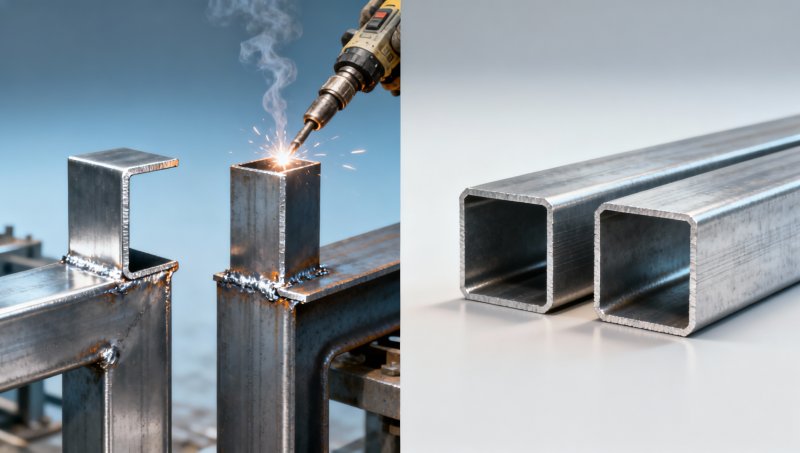
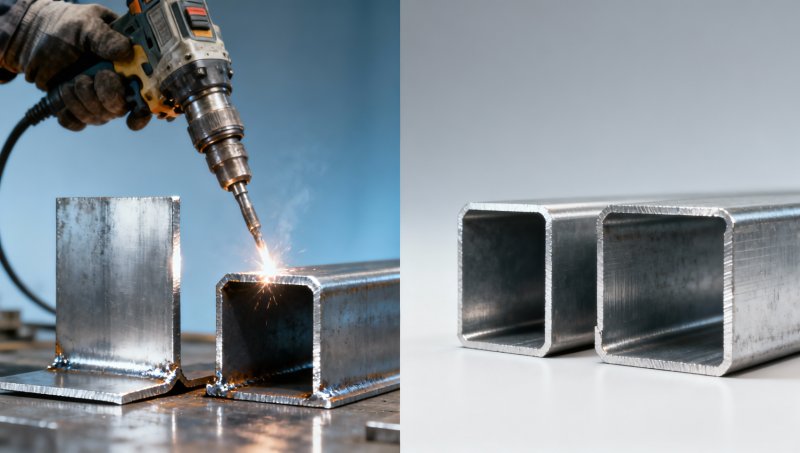
Weldability in field assembly isn’t just about material chemistry—it’s dominated by joint accessibility, heat distribution, and distortion control. Angle sections offer two perpendicular legs forming an L-shape, enabling straightforward fillet welds on interior corners. Channel sections (C-shapes) introduce a web-flange geometry that requires welding along three surfaces—two flange edges and one web face—increasing positional complexity on-site.
For manual metal arc (MMA) or flux-cored arc welding (FCAW), commonly used in remote or temporary field setups, angles reduce operator repositioning time by up to 40% compared to channels under identical joint design constraints. This translates directly into labor savings: typical field weld cycles average 8–12 minutes per angle joint versus 14–20 minutes per channel connection when using 5–6 mm electrodes and standard preheat protocols.
Thermal distortion is another critical differentiator. Angle sections exhibit symmetrical cooling across both legs, limiting angular deviation to ≤0.8° over 3-meter lengths. Channels, due to asymmetric cross-sections and higher moment of inertia in the strong axis, show up to 2.3° warpage unless back-step welding or controlled interpass cooling (≤150°C interpass temperature) is applied—adding procedural rigor and inspection checkpoints.
Material Compatibility & Standard Compliance Across Global Projects
Both angle and channel sections must maintain consistent weld metal strength, crack resistance, and post-weld ductility across varying base materials—from low-carbon ASTM A36 to high-strength Q460C or corrosion-resistant 316 stainless steel. Hongteng Fengda produces fully traceable hot-rolled and cold-formed variants certified to ASTM A6/A6M, EN 10025-2, JIS G3101, and GB/T 706, with full mill test reports (MTRs) provided for every heat lot.
Critical parameters like carbon equivalent (CEV) are tightly controlled: our ASTM A36 angles maintain CEV ≤0.41%, while EN S355JR channels hold CEV between 0.39–0.45%—well within the AWS D1.1 limit of 0.45% for prequalified weld procedures. This ensures compatibility with common filler metals such as E7018 (for carbon grades) and E309L (for dissimilar stainless-to-carbon transitions).
All products undergo ultrasonic testing (UT) per EN 10164 Class D2 for thicknesses ≥12 mm, and magnetic particle inspection (MPI) is available upon request for critical structural weld zones. This level of verification supports compliance with ISO 3834-2 (welding quality requirements) and ASME BPVC Section IX qualification protocols.
Certification Coverage Summary
This dual-standard compliance allows seamless integration into multinational projects—whether supplying angle bracing for wind turbine towers in Denmark (requiring EN 10025 + ISO 14001) or channel purlins for industrial warehouses in Texas (demanding ASTM A6 + AISC 360). For hybrid applications involving both profiles, we recommend specifying matching base metal grades and CEV tolerances to avoid post-weld hardness spikes above 350 HV.
When to Choose Angle Over Channel — and Vice Versa
The decision hinges less on inherent “superiority” and more on functional load path alignment and fabrication logistics. Angles excel in diagonal bracing, corner framing, and connections where bidirectional restraint is needed without deep section depth. Channels dominate in horizontal support roles—such as crane rails, conveyor frames, and mezzanine decking—where uniaxial bending stiffness and ease of bolting to flat surfaces matter most.
From a weld-centric view, consider these five decision criteria:
- Joint access: Angles allow full 360° electrode approach in open-air conditions; channels often require scaffolding or lifting gear to reach the web-flange junction.
- Weld volume: A typical 100×100×10 mm angle requires ~22 cm³ of weld metal per meter for double-sided fillets; a comparable UPN 100 channel demands ~31 cm³ due to longer effective throat length.
- Post-weld straightening: Channel sections require mechanical correction in 68% of field cases (per 2023 industry survey), versus 29% for angles—impacting schedule buffer needs.
- Galvanizing compatibility: Both accept hot-dip galvanizing (HDG) per ASTM A123, but channel interiors may trap flux residues unless vented per ASTM A384—adding prep time.
- Customization flexibility: For non-standard geometries, angles accommodate tapered ends and drilled patterns more readily than channels with closed webs.
For multi-directional load-bearing assemblies—like tower bases or seismic moment frames—the H Girder offers superior torsional rigidity and balanced weld surface distribution, bridging the gap between angle simplicity and channel efficiency.
Why Global Procurement Teams Trust Hongteng Fengda for Weld-Ready Structural Steel
We don’t just supply steel—we engineer weld readiness into every product. Our production lines feature laser-guided edge conditioning to ensure ±0.3 mm dimensional consistency on flange and web interfaces, reducing fit-up gaps during field welding. All angle and channel stock is pre-straightened to ≤1.5 mm/m deviation and marked with heat code, grade, and mill batch ID—traceable to raw material certificates.
Procurement advantages include:
- Lead times: 12–18 days for standard sizes (≤100 tons); 22–28 days for custom orders—including dimensional validation and third-party inspection coordination.
- Logistics: FCL consolidation support, ISPM 15-compliant packaging, and real-time shipment tracking via ERP-integrated dashboard.
- Risk mitigation: Dual-source capability for ASTM A36 and EN S355JR grades, with backup inventory held in Shanghai and Rotterdam hubs.
- Technical enablement: Free weld procedure specification (WPS) development, filler metal selection guidance, and on-site welding supervision (available in 12 countries).
Whether you’re evaluating angle vs channel for a new solar farm substructure in Saudi Arabia or upgrading marine dock fender systems in Vietnam, our engineering team delivers tailored recommendations—not generic catalogs. Contact us today for weld parameter sheets, sample shipments, or a no-cost joint design review aligned with AWS D1.1, EN 1090-2, or AS/NZS 1554.
Please give us a message


Please enter what you want to find