Choosing the right structural profile can directly affect project cost, load performance, fabrication efficiency, and long-term reliability.
For business evaluators comparing angle vs channel steel for industrial projects, the decision involves application requirements, sourcing stability, standards compliance, and total project value.
This guide explains the key differences between angle steel and channel steel for buyers, engineers, and procurement teams evaluating industrial steel applications.
What Business Evaluators Really Need to Decide
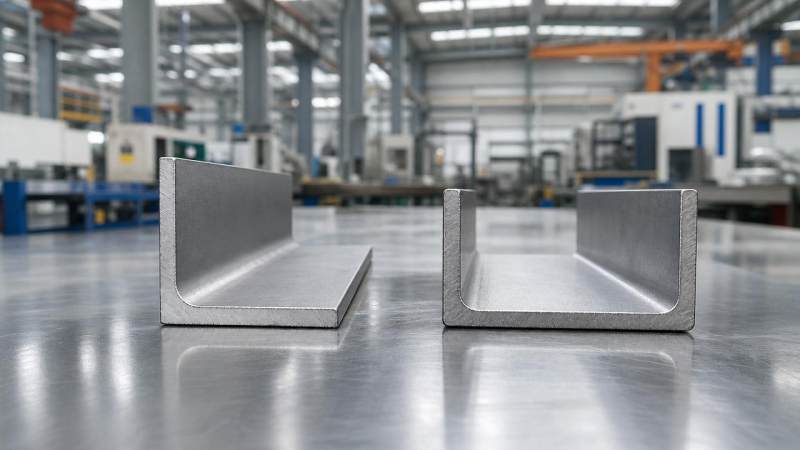
The core question is not which profile is universally better. The real question is which profile reduces risk for a specific project condition.
Angle steel is often preferred when bracing, framing, edge support, or connection flexibility matters more than deep-section load capacity.
Channel steel is usually more suitable when the project needs stronger directional support, better bending resistance, or a more stable open-section profile.
For procurement teams, the best choice also depends on fabrication cost, availability, coating requirements, installation efficiency, and compliance with project standards.
A low unit price may not deliver savings if the profile increases welding time, requires extra reinforcement, or causes delays during assembly.
Angle Steel: Where It Creates Practical Value
Angle steel has an L-shaped cross-section, available as equal angle or unequal angle depending on structural and design requirements.
Its main advantage is versatility. It can be used for frames, brackets, supports, trusses, shelves, towers, and secondary structural components.
Because of its simple geometry, angle steel is easy to cut, drill, weld, galvanize, and connect with bolts during fabrication.
This makes it attractive for industrial projects that require many repeated parts, fast workshop preparation, or flexible on-site adjustments.
Angle steel performs well in bracing systems because it can resist tension and compression effectively when correctly designed and installed.
It is also useful where space is limited, since the L-shape can fit against edges, corners, platforms, and machinery support frames.
However, angle steel is not always the best option for primary load-bearing members exposed to significant bending in one direction.
Its open and asymmetric shape may require careful orientation, additional bracing, or design verification to avoid instability under certain loads.
Channel Steel: When Strength and Stability Matter More
Channel steel has a U-shaped cross-section with a web and two flanges, giving it stronger directional stiffness than angle steel.
It is commonly used for equipment frames, support rails, floor joists, truck bodies, machinery bases, roof purlins, and industrial platforms.
Compared with angle steel, channel steel usually provides better bending resistance along its strong axis, making it suitable for heavier support needs.
The web and flanges help distribute loads more effectively, especially when the member is installed in the correct structural orientation.
For business evaluators, this can mean fewer auxiliary supports, cleaner designs, and potentially lower labor costs during assembly.
Channel steel can also simplify alignment where components need to sit inside, beside, or against a straight U-shaped section.
The limitation is that channel steel may be heavier, more expensive per piece, and less flexible for small connection details.
In some cases, its open section can still twist under eccentric loads, so engineering review remains important for demanding applications.
Cost Comparison: Look Beyond the Steel Price
Many buyers start with price per ton, but industrial project economics require a wider view of the total installed cost.
Angle steel may offer lower material cost for light structures, repeated brackets, simple frames, and non-critical secondary support applications.
Channel steel may cost more initially, yet reduce reinforcement, welding, or assembly time when stronger directional support is required.
The right comparison should include material weight, fabrication steps, coating cost, transport efficiency, installation labor, and expected service life.
For example, choosing angle steel for a component that later needs extra stiffeners can eliminate any apparent purchasing advantage.
Similarly, selecting channel steel for a light bracket may add unnecessary weight and cost without improving project performance.
Business evaluators should ask suppliers for quotation clarity, including steel grade, standard, tolerance, surface treatment, packing, and delivery schedule.
This prevents misleading comparisons where one offer appears cheaper but excludes important processing, inspection, or logistics requirements.
Application Fit: Matching Profile to Project Function
Angle steel is a strong candidate for bracing, corner supports, small frames, lattice structures, temporary supports, and connection components.
It is especially valuable where the design needs many connection points and where fabrication teams benefit from simple cutting and welding.
Channel steel is better suited for structural rails, machine supports, platform edges, load-bearing frames, and members exposed to bending forces.
It also works well when a project needs a continuous straight profile that can guide, support, or protect another component.
In industrial construction, both profiles often appear together, because each solves a different structural and fabrication problem.
For heavier civil works, waterfront construction, or retaining systems, buyers may also evaluate specialized products such as Steel Sheet Piles.
These products support applications like cofferdam formation, deep-water construction, soil retention, and reusable temporary works under demanding site conditions.
Evaluators should therefore compare steel profiles within the broader project system, not as isolated materials with separate price tags.
Standards, Grades, and Quality Control Considerations
For international buyers, standards compliance is often as important as profile selection, especially for regulated construction and industrial projects.
Common standards may include ASTM, EN, JIS, and GB, depending on project location, engineering specifications, and buyer requirements.
Steel grade selection affects yield strength, weldability, toughness, and suitability for galvanizing or other surface protection treatments.
A business evaluator should confirm whether the supplier can provide mill certificates, dimensional inspection records, and traceable production documentation.
This is particularly important when projects involve safety-critical structures, public infrastructure, export documentation, or third-party inspection requirements.
Dimensional tolerance also matters. Inconsistent flange width, leg length, thickness, or straightness can create assembly problems downstream.
Reliable quality control reduces hidden costs by preventing rework, installation delays, rejected batches, and disputes between contractors and suppliers.
A professional structural steel manufacturer should support standard specifications and customized solutions while maintaining stable production consistency.
Fabrication and Installation Efficiency
Fabrication efficiency can significantly influence the final decision between angle and channel steel, especially in high-volume industrial projects.
Angle steel is generally easier to handle, mark, cut, punch, and weld when parts are small or repetitive.
Its simple form allows fabricators to create brackets, gussets, supports, and frames without complex preparation or special fixturing.
Channel steel may require more attention during cutting and welding, but it can simplify assembly for heavier structural frames.
When used properly, channel sections can reduce the need for multiple small pieces and create a cleaner load path.
Installation teams may prefer channel steel when components require alignment along a straight edge or support over a longer span.
However, angle steel remains more convenient for quick reinforcement, field adjustment, and connection to existing structures or machinery bases.
The most efficient option depends on how the profile moves through purchasing, workshop fabrication, coating, shipping, and final installation.
Durability, Coating, and Maintenance Factors
Industrial environments often expose steel to moisture, chemicals, abrasion, temperature changes, or outdoor weathering conditions over many years.
Both angle and channel steel can perform reliably when the correct grade, coating system, and maintenance plan are selected.
Hot-dip galvanizing is common for outdoor structures, transmission towers, platforms, fences, and components exposed to corrosion risk.
Painting, powder coating, or customized surface treatment may be more suitable for controlled environments or specific appearance requirements.
Angle steel can be easier to inspect because its surfaces are more accessible after installation in many support applications.
Channel steel may collect water or debris if installed in an orientation that creates pockets, so drainage should be considered.
For long-term value, evaluators should review the environment, expected service life, maintenance access, and corrosion protection specification together.
A slightly higher upfront coating cost can be justified when it reduces replacement risk and long-term operational disruption.
Sourcing Strategy for Global Industrial Projects
For overseas buyers, choosing a supplier is not only about product capability. It is also about delivery reliability and communication quality.
Industrial schedules are often tight, and delays in structural steel supply can affect fabrication, site installation, and contractor coordination.
A dependable manufacturer should offer stable capacity, clear lead times, export experience, and the ability to meet international standards.
Hongteng Fengda supports global buyers with angle steel, channel steel, beams, cold formed profiles, and customized structural steel components.
For business evaluators, this can reduce sourcing complexity by consolidating multiple structural steel requirements with one experienced partner.
OEM capability is also useful when projects need non-standard dimensions, special hole patterns, custom lengths, or project-specific packaging.
Buyers should request technical drawings, material specifications, inspection requirements, loading plans, and delivery schedules early in the sourcing process.
This improves quotation accuracy and reduces the risk of misunderstandings after production has already started.
Decision Checklist: Angle or Channel Steel?
Choose angle steel when the application involves bracing, light framing, connection details, brackets, edge supports, or flexible fabrication needs.
It is also a practical choice when the project requires many small parts and benefits from simple processing methods.
Choose channel steel when the component must carry stronger directional loads, support longer spans, or provide a stable framing element.
It is often more suitable for machinery bases, structural rails, platform members, and heavier industrial support systems.
If weight reduction is important, compare the required load capacity rather than simply selecting the lighter-looking profile.
If labor cost is high, evaluate which profile reduces cutting, welding, alignment, and installation time for the complete assembly.
If project risk is high, prioritize certified materials, consistent tolerances, supplier documentation, and compliance with the required engineering standard.
The best decision comes from matching structural function, fabrication method, procurement conditions, and long-term performance requirements.
Conclusion: The Better Profile Depends on Project Value
In the angle vs channel steel for industrial projects comparison, there is no single answer that fits every application.
Angle steel offers flexibility, easy fabrication, and cost efficiency for bracing, brackets, frames, and secondary support structures.
Channel steel provides stronger directional support, cleaner framing options, and better suitability for heavier load-bearing industrial components.
Business evaluators should compare total installed cost, standards compliance, fabrication efficiency, durability, and supplier reliability before making a decision.
Working with an experienced structural steel manufacturer helps buyers reduce sourcing risk, control project cost, and secure consistent product quality.
When the profile matches the real project function, steel procurement becomes more than a purchase decision; it becomes a value decision.
Please give us a message


Please enter what you want to find