Choosing between angle and channel steel can directly impact material budgets, fabrication efficiency, and long-term project value. Understanding the angle vs channel steel cost-effective solution helps control load performance, sourcing risk, and total installed cost.
In structural steel projects, the cheaper ton price does not always create the lower final budget. Shape efficiency, cutting waste, welding time, coating area, transport volume, and standard availability all influence the true comparison.
This article explains the practical differences between angle steel and channel steel, reviews current market concerns, and outlines how to identify the most cost-effective structural option for common applications.
Basic Profile of Angle Steel and Channel Steel
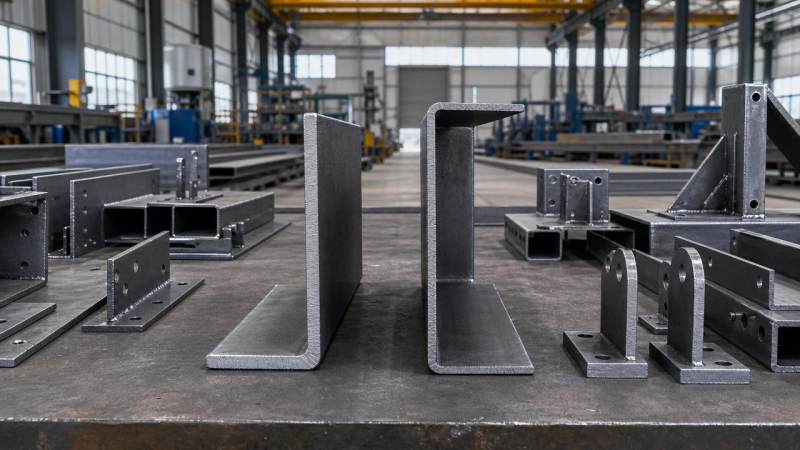
Angle steel is an L-shaped section with two legs, equal or unequal. It is widely used for frames, brackets, edge reinforcement, towers, supports, and light structural assemblies.
Channel steel is a C-shaped section with a web and two flanges. It is common in purlins, machine bases, trailer frames, racks, platforms, and medium-duty load-bearing systems.
The angle vs channel steel cost-effective solution depends on section efficiency. Channel steel often provides better bending resistance in one direction, while angle steel offers simpler detailing in compact assemblies.
Both products are available in hot rolled and formed versions, with production aligned to ASTM, EN, JIS, and GB standards. Dimensional tolerance and chemistry consistency matter in large procurement programs.
Key Structural Differences
- Angle steel is compact and easy to join in corners and edge conditions.
- Channel steel usually carries directional loads more efficiently.
- Angle sections can be easier to drill, clip, and brace in simple fabrications.
- Channel sections may reduce member count in frames needing higher stiffness.
Cost Signals Shaping Steel Selection
Today’s steel buyers evaluate more than ex-works price. The angle vs channel steel cost-effective solution is increasingly tied to procurement stability, fabrication productivity, and freight efficiency.
When supply schedules are tight, common sizes matter as much as unit price. Standard sections with stable rolling schedules usually reduce waiting time, partial shipment risk, and urgent replacement cost.
A reliable structural steel exporter can support this comparison with mill test records, dimensional consistency, and customized cutting. That combination often lowers hidden project expense more than nominal price negotiation.
How Each Section Creates Business Value
Angle steel usually becomes the angle vs channel steel cost-effective solution in secondary framing, light supports, equipment brackets, and reinforcement points where simple geometry reduces shop labor.
Channel steel often becomes the better choice in members carrying stronger directional bending. It can replace built-up light sections and improve stiffness without adding excessive fabrication steps.
Installed Cost Matters More Than Section Price
A lower steel weight can still produce a higher final cost if welding, fitting, or alignment becomes difficult. Likewise, a heavier section may save money when it shortens assembly hours.
In mixed-material projects, corrosion resistance may also affect section selection around exposed zones, food handling lines, or chemical environments. In these cases, stainless accessories or plate components are often added.
For projects needing corrosion-resistant flat materials, 304L Stainless Steel Plate can complement structural steel assemblies in chemical, food, transport, and equipment applications.
This material offers excellent corrosion resistance, easy welding, strong formability, and tensile strength of at least 520 MPa. Common thickness ranges run from 0.3mm to 200mm with ISO, SGS, and BV certification options.
Typical Project Scenarios and Section Fit
The angle vs channel steel cost-effective solution becomes clearer when matched to use conditions. Load direction, connection style, span, and maintenance exposure should be reviewed together.
When Angle Steel Usually Wins
- Short members with many repetitive connections.
- Projects prioritizing compact detailing and easy drilling.
- Secondary structures where extreme bending strength is unnecessary.
When Channel Steel Usually Wins
- Members exposed to larger directional loads.
- Frames needing fewer parts and cleaner load transfer.
- Applications where stiffness reduces vibration or deflection issues.
Practical Evaluation Steps Before Ordering
The most reliable angle vs channel steel cost-effective solution comes from comparing total use conditions, not from selecting by habit or stock familiarity alone.
- Confirm actual load direction, span, and connection method.
- Compare weight per meter against required strength and stiffness.
- Estimate cutting, welding, drilling, and fitting hours.
- Check coating area, galvanizing needs, and exposure conditions.
- Review export packing, container loading, and lead time stability.
- Request standard compliance documents and dimensional tolerances.
It is also useful to compare alternative section sizes instead of only comparing one angle with one channel. A slightly different dimension can improve both material yield and assembly speed.
For international orders, supplier capability matters. Stable production, custom processing, and dependable shipment planning can prevent expensive delays, especially in phased construction or industrial installation schedules.
Decision Direction for Lower-Risk Steel Sourcing
There is no universal winner in the angle vs channel steel cost-effective solution. Angle steel often lowers cost in lighter, connection-heavy work. Channel steel often improves value in members needing directional strength and stiffness.
The best decision comes from evaluating total project economics: steel weight, fabrication effort, corrosion treatment, logistics, and supply reliability. That broader view reduces procurement risk and supports predictable project execution.
For structural steel sourcing from China, Hongteng Fengda supplies angle steel, channel steel, beams, cold formed profiles, and custom structural components with international standard compliance and dependable export support.
If a project requires a clear section comparison, prepare drawings, loading details, target standards, and quantity plans first. A precise quotation review will reveal the most practical and cost-effective steel solution faster.
Please give us a message


Please enter what you want to find