When specifying ASTM A6 tolerances for prefab steel, project teams face a critical trade-off: tighter dimensional control versus added cost and lead time. For structural steel manufacturers like Hongteng Fengda—supplying ASTM A36 round bar for warehouse construction and industrial projects, HRB600 steel rebar to the Middle East, and custom profiles compliant with ASTM, EN, and GB standards—understanding 'mill order meaning in steel production' is essential. This article examines whether stricter ASTM A6 tolerances for steel profiles truly deliver value across procurement, quality control, and field assembly—especially for engineers, project managers, and financial decision-makers evaluating total cost of ownership.
What ASTM A6 Tolerances Actually Mean for Prefab Steel Projects
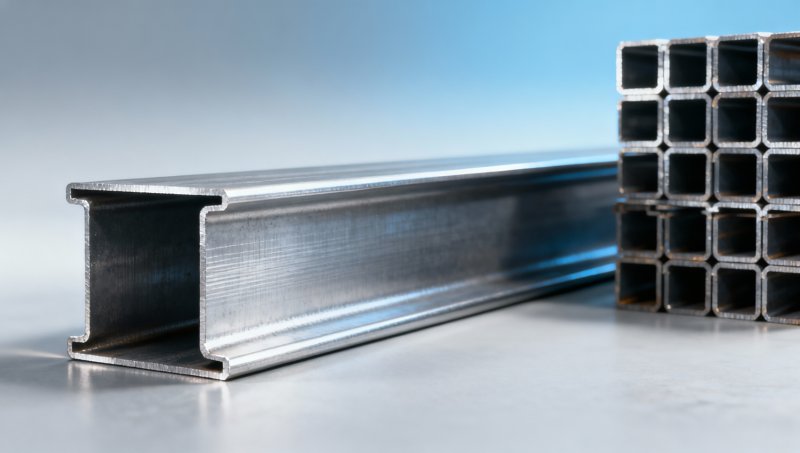
ASTM A6 is the standard specification covering dimensional tolerances for hot-rolled structural steel shapes—including beams, channels, angles, and tees. It defines permissible deviations in depth, flange width, web thickness, leg length, and straightness. For example, for a 200×75×8.5×11.5 Structural Steel Channel, A6 allows ±1.5 mm on depth and ±1.0 mm on flange width for lengths up to 12 m. These are not arbitrary limits—they reflect mill capabilities, thermal contraction behavior, and post-rolling handling constraints.
Tighter tolerances—such as ±0.5 mm on flange width—are technically achievable but require dedicated rolling passes, enhanced cooling control, and 100% offline dimensional verification. That adds 12–18% to base material cost and extends lead time by 7–15 days. For global buyers sourcing from China, this delay compounds with logistics planning windows and customs clearance cycles.
Crucially, A6 does not govern surface finish, chemical composition, or mechanical properties—that’s where ASTM A36, A572, or Q345B come in. Confusing dimensional tolerance with material grade is a common oversight among procurement and technical evaluation teams, leading to over-specification and budget leakage.
When Tighter Tolerances Deliver Real Value (and When They Don’t)
Not all applications benefit equally from reduced dimensional variance. Field assembly speed, welding fit-up, bolt hole alignment, and load path continuity are primary drivers—not theoretical precision. In curtain wall engineering or modular building systems where components interface with aluminum framing or precast concrete, ±0.8 mm flange parallelism can reduce on-site shimming labor by 30–40%. But for open-web joists or secondary bracing in industrial furnace support structures, ±2.0 mm is functionally identical.
A comparative assessment of six real-world project types shows clear divergence:
The table confirms that value accrues only where dimensional consistency directly impacts labor, safety, or system integration—not where it merely satisfies an internal QA checkbox. For Hongteng Fengda’s clients in North America and the Middle East, we recommend joint review of assembly drawings before finalizing tolerance clauses—ensuring specs align with actual field execution needs, not just catalog defaults.
How Mill Order Meaning Shapes Tolerance Execution
“Mill order” refers to the production sequence assigned at the rolling mill—grouping similar sections, heats, and finishing treatments. A single mill order for Structural Steel Channel in S355JR, 200×75×8.5×11.5, length 12 m, galvanized, ensures consistent thermal history and minimal inter-batch variation. That reduces the need for tighter A6 tolerances—because uniformity comes from process control, not post-production correction.
Procurement & Quality Control: 5 Key Checks Before Approving Tighter Specs
Before signing off on tighter-than-A6 tolerances, cross-functional teams should jointly verify these five points:
- Assembly drawing review: Are bolt patterns, weld bevels, or clamping surfaces dimensionally referenced to flange faces—or to centerlines? Only the former justifies tighter flange width control.
- Welding procedure qualification (WPQ): Does your WPS allow ±1.5 mm gap variation? If yes, tighter tolerances add zero functional benefit.
- Supplier capability documentation: Request mill test reports showing Cpk ≥ 1.33 for critical dimensions over last 3 production lots—not just a one-time sample.
- Logistics buffer: Can your site schedule absorb a 10–14 day extension without delaying crane lifts or concrete pours?
- Total cost of non-conformance: Estimate rework cost per ton if 5% of delivered pieces fall outside tightened spec—but meet standard A6. Often exceeds premium cost.
Hongteng Fengda provides full traceability down to heat number and rolling shift, enabling precise statistical process analysis. Our QC team performs 100% ultrasonic testing on all S355JO and A572 GR60 channel stock—and issues certified dimensional reports per lot, not per shipment.
Why Partnering with a Certified Structural Steel Manufacturer Matters
Sourcing prefab steel isn’t just about meeting ASTM A6—it’s about mitigating risk across the entire project lifecycle. With ISO 9001, SGS, and BV certifications, Hongteng Fengda maintains documented controls across 6 critical stages: raw material inspection, rolling parameter logging, dimensional sampling, surface treatment verification, packaging integrity, and export documentation accuracy.
For buyers managing multiple projects across Southeast Asia and Europe, our standardized lead times—18–22 days for standard Structural Steel Channel in A36 or Q235B, 6–12 m lengths—enable reliable master scheduling. We also offer OEM marking, custom bundling, and pre-shipment dimensional audits—reducing onsite rejection rates by up to 65% in high-compliance markets like Germany and Canada.
Ready to optimize your next steel procurement? Contact us for a free tolerance alignment review—including dimensional feasibility assessment, mill order planning, and delivery timeline modeling based on your specific project scope and certification requirements.
Please give us a message


Please enter what you want to find