When evaluating ASTM A106 Gr B mechanical properties against API pipe needs, buyers often compare pressure performance, weldability, cost, and supply stability. For engineers, procurement teams, and project managers, choosing the right steel pipe supplier also means balancing standards with budget factors such as steel coil price per ton, steel sheet price, and application-specific demands in construction, water supply, and industrial systems.
How should buyers compare ASTM A106 Gr B with API pipe requirements?
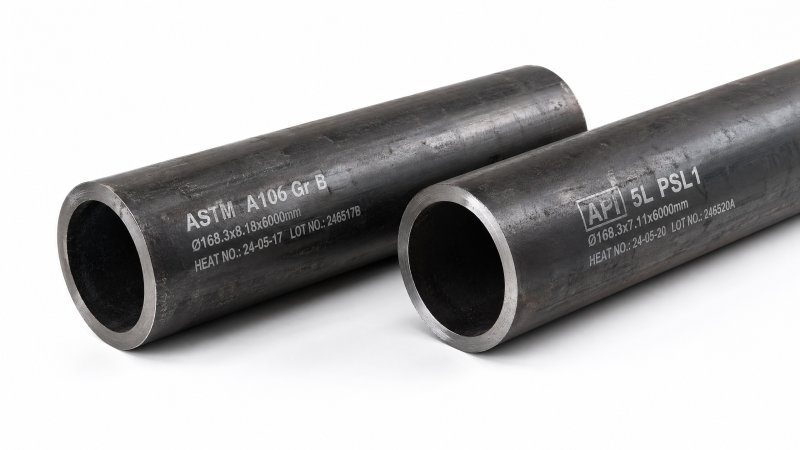
In steel sourcing, ASTM A106 Gr B and API pipe are often discussed together, but they are not interchangeable by default. ASTM A106 Gr B is a seamless carbon steel pipe grade widely used for high-temperature service, while API pipe usually refers to pipe supplied under API specifications for oil, gas, line pipe, or casing applications. The first decision point is not price, but service condition: temperature, pressure, transport medium, welding method, and project compliance path.
For technical evaluators, the key issue is whether the mechanical properties of ASTM A106 Gr B align with the actual operating load and code requirements. For procurement teams, the issue expands into lead time, mill documentation, dimensional tolerance, and consistency between batches. In many projects, the difference between a smooth approval process and a delayed one comes down to 3 factors: correct standard selection, complete traceability, and realistic total landed cost.
ASTM A106 Gr B is commonly selected for refinery piping, process lines, steam service, and power-related systems. API pipe, depending on the specification, is more directly linked to hydrocarbon transmission or drilling environments. This means an engineer may accept A106 Gr B for one system but reject it for another, even if the nominal strength level appears close. A 1-grade similarity in tensile performance never replaces a full compliance review.
For global buyers, especially those serving North America, Europe, the Middle East, and Southeast Asia, the real challenge is integrating design standards with purchasing efficiency. Hongteng Fengda supports this process by supplying structural steel products and customized steel solutions under internationally recognized standards such as ASTM, EN, JIS, and GB, helping customers reduce sourcing risk across 2 to 4 key project stages: specification review, quotation confirmation, production control, and shipment scheduling.
What the comparison usually involves
- Mechanical properties such as tensile strength, yield strength, and elongation, especially when pressure and temperature vary across operating cycles.
- Manufacturing route, including seamless production, heat treatment condition, and impact of wall thickness on fabrication and welding.
- Project documentation, including MTC availability, dimensional inspection records, standard marking, and third-party verification when required.
- Commercial conditions such as order volume, standard size availability, export packing, and typical delivery windows of 2–6 weeks depending on stock and production planning.
Mechanical properties: where ASTM A106 Gr B matches and where API pipe goes further
From a mechanical standpoint, ASTM A106 Gr B is known for a minimum tensile strength of 60 ksi and a minimum yield strength of 35 ksi. Those baseline values make it suitable for many high-temperature and pressure-related industrial systems. However, API pipe needs are often driven not only by minimum strength, but also by service-specific requirements such as toughness, sour service suitability, flattening tests, hydrostatic testing, or additional chemical control depending on the API specification used.
This is why project teams should avoid asking only, “Is A106 Gr B strong enough?” The better question is, “Does A106 Gr B satisfy the full service profile and approval standard?” In a water, steam, or general process system, the answer may be yes. In oil and gas transmission or drilling-related use, the project may require API 5L or another API-based route because mechanical properties are only 1 part of a broader compliance framework.
Below is a practical comparison table that helps engineers, buyers, and quality teams screen the two options before moving into detailed drawing review. It does not replace the project code, but it helps identify whether the decision is strength-driven, service-driven, or documentation-driven.
The table shows an important procurement reality: a close strength range does not automatically mean equal application approval. For project managers, this prevents costly rework after document submission. For finance and commercial reviewers, it also prevents false savings, because selecting a lower-priced material that fails compliance can trigger delays of 7–15 days or more in requalification, shipment rescheduling, and site coordination.
Technical checkpoints before approval
A practical review usually includes 4 checkpoints: required standard, mechanical baseline, chemical composition limits, and inspection/testing scope. If one of these 4 is unclear, the comparison between ASTM A106 Gr B and API pipe becomes incomplete. This is especially true when the same project includes process piping, structural steel supports, and utility pipelines under different engineering packages.
Why weldability and fabrication still matter
Operators and fabrication teams care about more than strength values. They need predictable cutting, beveling, welding, and field fit-up. ASTM A106 Gr B is widely accepted because it supports common shop fabrication methods, but weld procedure qualification still depends on wall thickness, joint design, and service code. For medium-wall and heavy-wall pipe, even a small tolerance issue can affect fit-up time across 20, 50, or 100 joints on site.
Which application scenarios favor ASTM A106 Gr B, and when should API pipe remain the priority?
Application logic matters more than label familiarity. ASTM A106 Gr B is commonly preferred in industrial plants where steam, hot water, non-corrosive fluids, or process media require seamless pipe with stable mechanical performance. In these environments, designers often value availability, welding convenience, and predictable pressure service over more specialized transport standards. For many general industrial systems, that balance is commercially efficient.
API pipe remains the better path when the contract documents, owner standards, or transport regulations specifically call for API compliance. This is typical in oil and gas gathering, transmission, and some drilling-linked systems. In such cases, the buyer is not simply purchasing steel tube; the buyer is purchasing a standard package that includes grade identity, inspection logic, and application relevance. That package can be decisive during audits, approvals, and final handover.
For distributors and project suppliers managing mixed material packages, this distinction is also useful in cross-selling adjacent steel products. A project that uses ASTM A106 Gr B for process lines may also require beams, channels, angles, or cold formed profiles for support frames, skids, walkways, and equipment platforms. That is where an experienced structural steel manufacturer can simplify sourcing by coordinating multiple product categories under one quality control process.
In some projects, buyers also combine pipe procurement with lifting, anchoring, or auxiliary steel items for installation and handling. For example, operations involving cranes, drilling, mining, or marine environments may also require corrosion-resistant rope solutions such as Galvanized Steel Wire Rope 1470Mpa to 1960Mpa. Available in constructions such as 6X7+FC, 6X19+IWR, and 8x19S+FC, with diameters from 1.0 mm to 22 mm and finishes including plain, electro galvanized, and hot dipped galvanized, it fits projects where the steel package must address both structural support and operating hardware.
Typical scenario screening table
The following table helps users quickly identify which path is more practical during early-stage material planning. It is especially useful when technical, procurement, and finance teams must align within 1 or 2 review meetings.
The main takeaway is straightforward: use ASTM A106 Gr B where its mechanical and service profile fits the system, but keep API pipe as the priority where the project specification or application context is API-driven. This approach reduces over-specification on one side and compliance gaps on the other.
Three common buyer mistakes
- Comparing only yield and tensile strength while ignoring application code and inspection requirements.
- Using a low unit price as the main decision factor without including reapproval risk, delivery delay, and site schedule impact.
- Treating all seamless pipe categories as equivalent, even though approval documents may separate process pipe, line pipe, and structural steel items into different material packages.
What should procurement teams check beyond mechanical properties?
In B2B steel procurement, the purchase decision rarely depends on one material value. Procurement managers, quality teams, and business evaluators typically review at least 5 dimensions: standard compliance, manufacturing consistency, dimensional tolerance, documentation quality, and delivery reliability. When comparing ASTM A106 Gr B with API pipe needs, these dimensions often decide whether a supplier can support a real project rather than just issue a quotation.
Cost control also needs a broader lens. Buyers often compare pipe budgets with upstream steel market indicators such as steel coil price per ton or steel sheet price because these figures influence overall market sentiment and fabrication cost planning. However, pipe procurement has its own cost drivers: wall thickness, NPS range, test requirements, export packing, quantity breakpoints, and whether the order is standard stock or made-to-order. A lower raw steel market may not immediately translate into lower delivered pipe cost within the same 7–30 day window.
This is where supplier capability becomes practical. Hongteng Fengda supports buyers with stable production coordination, quality control, and customized steel solutions for international projects. For mixed procurement packages that include structural steel components, support sections, and custom fabrication items, using one dependable export partner can reduce communication loops from 5 or 6 separate contacts to 1 coordinated supply window, which is valuable for project managers working against fixed milestone dates.
For quality control and safety personnel, documentation consistency is especially important. Material certificates, dimensional reports, heat number traceability, and packing identification should all be checked before dispatch. A missing certificate may delay customs clearance, site receiving, or internal release. In many cross-border orders, preventing one paperwork issue is worth more than negotiating a marginal unit-price difference.
Practical supplier evaluation checklist
- Confirm whether the offered standard exactly matches the project requirement, including edition references if stated in the contract.
- Check the available size range, wall thickness, and quantity split between stock material and production material.
- Request MTC format, marking method, and inspection scope before order confirmation, not after production starts.
- Review packing, container loading method, and transit protection, especially for export projects with 3–5 weeks sea transport.
- Compare total procurement cost, including testing, logistics, rework risk, and possible schedule penalties.
How lead time affects the real cost decision
If a supplier quotes a competitive price but needs 6–8 weeks for production, that offer may be less attractive than a slightly higher quote with a 2–4 week delivery window. For project leaders, every week matters when pipe supports, valves, fittings, and civil work are linked in sequence. Effective sourcing is not the lowest visible price; it is the lowest controllable project cost with acceptable risk.
FAQ: common decision questions from engineers, buyers, and project managers
Can ASTM A106 Gr B replace API pipe in all cases?
No. ASTM A106 Gr B can serve many pressure and temperature applications, but it should not be treated as a universal replacement for API pipe. If the project specification, owner requirement, or operating environment specifically calls for API compliance, substitution must be reviewed and approved. Mechanical properties alone are not enough to justify replacement.
What are the most important mechanical properties to check first?
Start with 3 items: minimum tensile strength, minimum yield strength, and suitability for the intended temperature and pressure service. Then move to elongation, chemical composition, weldability, and required testing. For many buyers, that first 3-item check quickly shows whether the material is worth deeper review.
How long does international steel supply normally take?
A common range is 2–6 weeks for production readiness depending on size, quantity, and stock status, followed by shipping time based on destination. Customized steel components or mixed structural packages may need longer planning. Buyers should always separate mill lead time, port handling time, and sea transit time when building the project schedule.
What documents should quality teams request?
At minimum, request the material test certificate, dimensional inspection records, standard marking details, and packing identification list. If the project requires it, add third-party inspection arrangements before dispatch. These documents help quality and safety teams verify that the delivered material matches both purchase order and site acceptance criteria.
Why work with a steel supplier that understands both standards and project execution?
A reliable steel supplier does more than quote a grade. The supplier should help the customer interpret standards, match products to application scenarios, and coordinate production with real delivery milestones. That is especially important when a project includes multiple steel categories such as pipe-related materials, angle steel, channel steel, steel beams, cold formed profiles, and customized structural components.
Hongteng Fengda works with global customers across construction, industrial, and manufacturing projects by combining export experience, modern manufacturing capability, and strict quality control. Compliance with major international standards such as ASTM, EN, JIS, and GB supports smoother communication between technical teams, procurement departments, and end users. For companies trying to reduce sourcing risk, stable supply and consistent documentation are often just as important as the initial quotation.
If you are comparing ASTM A106 Gr B mechanical properties with API pipe needs, the best next step is a specification-based review rather than a generic product inquiry. Share your required standard, size range, service condition, target quantity, and delivery schedule. This allows a faster assessment of whether a standard solution is enough or whether a customized procurement plan is more suitable.
You can contact us for 6 practical topics: parameter confirmation, material selection, delivery cycle estimation, customized steel solution planning, certification and documentation review, and sample or quotation discussion. This helps engineers, buyers, quality teams, and decision-makers move from comparison to execution with fewer delays and clearer cost control.
Please give us a message


Please enter what you want to find