Choosing the right 304 pipe for water, food, and general applications is less about buying the “most common stainless steel” and more about matching corrosion resistance, hygiene, wall thickness, surface finish, and compliance to the real working environment. In most cases, 304 stainless steel pipe is a practical and cost-effective choice for clean water systems, many food-processing lines, and ordinary industrial use. However, it is not automatically the best option for chloride-rich water, aggressive cleaning chemicals, or highly regulated sanitary systems. If you are comparing ASTM stainless steel grades, checking stainless steel square tube prices, or sourcing from a dependable China steel supplier, the key is to evaluate total service life, maintenance risk, and certification requirements—not just the initial unit price.
How do you know if 304 pipe is the right choice for your application?
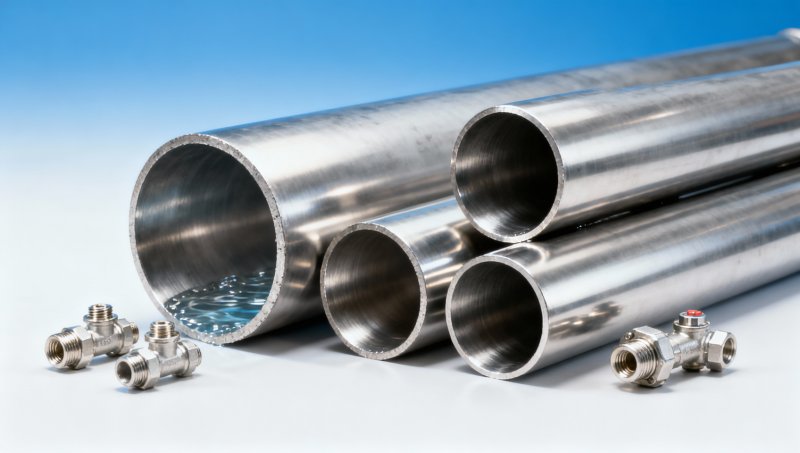
For most buyers and technical evaluators, the first question is simple: will 304 pipe perform safely and economically in the intended environment? The answer depends on three factors:
- Media type: potable water, food contact materials, steam, mild chemicals, or general fluids
- Service environment: indoor, outdoor, humid, coastal, high-temperature, or washdown conditions
- Compliance level: general industrial use, food-grade processing, or stricter sanitation and quality control needs
304 stainless steel is widely selected because it offers a strong balance of corrosion resistance, formability, weldability, cleanliness, and market availability. In freshwater systems and many food-related applications, it performs well and keeps lifecycle cost under control. For general fabrication and industrial utility lines, it is often the default stainless option because it is easier to source than more alloyed grades.
That said, buyers should not assume “304” alone guarantees suitability. Pipe standard, manufacturing method, internal surface condition, dimensional tolerance, and documentation all matter. A well-made 304 pipe with proper finishing and traceability can outperform a lower-quality product labeled with the same grade.
What makes 304 pipe suitable for water systems?
In water applications, 304 pipe is commonly used for clean water transfer, indoor plumbing support systems, light industrial piping, and equipment connections. Its main advantages include:
- Good corrosion resistance in normal potable water environments
- Low maintenance needs compared with carbon steel
- Clean surface that supports hygienic operation
- Reliable fabrication for cutting, welding, and forming
However, water chemistry matters. If the water contains high chloride content, if the system is exposed to salt spray, or if stagnation is frequent, pitting risk increases. In those cases, engineers often review whether 316 stainless steel is a safer long-term choice.
For project managers and procurement teams, the practical selection checklist for water use should include:
- Water quality and chloride level
- Operating temperature and pressure
- Required pipe size and schedule
- Welded vs. seamless requirement
- Applicable ASTM, EN, JIS, or local standards
- Mill test certificates and material traceability
If the installation is for standard indoor water service and the supplier can provide consistent quality control, 304 pipe is usually a sound commercial choice.
Is 304 pipe good enough for food applications?
For many food and beverage applications, yes—304 stainless steel pipe is a standard and widely accepted material because it is clean, durable, and resistant to many food-related environments. It is often used in processing lines, storage-related tubing, transfer systems, kitchen equipment, and packaging machinery.
But for food use, the real issue is not only the alloy grade. The more important questions are:
- Is the surface finish appropriate for hygiene?
- Are the welds smooth and cleanable?
- Does the pipe meet the required sanitary or food-contact standard?
- Can the system withstand CIP cleaning chemicals and washdown routines?
In other words, food processors should evaluate the entire pipe specification, not just “304”. If a production line handles acidic ingredients, salt-rich products, or aggressive cleaning agents, a higher grade may be worth considering. But for many dry food, mild liquid, and general food equipment applications, 304 remains a highly practical solution.
Quality and safety managers should also verify whether the pipe interior is polished where needed and whether documentation supports compliance and inspection requirements. This step is especially important for exporters, distributors, and OEM buyers serving regulated markets.
What should buyers check besides grade, size, and price?
Many sourcing mistakes happen because buyers compare only nominal dimensions and price per ton. In reality, the following factors often affect performance more than headline pricing:
- Pipe manufacturing method
Welded pipe is often sufficient and more economical for many water and general uses. Seamless pipe may be preferred for higher pressure, more critical service, or specific standards. - Wall thickness and schedule
Choosing the wrong thickness can increase failure risk or create unnecessary cost. Match schedule to pressure, mechanical load, and fabrication conditions. - Surface quality
A smoother, defect-free surface improves cleanability, corrosion behavior, and visual quality. - Dimensional consistency
Stable OD, ID, straightness, and wall thickness simplify installation and reduce fitting problems. - Certification and test records
Mill test reports, chemical composition, mechanical property data, and inspection records reduce procurement and compliance risk. - Supplier capability
A qualified supplier should offer standard products, custom processing, stable lead times, export experience, and clear communication.
For buyers managing broader steel procurement, it is also useful to work with suppliers that understand adjacent product categories. For example, in projects involving framing, reinforcement, fastening, and utility fabrication, some buyers also source wire materials together with stainless or structural steel items. In such cases, a product like Premium Galvanized Cold Drawn Steel Wire Rod (1.6mm - 6mm) may support construction, agricultural, manufacturing, and telecommunications needs where precise diameter tolerance, customizable tensile strength, and zinc coating performance are important. This kind of integrated sourcing can improve purchasing efficiency when managed by a reliable exporter.
When should you avoid 304 and consider another stainless option?
304 pipe is not the best answer for every environment. You should review alternatives when any of the following apply:
- High chloride exposure such as coastal conditions, brackish water, or saline process media
- Frequent contact with strong cleaning chemicals or disinfectants
- High hygiene sensitivity requiring specific sanitary tube standards and polished finishes
- High-temperature or highly corrosive processing conditions
- Long service life expectations in aggressive outdoor environments
In these cases, 316 stainless steel is often reviewed because of its improved resistance to pitting and chemical attack. For technical teams, this is where lifecycle thinking matters: paying more upfront may reduce replacement, downtime, contamination risk, and warranty exposure.
How can procurement and project teams reduce sourcing risk?
Whether you are an importer, distributor, OEM buyer, or project contractor, the safest buying process is structured and evidence-based. A practical approach includes:
- Define the application clearly: water, food, or general use
- Confirm service conditions: temperature, pressure, media, and cleaning routine
- Specify grade, dimensions, standard, and finish in writing
- Request mill test certificates and inspection details
- Evaluate supplier export experience and quality consistency
- Check packaging, delivery reliability, and after-sales communication
For international buyers, working with a professional Chinese steel manufacturer and exporter can be an advantage when the supplier has modern production facilities, stable manufacturing capacity, and experience with ASTM, EN, JIS, and GB standards. The right partner should help reduce sourcing risk, control costs, and support efficient project execution rather than simply quote the lowest price.
For example, buyers needing additional coated wire products for industrial use may also evaluate Premium Galvanized Cold Drawn Steel Wire Rod (1.6mm - 6mm) for applications requiring smooth surface finish, uniform hardness, and customizable zinc coating from 40g/m² to 300g/m².
Final selection advice for 304 pipe
If your application involves normal water service, many food-related environments, or general industrial use, 304 pipe is often the most balanced choice in terms of availability, fabrication performance, hygiene, and cost. The best results come when you evaluate not just the grade, but the actual operating environment, finishing requirement, standard compliance, and supplier reliability.
The most useful rule is this: choose 304 pipe when the environment is moderate and cleanliness, corrosion resistance, and budget must be balanced. Move to a more resistant grade when chlorides, harsh chemicals, or stricter sanitary demands increase the risk. For buyers, engineers, and decision-makers, that approach leads to better technical performance and better commercial outcomes.
Please give us a message


Please enter what you want to find