Before ordering 304 pipe for industrial or structural use, buyers should understand the corrosion limits that affect service life, compliance, and total cost. From chloride exposure to temperature conditions, knowing where 304 stainless steel performs well—and where it may fail—helps procurement teams reduce sourcing risk, avoid premature replacement, and choose the right specification for each project.
What corrosion limits matter most when buying 304 pipe?
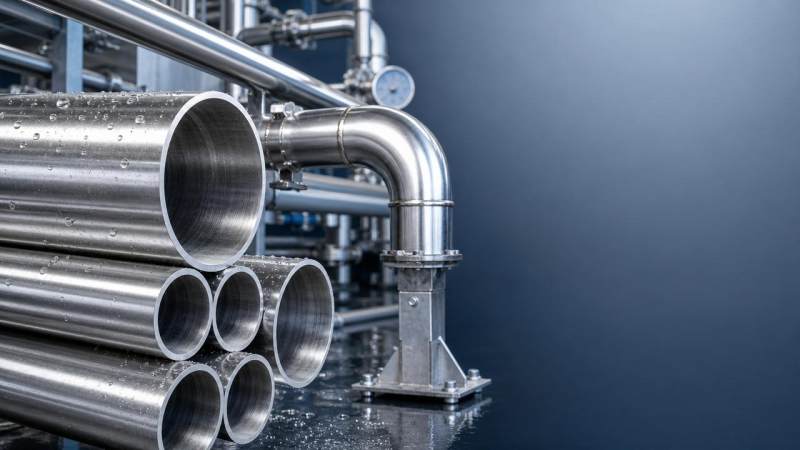
For procurement teams, the main question is not whether 304 pipe is corrosion resistant. The real question is where its resistance reaches a practical limit. Grade 304 stainless steel performs well in many indoor, mild outdoor, and general industrial environments, but it is not immune to localized corrosion, chloride attack, stress corrosion cracking, or contamination during fabrication and installation.
In steel and construction supply chains, buyers often focus on price, dimensions, and delivery. Those are important, but corrosion risk usually determines long-term replacement cost. A lower-priced 304 pipe may become more expensive if the service environment includes seawater mist, deicing salts, chemical washdown, stagnant water, or elevated operating temperature.
This is especially relevant for global sourcing. A stainless steel pipe ordered for a food processing frame, utility line support, or architectural application may later be exposed to conditions not fully described in the initial RFQ. Once chloride concentration, cleaning chemicals, weld quality, and surface finish are understood, material selection becomes much more reliable.
- 304 pipe resists many atmospheric and water-based environments, but chloride-rich conditions can trigger pitting and crevice corrosion.
- Weld areas, rough surfaces, and trapped moisture usually fail earlier than open, polished surfaces.
- Higher temperature generally increases corrosion risk, especially where chlorides and tensile stress are both present.
- Material verification should include standard, chemical composition, surface condition, and fabrication method, not only pipe size.
Why 304 pipe remains widely used
Despite its limits, 304 pipe remains one of the most commonly specified stainless pipe grades because it offers a useful balance of corrosion resistance, formability, weldability, availability, and cost. For many buyers, it fits general fabrication needs better than carbon steel while avoiding the higher cost of molybdenum-bearing grades such as 316.
In structural and industrial projects, 304 pipe is often selected for handrails, supports, light process piping, equipment frames, decorative structures, and utility systems in moderate environments. Procurement value comes from selecting it only where its corrosion envelope is suitable.
How do chloride exposure and temperature affect 304 pipe service life?
If buyers check only the nominal grade and ignore environment, they miss the main corrosion trigger for 304 pipe: chlorides. Chloride ions break down the passive film on stainless steel and create localized attack. This often starts as pitting, which may not be obvious during early inspection but can shorten the usable life of pipe, fittings, and welded assemblies.
Temperature is the second major factor. Warm chloride-bearing conditions are more aggressive than cool ones. A 304 pipe that performs acceptably in a dry indoor plant may struggle in hot coastal air, washdown zones, or heated process areas where condensate and salts accumulate.
The table below gives procurement teams a practical screening view rather than an absolute engineering limit. Actual suitability depends on concentration, exposure duration, cleaning frequency, crevice design, finish, and whether welding or fabrication leaves vulnerable areas.
For buyers, the key takeaway is simple: corrosion limits are environmental limits. A 304 pipe can be a sound purchase in one plant and a poor purchase in another, even with the same size and standard, because chloride level and operating temperature change the result.
Hidden chloride sources buyers often overlook
- Cleaning agents used in food, pharmaceutical, and public facility maintenance.
- Splash zones near roads where winter deicing salts are present.
- Insulation systems that trap wet chlorides against pipe surfaces.
- Marine transport and storage exposure before installation.
Which corrosion mechanisms should procurement teams check before placing a 304 pipe order?
Not all corrosion looks the same, and each mechanism has different procurement implications. If the RFQ only says stainless pipe without defining service conditions, the supplier may quote a technically correct product that still underperforms in actual use. Buyers should connect corrosion type with design, fabrication, and inspection requirements.
Pitting corrosion
Pitting is a localized attack that creates small but deep holes. It is common in chloride exposure and often starts where deposits remain on the surface. For 304 pipe, smooth finish, drainage, and proper cleaning reduce risk, but they do not eliminate it in severe environments.
Crevice corrosion
Crevice corrosion occurs in gaps under gaskets, clamps, lap joints, deposits, or poorly drained supports. Buyers who specify 304 pipe for structural assemblies should review whether the design traps water or contaminants. A good alloy can still fail early if the connection detail is wrong.
Weld-related attack
Improper welding, heat tint, or unclean weld surfaces can reduce corrosion resistance. Procurement documents should define welding quality, pickling or passivation if needed, and surface acceptance criteria. This matters when 304 pipe is used in visible architectural steelwork or in hygiene-sensitive industrial applications.
Stress corrosion cracking
When chloride exposure combines with tensile stress and elevated temperature, stress corrosion cracking becomes a concern. It is not the most common issue in every project, but it matters in heated service lines, chemical environments, and highly stressed fabricated parts.
304 pipe vs 316 pipe: when is the upgrade justified?
Many buyers compare 304 pipe with 316 pipe at the quotation stage. The cost gap can push teams toward 304, especially in budget-controlled projects. But the better question is whether the cheaper grade will increase maintenance, shutdown risk, or replacement frequency later.
The following table helps separate cases where 304 pipe is normally acceptable from cases where a higher-alloy option deserves serious evaluation.
An upgrade is justified when failure cost exceeds initial material savings. That includes access difficulty, production downtime, safety exposure, hygiene requirements, and visible corrosion on customer-facing structures. Good procurement is not about buying the cheapest stainless pipe. It is about matching grade to risk.
What specifications should buyers confirm on a 304 pipe purchase order?
A corrosion-resistant purchase starts with a precise purchase order. In international steel sourcing, ambiguity creates avoidable claims. Procurement teams should confirm the standard, dimensions, wall thickness, surface finish, manufacturing route, inspection requirements, and packaging method before production starts.
- Define the applicable standard, such as ASTM, EN, JIS, or GB, based on project and market requirements.
- Confirm whether the 304 pipe is welded or seamless, because service pressure, fabrication method, and budget may affect the choice.
- Specify surface finish and weld condition, especially for visible, hygienic, or corrosive service environments.
- Request mill test documentation and, if needed, third-party inspection based on project contract terms.
- Clarify export packing, storage, and transport protection to reduce contamination before site delivery.
Procurement checklist for corrosion-sensitive applications
The table below is useful when the 304 pipe will be used in environments where corrosion failure would disrupt operations or trigger replacement claims.
For global buyers, this level of detail reduces dispute risk and helps suppliers quote the right material from the beginning. It also shortens the approval cycle because technical and commercial expectations are aligned.
How can buyers reduce risk when sourcing from overseas steel suppliers?
Overseas sourcing works best when technical control matches commercial control. In practice, procurement teams need a supplier that can communicate across standards, manage production consistency, and respond quickly to project-specific customization. This is especially important when stainless and structural steel items are purchased together for one project package.
Hongteng Fengda supports global buyers with a broad structural steel manufacturing base in China, covering angle steel, channel steel, steel beams, cold formed steel profiles, and customized structural steel components. For buyers managing mixed procurement, this matters because one supplier with stable production and clear quality control can simplify coordination, documentation, and lead-time planning.
The company serves customers across North America, Europe, the Middle East, and Southeast Asia, with products aligned to major international standards such as ASTM, EN, JIS, and GB. For procurement personnel, that means conversations can focus on application fit, compliance expectations, and delivery reliability rather than only base price.
- Stable manufacturing capacity helps avoid split shipments and schedule slippage.
- Customized solutions support OEM and project-based steel component sourcing.
- Quality control linked to international standards improves document consistency and inspection confidence.
- Combined expertise in structural steel products helps buyers manage related items under one purchasing plan.
FAQ: common 304 pipe questions from procurement teams
Is 304 pipe suitable for outdoor use?
Yes, 304 pipe is often suitable for outdoor use in mild urban or inland environments, especially where rain can wash surfaces and where chloride contamination is limited. It becomes less reliable in coastal or salt-rich conditions, so buyers should not assume all outdoor exposure is equal.
Can 304 pipe handle chemical cleaning solutions?
Sometimes, but the answer depends on the chemistry, concentration, temperature, and contact frequency. Chloride-containing cleaners are a common warning sign. Procurement teams should ask the end user for actual cleaning agents before finalizing material grade.
What is the biggest mistake when ordering 304 pipe?
The biggest mistake is treating 304 pipe as a universal stainless solution. Buyers may compare only price and dimensions while leaving out service environment, finish, weld treatment, or maintenance conditions. That approach often leads to avoidable corrosion complaints.
Should buyers request third-party inspection?
Third-party inspection is useful when project specifications require it, when shipment value is high, or when there is low tolerance for dimensional or documentation errors. It is especially relevant in export projects where multiple standards and stakeholders are involved.
Why choose us for project steel sourcing and related structural components?
If your team is comparing 304 pipe options while also sourcing structural steel components, the best partner is one that helps reduce technical uncertainty and purchasing complexity at the same time. Hongteng Fengda provides not only manufacturing and export support, but also coordinated solutions across standard and customized steel products for global construction, industrial, and manufacturing projects.
You can contact us for parameter confirmation, application-based material selection, delivery schedule planning, OEM customization, standard matching, sample support, and quotation alignment for mixed steel procurement. When a project includes cold formed profiles or secondary steel members, we can also help connect the specification process across product categories.
For example, if your project also requires purlins, wall beams, brackets, or light structural members, Z-beam can be integrated into the sourcing plan. This Z-shaped steel profile is used in steel structure construction purlins, wall beams, lightweight roofs, brackets, mechanical columns, and beams for light manufacturing applications. Available materials include Q235B, Q345B, Q420C, Q460C, SS400, SS540, S235, S275, S355, A36, A572, G50, and G61, with thickness from 6-25mm, length from 2-12m or customized, edge options such as Mill Edge and Slit Edge, and tolerance of ±1%.
Additional options include perforated and galvanized coated specifications, with CE, SGS, BV, and ISO listed in the provided certification scope. Processing follows GB50018-2002, and related ancillary products such as color steel tile, rock wool sandwich panel, and floor deck are also available. If you want a practical sourcing discussion covering 304 pipe risk, structural member matching, and export delivery planning, send your technical requirements and project conditions for a focused quotation review.
Please give us a message


Please enter what you want to find