Planning a 2026 tin can production line budget requires more than comparing machine prices. Buyers evaluating metal packaging equipment must also consider raw material trends, operating efficiency, maintenance costs, and supplier reliability. For companies already sourcing products such as coil coated steel, Cold Rolled Steel Sheet in Coil, or other steel solutions from China, this guide explains the key cost factors, helping procurement teams, engineers, and decision-makers make smarter investment choices.
What Shapes the Real Cost of a Tin Can Production Line in 2026?
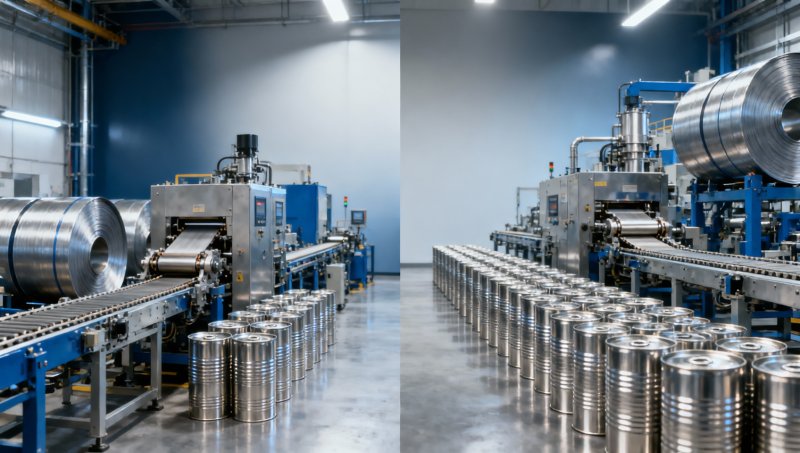
For most buyers, the visible machine quotation is only the starting point. A complete tin can production line cost in 2026 usually includes forming, welding, flanging, seaming, curing, conveying, inspection, utility setup, operator training, spare parts, and after-sales support. In steel-related manufacturing projects, upstream material quality also affects downstream equipment stability, especially when line speed, thickness tolerance, and coating consistency must work together.
Procurement teams often divide investment into 3 layers: initial capital expense, operating expense, and risk control expense. Initial capital covers the production line itself and installation. Operating expense includes power use, labor, consumables, and maintenance over 12–36 months. Risk control expense covers unplanned downtime, rejected cans, delayed delivery, and raw material mismatch. This broader view is especially important for financial approvers and project managers who need predictable payback rather than a low headline price.
In practical sourcing, steel buyers already understand that material consistency can change total project economics. The same logic applies to metal packaging lines. If the steel sheet or related coil material has unstable thickness, poor flatness, or coating variation, machine settings require more frequent adjustment. That means lower effective output per shift, higher scrap rates, and more operator intervention during continuous runs of 8–12 hours.
This is where a manufacturing partner with structural steel and steel product export experience becomes relevant. Hongteng Fengda supports global buyers with stable production capability, customized steel solutions, and quality control aligned with common standards such as ASTM, EN, JIS, and GB. For companies comparing China supply options, this kind of production discipline helps reduce sourcing risk, which is often a hidden but major part of total cost.
Cost categories buyers should separate early
When technical teams and purchasing teams use one combined budget line, key cost drivers are easy to miss. A better approach is to split them into measurable categories before supplier comparison. This helps distributors, plant operators, and decision-makers compare quotations on a like-for-like basis rather than by incomplete unit price.
- Equipment package cost: body maker, seam welder, curling or flanging unit, testing section, and automation accessories.
- Utility and infrastructure cost: power supply, compressed air, floor layout, ventilation, and safety guarding.
- Material compatibility cost: steel sheet grade, coating behavior, thickness range, and scrap handling requirements.
- Lifecycle cost: spare parts, maintenance interval, technician response time, and training for 2–3 shifts.
The table below helps teams estimate where budget pressure usually comes from during project evaluation and early approval.
This breakdown shows why the lowest equipment quote does not always mean the lowest production line cost. If a supplier cannot support stable steel input, spare parts planning, and commissioning coordination, the total expense can rise quickly after startup.
How Do Capacity, Automation, and Steel Inputs Change Your Budget?
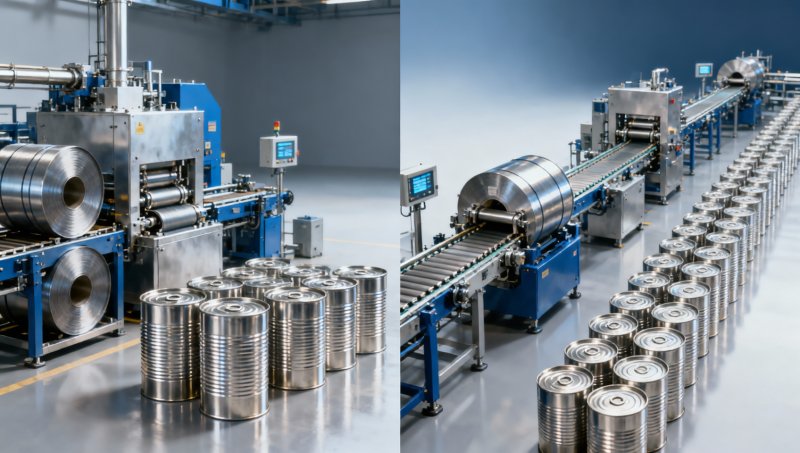
Capacity planning is one of the first variables that changes a 2026 tin can production line budget. A line designed for small-batch output has a very different cost structure from a line intended for medium or high-volume production. Buyers should confirm not just rated speed, but effective speed under stable operating conditions, because actual performance depends on feeding precision, steel sheet quality, operator skill, and changeover frequency.
Automation level also changes both up-front and long-term cost. A semi-automatic setup may reduce entry investment, but it often needs more labor per shift and more manual intervention during format changes. A higher automation level can improve consistency and reduce dependence on operator experience, especially over 2-shift or 3-shift schedules. For larger projects, automation often improves budgeting accuracy because labor and scrap become easier to control.
Steel input selection is another major variable. In many packaging and metalworking operations, buyers compare tinplate, coated steel, or cold rolled steel based on thickness, surface condition, and forming behavior. Even when the machinery is the same, a line processing more stable coil material usually spends less time on correction and adjustment. That matters to quality managers, maintenance teams, and finance departments trying to forecast cost per thousand units.
For some support processes in packaging, bundling, barrier separation, or workshop handling, related wire products may also affect overall operating efficiency. For example, Metal Coil Wire made from low carbon steel grades such as Q195 or Q235 is commonly used in construction, packaging, wire mesh, barrier isolation, and daily industrial tasks. With wire diameter options from 0.25 mm to 5.0 mm, zinc coating thickness of 8–25 g/m2, and tensile strength of 350–550 Mpa, it can support auxiliary packaging and handling needs where durability, ductility, and low cost matter.
A practical comparison for investment planning
The next table compares common investment situations. These are not fixed market prices, but they reflect the types of differences procurement and technical teams usually evaluate when selecting a metal packaging line connected to steel material sourcing.
This comparison helps business evaluators decide whether to prioritize lower entry cost or lower unit cost over time. In many cases, the right choice depends on order stability, staffing level, and how tightly material quality can be controlled.
Three steel-related checks before machine approval
- Confirm thickness range and flatness expectations for all incoming steel sheets or coils, including variation across batches.
- Ask whether the line has been matched to ASTM, EN, JIS, or GB-oriented material practices relevant to your export market.
- Check if the supplier can coordinate sample review, trial settings, and replacement part planning before mass production begins.
These checks are simple, but they often prevent 2 costly issues: repeated commissioning delays and unstable product quality during the first 30–90 days of operation.
What Should Procurement and Engineering Teams Compare Before Buying?
A useful buying process starts with alignment between engineering, procurement, quality, and finance. Each group sees cost differently. Engineers focus on compatibility and operating stability. Buyers compare price, lead time, and documentation. Quality teams care about defect rates and inspection points. Finance teams need a clear investment horizon, often over 12, 24, or 36 months. Without a shared checklist, quotations look comparable even when the actual project scope is different.
For steel-related manufacturing, supplier capability matters beyond the machine itself. A partner with export experience can usually provide more reliable communication on specifications, standards, packing, and shipment coordination. Hongteng Fengda serves customers in North America, Europe, the Middle East, and Southeast Asia, supporting projects that require stable production, controlled lead times, and customized steel solutions rather than one-size-fits-all supply.
Buyers should also ask how the supplier handles specification changes. It is common for a project to begin with one can size or one steel input and later expand into additional formats. If adjustment time is too long, the line loses flexibility. If drawings, tolerances, or spare parts lists are incomplete, future maintenance becomes harder. These are common pain points for plant operators and after-sales teams.
Another key issue is implementation rhythm. A realistic project often includes 4 stages: demand confirmation, technical review, production and inspection, then shipping and commissioning support. Depending on scope, a normal lead time can range from a few weeks for standard supply coordination to a longer period for customized line arrangements. The clearer the front-end review, the lower the chance of expensive changes later.
A practical supplier evaluation checklist
Use this list when comparing a tin can production line supplier or a steel material partner involved in the same project.
- Can the supplier explain the match between machine configuration and your steel material range, not just machine speed?
- Are quality control steps defined, including inspection points before shipment and during startup?
- Is there support for OEM or custom structural requirements if the project expands beyond standard specifications?
- Can the supplier provide clear packing, export documentation, and delivery planning for global shipment?
- Are common standards such as ASTM, EN, JIS, and GB understood where relevant to material compliance and customer expectations?
This checklist is especially useful for distributors, project managers, and enterprise decision-makers who must defend the purchase internally. It shifts the discussion from unit price alone to business risk, production continuity, and long-term serviceability.
Where Do Hidden Costs Usually Appear After Installation?
Hidden costs usually appear after startup, not during quotation. The most common areas are scrap, downtime, maintenance response, format change delays, and material mismatch. If a line runs below planned efficiency for several weeks, the cost impact may exceed the difference between two supplier quotations. That is why operators and financial approvers should review post-installation conditions before final purchase approval.
Scrap is often linked to unstable steel input, poor alignment, or inconsistent seam performance. Even a small increase in reject rate becomes expensive in medium and large batch production. Maintenance cost often rises when wear parts are not standardized or when replacement lead time is unclear. In export-driven manufacturing, waiting 2–4 weeks for the wrong part correction can interrupt the full production schedule and affect customer delivery commitments.
Training is another underestimated cost. A line may be technically capable, but if operators are not trained on setup windows, lubrication intervals, and inspection checkpoints, output quality becomes inconsistent. A practical training plan should cover at least 3 areas: safe operation, daily adjustment, and fault recognition. This is particularly important when the line is intended to run continuously across multiple shifts.
Steel sourcing decisions also affect these hidden costs. Suppliers with disciplined production and quality control help reduce variability in angle steel, channels, beams, cold formed profiles, and related customized steel products. The same quality mindset benefits packaging and manufacturing buyers who need dependable raw material support and fewer surprises after equipment installation.
Common post-installation risks and responses
The table below summarizes frequent operational issues and the type of preventive action buyers should request before contract finalization.
These risks are manageable when procurement and technical review happen together. The goal is not to remove every uncertainty, but to prevent avoidable cost escalation after the line is already on the floor.
FAQ: What Do Buyers Most Often Ask About 2026 Line Cost and Selection?
How should I compare two tin can production line quotations?
Start by standardizing 5 comparison points: output target, automation scope, steel material range, spare parts coverage, and commissioning support. If one quote includes installation guidance and another does not, they are not directly comparable. Also compare expected operating conditions over at least 12 months, not just purchase price.
What lead time should buyers usually expect?
Lead time depends on whether the project uses standard configuration or customized integration. A simpler supply scope may move faster, while a line requiring technical matching, drawings, and export coordination takes longer. Buyers should confirm 3 dates clearly: production completion, inspection readiness, and shipment schedule. This is often more useful than asking for one single delivery promise.
Why does raw material quality affect equipment cost efficiency?
Because machines perform best within a defined processing window. When steel thickness, coating condition, or flatness varies too much, the line needs more adjustments, more operator attention, and may create more reject units. Stable material quality usually improves effective speed and reduces hidden cost over repeated production cycles.
Is a lower-priced line better for a new factory?
Not always. A lower-priced line may suit pilot production or limited product ranges, but if your target is continuous output, export-grade consistency, or reduced labor dependency, a more controlled setup may be more economical over 24–36 months. The right choice depends on production scale, staffing availability, and quality expectations.
Why Work With a Steel Supply Partner That Understands Global Manufacturing Projects?
For buyers building or upgrading a tin can production line, equipment decisions are closely linked to steel sourcing decisions. A supplier that understands structural steel, industrial manufacturing, and export coordination can support the project more effectively than a trading-only source focused on price. That is especially valuable when technical details, standards, packaging, and delivery timing all affect production readiness.
Hongteng Fengda provides structural steel products and customized solutions for global construction, industrial, and manufacturing projects. Its product scope includes angle steel, channel steel, steel beams, cold formed steel profiles, and custom structural steel components. With modern manufacturing facilities and strict quality control, the company helps buyers manage sourcing risk, control cost, and align supply with project requirements across multiple regions.
If you are evaluating a 2026 tin can production line budget, the most useful next step is to confirm the technical and supply assumptions behind your numbers. That may include steel material parameters, application environment, expected output level, acceptance criteria, and shipment plan. Early clarification usually saves more money than late negotiation.
You can contact us to discuss parameter confirmation, product selection, custom steel support, delivery cycle planning, standards such as ASTM, EN, JIS, or GB, sample coordination, and quotation comparison. Whether you are a procurement manager, engineer, distributor, or project decision-maker, a clearer technical basis leads to a more reliable investment decision.
Please give us a message


Please enter what you want to find