Choosing the right 2-piece can equipment starts with accurate capacity planning. Output goals, uptime, line balance, and cost control must work together. A weak estimate often creates bottlenecks, scrap, and delayed returns.
In steel-related manufacturing projects, capacity planning also affects plant layout, structural support, utility loads, and expansion options. Better planning helps avoid overbuying while protecting long-term production stability.
Why capacity planning matters for 2-piece can equipment
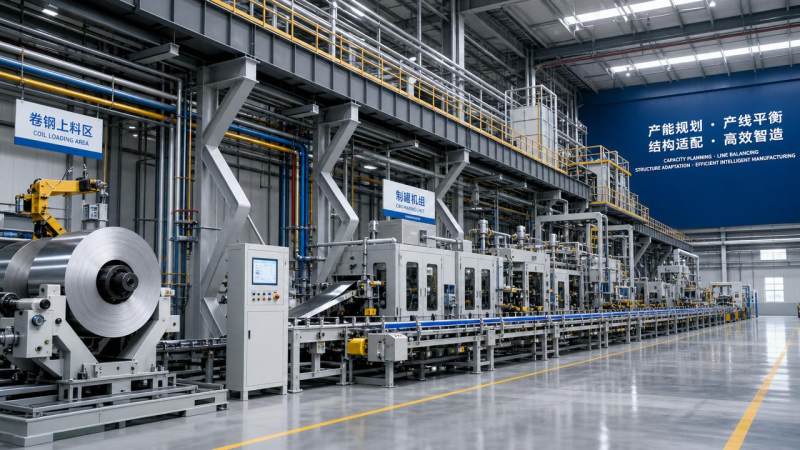
2-piece can equipment operates as a connected system, not as isolated machines. One fast module cannot fix a slow downstream section. True capacity depends on the weakest point across the line.
Planning also affects steel infrastructure decisions. Floor loading, machine bases, mezzanines, and material racks require reliable structural steel design that matches equipment weight and vibration conditions.
A practical review reduces three common mistakes: unrealistic speed assumptions, poor maintenance allowances, and ignoring future product mix changes. These issues often raise costs more than the machine purchase itself.
Core checks before selecting 2-piece can equipment
- Define target annual output, daily shifts, and planned uptime first, then convert those figures into realistic hourly capacity requirements for the complete 2-piece can equipment line.
- Map each station, including cupping, body making, washing, coating, printing, necking, and conveying, to identify where actual line speed will be limited.
- Use net capacity instead of nameplate speed. Include changeover time, maintenance stops, quality checks, scrap rates, and startup losses in every calculation.
- Check product mix carefully. Different can diameters, heights, and decoration requirements may reduce effective speed and increase adjustment time across 2-piece can equipment.
- Review utility demand in parallel with machine selection, especially compressed air, power, cooling water, exhaust systems, and wastewater handling capacity.
- Confirm material flow and warehouse space. Coil input, finished can storage, and spare parts access must support stable operation without internal transport congestion.
- Evaluate foundation and steel support needs early, because heavy equipment and auxiliary platforms often require customized structural steel fabrication and installation planning.
- Plan for future expansion by reserving floor space, cable routes, and steel framing interfaces so added modules can be installed with minimal disruption.
How to calculate realistic line capacity
Start with annual demand. Divide it by working days, then by effective shift hours. This gives a baseline hourly requirement. Next, compare that number with actual line efficiency.
For example, a line rated at 1,800 cans per minute will never deliver that level continuously. If uptime is 85% and scrap is 3%, net output drops quickly.
This is where 2-piece can equipment selection becomes a system decision. Every section must support the same practical throughput, not just the advertised mechanical maximum.
Do not ignore plant steel structure compatibility
Capacity planning often focuses on machine speed, but plant support structures are equally important. Walkways, cable trays, roof supports, and equipment platforms affect safety and service access.
In many projects, cold formed and structural steel components improve layout flexibility. A well-designed Z-beam system can support purlins, wall beams, brackets, and lightweight roof framing.
Typical specifications include thickness from 6-25mm, length from 2~12m or customized, and tolerance within ±1%. Common materials include Q235B, Q345B, S275, S355, A36, and A572 grades.
For export projects, galvanized coating, roll forming accuracy, and compliance with CE, SGS, BV, and ISO expectations support reliable installation around 2-piece can equipment areas.
Capacity planning in different operating scenarios
New plant setup
A new site allows cleaner layout planning, but mistakes become expensive later. Leave enough room for coil handling, maintenance zones, finished goods flow, and utility corridors.
At this stage, 2-piece can equipment should be matched with building geometry and steel framing. Expansion-ready support structures reduce future shutdowns during line upgrades.
Brownfield expansion
Existing plants usually face space limits, older foundations, and shared utility networks. Here, net capacity gain matters more than nominal machine speed.
Review whether current conveyors, access platforms, and building steel can support the added 2-piece can equipment. A small bottleneck may cancel the value of a larger investment.
High-mix production
When product sizes change often, flexibility becomes part of capacity. Fast changeovers, tooling availability, and operator training may matter more than top-end speed.
In this case, compare setup time per SKU and scrap during transition. Effective 2-piece can equipment performance should be measured over a full production week.
Export-oriented production
Export operations often need stricter consistency, traceability, and delivery discipline. Capacity planning must include inspection time, packaging flow, and finished inventory buffers.
Structural steel support systems should also align with international standards. Stable platforms and corrosion-resistant framing protect utility routing around sensitive 2-piece can equipment sections.
Common oversights that create hidden risk
Ignoring maintenance windows is a major error. A line that looks sufficient on paper may fail once lubrication, wear parts replacement, and cleaning schedules are included.
Underestimating utility peaks is another problem. Compressed air and cooling demand often rise during fast production periods, reducing actual 2-piece can equipment performance.
Some projects overlook steel structure details. Weak access platforms, poor bracket positioning, or limited roof support can slow maintenance and increase safety exposure.
Lead time risk should also be checked. If spare parts, tooling, or custom structural components arrive late, the whole startup schedule may shift.
Practical steps to improve planning accuracy
- Build a simple model using demand, uptime, scrap, and changeover assumptions, then test best-case, expected-case, and constrained-case output levels.
- Ask equipment suppliers for reference data showing actual operating speeds, maintenance intervals, and production results under comparable working conditions.
- Coordinate machine planning with structural steel design early, especially for platforms, supports, pipe racks, roof framing, and future expansion interfaces.
- Review whether perforated or non-perforated support members are needed where utilities, brackets, or lightweight roof elements connect near production zones.
- Set acceptance standards before purchase, including net throughput, scrap limits, installation tolerances, and required compliance documentation.
Final decision points before commitment
Before ordering 2-piece can equipment, confirm three things: the line can meet net output, the building can support it, and the utility system can sustain it.
Then verify supplier responsiveness, installation planning, and structural steel readiness. Reliable project delivery depends on coordination between machinery, plant engineering, and material support systems.
For projects involving steel platforms, purlins, wall beams, and customized framing, strong manufacturing control matters. Consistent quality, export packaging, and standard compliance reduce site risks.
Well-planned 2-piece can equipment investment should improve throughput without creating new constraints. Start with measurable demand, validate every bottleneck, and align machine decisions with structural steel realities.
Please give us a message


Please enter what you want to find