Structural steel decisions usually fail before installation starts
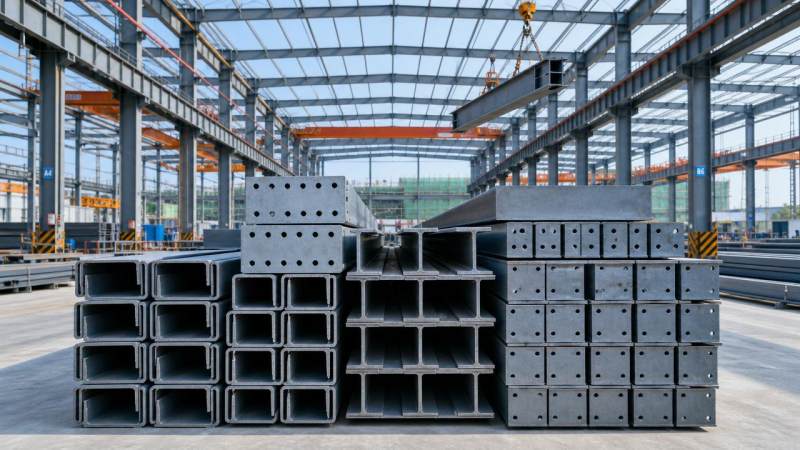
Choosing structural steel for construction is rarely a simple material decision. It affects safety margins, fabrication efficiency, shipping plans, and how smoothly site work actually moves.
Many mistakes happen long before erection. Drawings may be clear, yet specifications remain vague. A low price may look attractive, while hidden processing limits create delays later.
That is why structural steel for construction should be judged by application conditions, not by section name alone. Similar projects often require different grades, tolerances, coatings, or certification paths.
In real projects, load path, corrosion exposure, fabrication complexity, and local code alignment all change the right answer. Treating every steel package as interchangeable usually creates rework.
Why the same structural steel for construction does not fit every job
A warehouse extension, a factory support frame, and a light industrial platform may all use structural sections. The technical pressure behind each one is still very different.
For example, exposed outdoor frames often prioritize corrosion resistance and coating durability. Interior manufacturing structures may care more about punching accuracy, welding compatibility, and dimensional consistency.
When buyers only compare section size and unit price, they miss the operational context. Structural steel for construction performs well only when the specification reflects how the steel will be processed and used.
A reliable supplier should also understand those differences. Hongteng Fengda, as a structural steel manufacturer and exporter from China, supports projects that require standard sections, cold formed profiles, and customized processing under ASTM, EN, JIS, and GB frameworks.
Common gaps that change the final result
- Grade is selected without checking actual design loads or connection details.
- Surface treatment is chosen late, after fabrication methods are already fixed.
- Standards are named broadly, but inspection documents are not clarified.
- Delivery timing ignores bundling, cutting, punching, or export packaging needs.
In building frames, the mistake is often oversimplifying the specification
Steel structure buildings usually look repetitive on paper. In practice, roof members, wall supports, bracing parts, and secondary framing do not face the same requirements.
A frequent mistake is using one structural steel for construction spec across all secondary members. That may reduce paperwork, but it often increases waste, cutting time, and handling difficulty.
Lighter sections may be better for purlins or wall beams, especially when weight control and installation speed matter. In these cases, formed profiles with stable tolerances can improve fit-up efficiency.
Mid-project, this is where products like C Channel Beam become relevant. They suit steel structure buildings and mechanical light industry applications where punched or processed C-shape members are needed.
With thickness options from 1mm to 12mm, common lengths of 6m, 9m, and 12m, and surfaces such as galvanized, powder coating, or black varnish, this type of section fits many secondary framing conditions.
The key point is not the product name. It is whether the section matches loading logic, corrosion exposure, connection design, and required processing services such as bending, welding, punching, or cutting.
Industrial and manufacturing environments change the judgment focus
Structural steel for construction in industrial settings is often exposed to vibration, repeated loading, utility interference, and later modifications. That makes dimensional control more important than many expect.
A support frame for machinery may need holes, brackets, or welded connections added precisely. If the initial material choice ignores tolerance or processing compatibility, the site team inherits the problem.
This is also why certification and inspection documents matter more in export projects. Compliance with ASTM, EN, JIS, or GB is not just a formal statement. It influences approval speed and traceability.
In mechanical light industry manufacturing, C-shaped members are often used for columns, beams, and support arms. Here, shape consistency and processing response may matter as much as nominal strength.
Different scenarios, different priorities
The most expensive mistakes are usually not about steel price
One of the most common errors is selecting structural steel for construction by ton cost only. That number says little about fabrication hours, coating rework, freight efficiency, or installation delays.
Another mistake is assuming similar grades are functionally identical everywhere. Q235, Q345, A36, SS400, and S235JR may appear close in some uses, but acceptance depends on design basis and jurisdiction.
Projects also run into trouble when perforation, cutting, or punching is treated as a minor detail. In reality, pre-processing can shorten site work dramatically if it is planned early.
Lead time is another hidden risk. A nominal 15 to 20 day production cycle may work well only when quantities, processing scope, and inspection requirements are fixed in advance.
Watch for these misjudgments before release
- Treating indoor and outdoor structural steel for construction as the same coating problem.
- Approving section geometry without checking transport length and lifting constraints.
- Assuming mill certificates alone cover all project verification requirements.
- Choosing processing after order placement, which limits realistic scheduling.
- Ignoring tolerance needs where bolted assembly depends on pre-punched alignment.
A better way to match structural steel for construction to real site conditions
A practical review starts with the actual use environment. Is the steel load-bearing primary framing, secondary support, equipment structure, or a customized formed component?
Then confirm what the project really needs from the material. Grade strength is only one part. Surface, edge condition, dimensional tolerance, and processing services may decide whether the steel fits.
For export supply, documentation should be checked early. If the project references ASTM, EN, JIS, or GB, grade conversion and inspection paperwork should be aligned before production starts.
Suppliers with broad manufacturing capability can reduce coordination risk here. Hongteng Fengda supports angle steel, channel steel, beams, cold formed profiles, and OEM structural components with consistent quality control.
Useful checks before final confirmation
- Define the exact application of each member instead of grouping all items together.
- Match steel grade to design basis, not to habit or past project memory.
- Confirm whether galvanized coating, powder coating, or black surface is more suitable.
- Decide early if cutting, punching, bending, or welding should be factory completed.
- Review tolerance needs where site assembly speed depends on accurate fit.
- Check delivery plan against project sequence, not only total order completion date.
The right next step is to compare conditions, not just catalogs
Structural steel for construction works best when selection follows the project context. Building frames, industrial supports, and light manufacturing structures may look related, but their decision points differ.
The safer approach is to map the scene first, then confirm grade, section form, processing scope, standards, and coating. That sequence usually prevents expensive corrections later.
Before finalizing supply, compare actual loads, exposure conditions, connection methods, documentation needs, and schedule limits. Those factors reveal whether a steel option is merely available or truly suitable.
When those checks are handled early, structural steel for construction becomes easier to source, easier to install, and far less likely to create downstream risk.
Please give us a message


Please enter what you want to find