Choosing the right steel l angle now requires more than checking a simple size chart. Design expectations, compliance pressure, and cost control are changing how projects compare sections, loads, and sourcing reliability.
This guide explains how steel l angle dimensions influence strength, stability, and practical use. It also highlights market changes affecting angle selection in construction, fabrication, and industrial support systems.
Why steel l angle selection is becoming more performance-driven
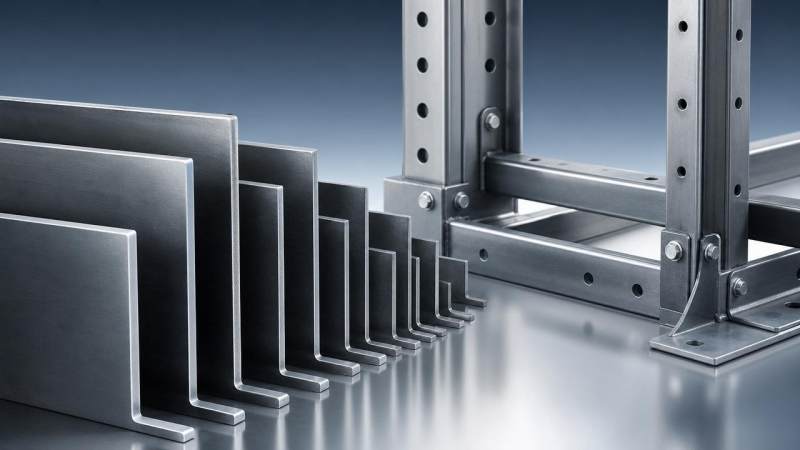
In the past, many projects selected steel l angle mainly by availability. Today, buyers increasingly compare load behavior, dimensional tolerance, coating options, and compliance with ASTM, EN, JIS, or GB requirements.
This shift matters because an angle section is often used in frames, edge reinforcement, brackets, towers, supports, trailers, racks, and machinery structures. Small size changes can affect stiffness, weldability, and connection safety.
Another trend is design efficiency. Projects want lighter structures without losing capacity. That makes steel l angle size comparison more important than before, especially when spans, bolt patterns, and deflection limits are strict.
Current market signals show rising demand for accurate size-to-load matching
Several clear signals are shaping how steel l angle is specified globally. Demand is moving toward sections that balance mechanical performance, fabrication speed, and lower total installed cost.
- More projects request documented standards and mill traceability.
- Light industrial structures favor optimized angle sizes over oversized sections.
- Export projects increasingly require predictable tolerances and surface quality.
- Fabricators prefer steel l angle that reduces cutting waste and connection adjustments.
These signals reflect a broader transition from commodity buying to application-focused sourcing. The section may look simple, but its real value depends on how accurately it fits the load path and the fabrication process.
What drives the shift in steel l angle sizes and load expectations
The trend is not random. It comes from technical, commercial, and operational pressures across steel-intensive industries.
How steel l angle sizes affect strength and real load behavior
Steel l angle is usually defined by leg size and thickness. Common examples include equal angles like 50x50x5 mm and unequal angles like 75x50x6 mm. Those dimensions directly affect section area and moment resistance.
A larger leg size generally improves load distribution. Greater thickness usually increases compressive resistance and connection strength. However, actual performance depends on span, restraint, hole placement, and whether the load is axial, bending, or combined.
Equal versus unequal steel l angle
- Equal angle sections are widely used for symmetrical brackets, edge frames, and secondary supports.
- Unequal steel l angle sections suit cases where one leg needs broader fastening or directional stiffness.
- Connection geometry often decides which shape performs better.
Load use by application type
For this reason, steel l angle load capacity should never be judged by size alone. Section shape, unsupported length, connection design, and steel grade must be reviewed together.
The impact on fabrication, sourcing, and material pairing
As size selection becomes more precise, fabrication planning also changes. Incorrect steel l angle dimensions can cause rework, wasted drilling, misaligned holes, or unstable assemblies during installation.
Material pairing is also gaining attention. In mixed systems, angle steel may be combined with tubes, beams, channels, and corrosion-resistant piping. For aggressive environments, supporting elements sometimes work beside 316 Stainless steel pipe in chemical, energy, shipbuilding, or boiler-related projects.
That product is known for improved corrosion resistance, high-temperature stability, and strong mechanical performance. Standard coverage includes ASTM A213, A312, A269, EN10216, JIS G3459, and other international specifications.
This does not replace steel l angle in structural roles. Instead, it shows how modern projects increasingly compare surrounding materials to ensure compatible durability, maintenance planning, and long-term operating reliability.
What should be checked before choosing a steel l angle size
Several checkpoints are now essential when evaluating steel l angle for structural or industrial use.
- Confirm whether the section is equal or unequal and match it to the connection layout.
- Check leg size, thickness, length tolerance, and straightness.
- Review steel grade and design standard compatibility.
- Compare required load, expected deflection, and buckling risk.
- Assess coating, galvanizing, or environmental exposure conditions.
- Verify whether custom punching, cutting, or OEM fabrication is needed.
These checks help avoid two common errors. One is overspecifying a heavy steel l angle that raises cost and slows installation. The other is underspecifying a section that weakens safety margins.
How future demand is likely to evolve
Demand for steel l angle will likely continue moving toward application-specific sizing. More projects want ready-to-use components, consistent dimensions, and documentation that supports faster approval and fewer site corrections.
Export supply chains are also favoring stable producers with broad structural steel capabilities. Companies that provide angle steel, channels, beams, cold formed profiles, and customized structural parts can often simplify combined sourcing.
That matters in global construction because project delays often come from coordination gaps, not only material cost. Reliable capacity, standard compliance, and predictable lead times are becoming part of the steel l angle selection decision.
Practical next steps for better steel l angle decisions
A useful approach is to compare steel l angle options through a simple sequence. Start with the real load condition. Then confirm connection details, section size, steel grade, finish, and supply consistency.
- Define the load path and service environment.
- Shortlist equal and unequal steel l angle sizes.
- Check strength, stiffness, and fabrication practicality.
- Confirm standards, inspection records, and delivery capability.
- Request customized processing if it reduces field work.
When these factors are reviewed together, steel l angle sourcing becomes more accurate and more cost-effective. Better size-to-load matching improves structural performance while reducing waste, delays, and downstream modification risk.
For projects needing dependable structural steel supply from China, it is worth working with a partner that offers angle steel expertise, custom processing support, and compliance with major international standards.
Please give us a message


Please enter what you want to find