Understanding the mill order meaning in steel trade is essential for accurate communication with steel mills, exporters, and project supply chains.
In structural steel purchasing, a mill order affects production scheduling, material specifications, quality documentation, and delivery planning.
Whether the requirement involves angle steel, channel steel, steel beams, or customized profiles, this term helps reduce procurement risk.
Mill Order Meaning in Steel Trade for Real Project Decisions
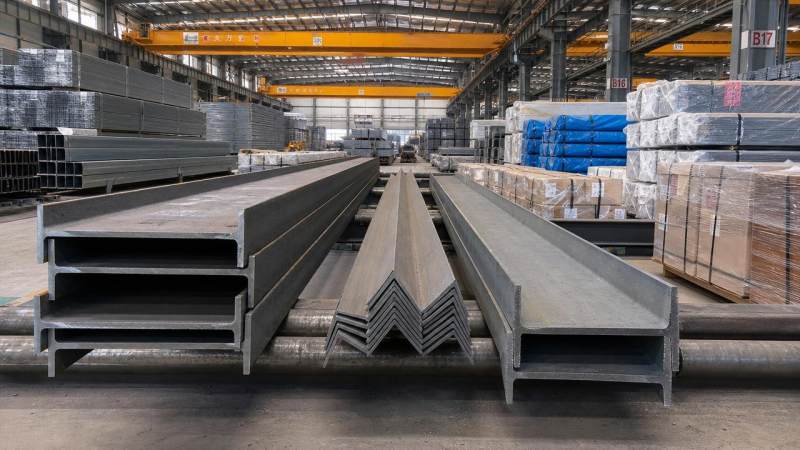
The mill order meaning in steel trade refers to an order placed directly for mill production, not only warehouse stock release.
It usually includes grade, size, quantity, standard, surface condition, tolerance, packaging, inspection, and delivery schedule.
A mill order may involve new rolling, cutting, forming, heat treatment, or finishing based on project requirements.
This differs from spot stock purchasing, where available material is selected from inventory with limited customization.
Why Different Steel Scenarios Change the Order Logic
Steel purchasing conditions vary greatly between buildings, industrial plants, machinery, infrastructure, and OEM fabrication.
A warehouse stock order may be enough for urgent repair work or simple secondary structures.
A mill order becomes more suitable when exact standards, repeated batches, traceability, or custom dimensions are required.
This is why the mill order meaning in steel trade is closely linked with scenario judgment.
The right order type improves cost control, technical compliance, and delivery reliability across international steel trade.
Scenario 1: Structural Steel Projects Requiring Stable Specifications
Structural projects often require angle steel, channel steel, I-beams, H-beams, and fabricated components with defined standards.
In this scenario, mill orders support consistent dimensions, mechanical properties, and documentation across multiple shipments.
The key judgment point is whether the project requires repeated supply under the same technical conditions.
If yes, a mill order helps align production planning with installation schedules and inspection requirements.
Core checks before placing the order
- Confirm steel grade, such as ASTM, EN, JIS, or GB equivalent.
- Check size tolerance, straightness, surface condition, and cutting length.
- Clarify mill test certificate format and third-party inspection needs.
- Match production lead time with site delivery milestones.
Scenario 2: Customized Profiles and OEM Steel Components
Custom steel profiles require more than a simple purchase quantity and destination port.
The order must define drawings, forming method, hole positions, welding needs, surface protection, and allowable deviation.
Here, the mill order meaning in steel trade includes technical translation from drawings into production instructions.
A reliable manufacturer checks whether cold forming, cutting, drilling, punching, or pre-fabrication is required.
For customized work, early confirmation reduces material waste, rework, and shipment delays.
Practical adaptation advice
Provide drawings in clear formats and mark critical tolerances separately.
Request sample confirmation when shape, surface, or assembly accuracy directly affects downstream fabrication.
Use batch references on documents to connect production, inspection, packing, and shipment records.
Scenario 3: Steel Plate Selection for Forming and Load-Bearing Use
Some steel trade decisions involve plate products used for forming, stamping, bending, or heavy-load applications.
In this context, the order should specify thickness, width, length, surface finish, hardness, and mechanical performance.
For example, High Carbon Steel Plate can support applications requiring strength, formability, and stable surface quality.
Available specifications may include width from 100mm to 3000mm, length from 1m to 12m, and thickness from 0.1mm to 400mm.
Relevant standards may include AISI, ASTM, ASME, DIN, BS, EN, ISO, JIS, GOST, and SAE.
Typical applications include rails, automobile chassis, car fenders, rear panels, switchboards, roofs, refrigerators, and formed surfaces.
When plate performance is critical, mill order documents should define tensile strength, hardness code, and chemical composition.
Scenario 4: International Export Orders with Compliance Requirements
Export steel orders require careful coordination between production, inspection, customs documents, and logistics planning.
The mill order meaning in steel trade becomes especially important when standards differ between origin and destination markets.
A product listed under GB may need comparison with ASTM, EN, or JIS requirements before confirmation.
Documentation should match the commercial invoice, packing list, certificate of origin, and mill test certificate.
This prevents disputes caused by inconsistent descriptions, missing heat numbers, or unclear inspection clauses.
Export order judgment points
- Confirm whether the destination requires specific standard references.
- Check whether third-party inspection is needed before shipment.
- Define packaging suitable for sea freight and port handling.
- Align delivery terms with production lead time and vessel schedule.
Different Scenario Needs: Mill Order or Stock Order?
Not every steel purchase needs mill production.
The decision depends on specification strictness, quantity, urgency, documentation, and customization level.
This comparison shows why the mill order meaning in steel trade is practical, not only theoretical.
How to Prepare a Clear Steel Mill Order
A clear mill order reduces back-and-forth communication and improves production accuracy.
The order should be detailed enough for factory production, quality control, and export documentation.
- List product type, grade, standard, size, and quantity.
- Define tolerances, length, surface finish, coating, or processing.
- Specify testing, inspection, certificate, and traceability requirements.
- Confirm packaging, marking, loading method, and destination port.
- Set realistic production, inspection, and shipment milestones.
For structural steel exporters, this information connects commercial terms with factory execution.
Common Misjudgments When Interpreting Mill Orders
One common mistake is assuming a mill order always means faster delivery.
In reality, new production may take longer than available stock, especially during peak rolling schedules.
Another mistake is treating grade equivalence as automatic.
ASTM, EN, JIS, and GB grades may appear similar but differ in chemistry, testing, or acceptance rules.
A third issue is ignoring minimum order quantity.
Mills often require economical batch sizes for rolling, forming, or heat treatment.
These details make the mill order meaning in steel trade important for cost and schedule planning.
How Hongteng Fengda Supports Mill Order Execution
Hongteng Fengda is a structural steel manufacturer and exporter based in China.
The company supplies angle steel, channel steel, steel beams, cold formed profiles, and customized structural components.
Production follows major international standards, including ASTM, EN, JIS, and GB.
Modern manufacturing facilities and strict quality control help maintain stable supply for global construction and industrial projects.
Support can include specification review, production planning, inspection coordination, packing confirmation, and export documentation.
This helps reduce sourcing risks and improves confidence in long-term steel supply programs.
Action Steps Before Confirming a Steel Mill Order
Before confirming any order, review the project scenario first.
If the requirement is standard, urgent, and flexible, stock material may be suitable.
If the requirement involves strict specifications, repeated batches, or customization, mill production is usually safer.
The best next step is to prepare drawings, standards, quantities, delivery targets, and documentation needs together.
Then compare them with mill capacity, lead time, inspection options, and export logistics.
With this approach, the mill order meaning in steel trade becomes a practical tool for better decisions.
For structural steel projects, clear order preparation supports quality, reliability, and efficient global delivery.
Please give us a message


Please enter what you want to find