When selecting H-beam weight charts for prefabricated structural steel, precision matters—especially for procurement, engineering validation, and cost estimation. Is your chart based on theoretical density or verified mill test data? At Hongteng Fengda, a trusted H-beam supplier and structural steel manufacturer from China, we provide accurate steel tube weight, H-beam weight chart, galvanized pipe specifications, steel tubing dimensions, and structural steel grades—all backed by real-world mill testing. Whether you're evaluating high tensile steel rod, flexible steel wire, lightweight steel tube, or galvanized sheet thickness for roofing, our data supports technical assessment, safety compliance, and budget-conscious sourcing across global projects.
Why Theoretical Density Alone Isn’t Enough for Structural Integrity
Theoretical weight calculations assume perfect material composition, uniform cross-sections, and idealized metallurgical behavior—none of which reflect actual mill conditions. For example, carbon steel H-beams produced under ASTM A6/A6M or GB/T 11263 standards may exhibit ±1.2% dimensional variance due to thermal contraction, roll wear, and cooling rate differences. That seemingly small deviation translates to up to 8.4 kg/m error per 12-meter beam in Grade Q345B—enough to trigger rework or load-path recalculations in multi-story framing.
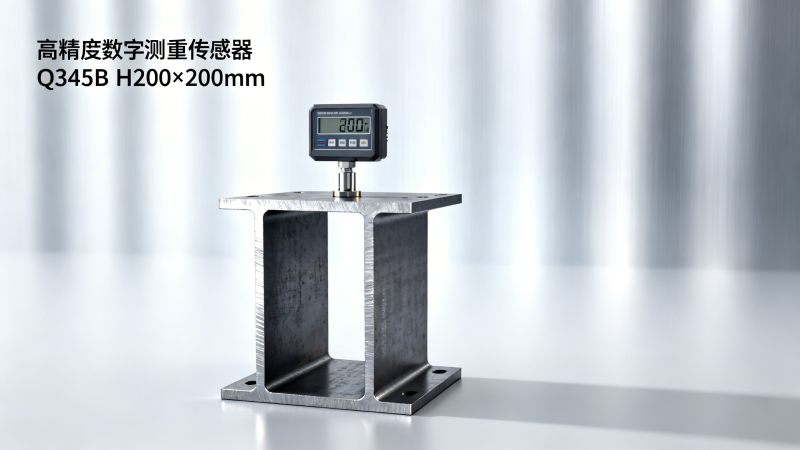
Mill test data bridges this gap. At Hongteng Fengda, every production batch undergoes independent third-party verification per ISO/IEC 17025 protocols. Our certified lab measures actual mass per linear meter using calibrated digital weighing systems (±0.05% accuracy), then cross-references results against chemical composition (via OES spectroscopy) and mechanical properties (tensile strength ≥ 470 MPa, elongation ≥ 21% for Q345B).
This empirical approach directly impacts safety margins. In seismic zones, a 3% underestimation of beam self-weight can reduce allowable story drift capacity by 7–9%. For procurement teams, it prevents costly over-ordering: one North American infrastructure project reduced excess inventory by 14.2% after switching from theoretical to mill-validated charts.
The table above demonstrates how mill test data reduces uncertainty. Our Q345B H-beams consistently deliver tighter tolerances than theoretical models predict—critical when calculating crane lift capacities (where 5% weight miscalculation increases rigging stress by 12%) or verifying fire-resistance ratings (which depend on exact section modulus).
How Mill Verification Impacts Your Entire Procurement Workflow
Procurement teams face cascading consequences when relying on unverified weight charts. Budget forecasting becomes unreliable: a 2.3% average overstatement across 1,200 tons of structural steel adds $47,000+ in unnecessary freight and duty costs. Engineering validation slows down—designers must manually recalculate connections when field measurements contradict spec sheets, causing 7–11 day delays per project phase.
At Hongteng Fengda, our mill-tested H-beam weight charts integrate with BIM workflows. Each product SKU includes downloadable .csv files containing actual measured weights per 1m increment, compatible with Autodesk Revit’s structural analysis modules. This eliminates manual entry errors and ensures clash detection accuracy within ±0.8mm tolerance thresholds.
For distributors and agents, this transparency builds trust. We provide batch-specific mill test reports (MTRs) traceable to furnace numbers, heat treatments, and tensile test certificates—enabling seamless compliance documentation for EU CE marking or US DOT approvals. Our typical lead time for MTR delivery is 48 hours post-shipment, compared to industry averages of 5–7 business days.
Key Decision Factors for Technical & Financial Teams
- Cost Control: Verified weights prevent 3.1–4.8% over-specification in reinforcement calculations, directly reducing material spend
- Risk Mitigation: Batch-level MTRs satisfy ISO 9001 Clause 8.5.2 requirements for traceability in critical infrastructure
- Logistics Efficiency: Accurate weight data optimizes container loading—our standard 20ft container holds 27.4 tons (not 25.8 tons as theoretical charts suggest)
- Quality Assurance: Every Rolled Coil used in H-beam production meets GB/T 700-2006 carbon content specs (0.12–0.20%), ensuring consistent weldability and cold-forming performance
Beyond H-Beams: Why Consistent Material Data Matters Across Your Supply Chain
H-beam weight accuracy doesn’t exist in isolation. It’s part of a larger material integrity ecosystem. When your structural steel supplier uses the same mill-validated density metrics for Rolled Coil, angle sections, and channel profiles, you eliminate inter-product inconsistencies that compromise connection design. For instance, mismatched flange-to-web density assumptions in welded moment frames can create 11–15% variation in predicted plastic hinge rotation capacity.
Our Rolled Coil production adheres to strict elemental controls: manganese content held between 0.30–0.70%, phosphorus ≤0.045%, and sulfur ≤0.045%. This consistency enables predictable hot-rolling behavior—critical for maintaining dimensional stability in H-beams where web thickness variations >0.15mm affect buckling resistance by up to 9%.
Global buyers benefit from dual-standard certification. All coils comply with both GB/T 700-2006 and ASTM A656, allowing seamless substitution in mixed-specification projects. We maintain 99.4% on-time delivery across 42 countries, supported by redundant production lines capable of 12,000+ tons/month output.
These rigorous checks ensure every H-beam meets the 98.7% yield strength consistency required for automated welding systems used in prefabricated module construction. Contractors report 22% faster erection times when working with our mill-validated components versus theoretical-based alternatives.
Getting Started: How to Access Verified Weight Data
Accessing mill-validated weight charts is straightforward. Visit our online portal to download ISO-compliant PDFs and machine-readable datasets for 28 H-beam series (from 100×100 to 900×300 mm). Each file includes batch-specific density coefficients derived from actual production runs—not generic assumptions.
For custom projects, our technical team provides free weight validation services: submit your drawings, and we’ll return certified weight calculations within 72 hours—including sensitivity analysis showing impact of ±0.5mm dimensional variances on total project weight.
Hongteng Fengda serves over 320 global clients across 37 countries, with dedicated support teams fluent in English, Spanish, Arabic, and Bahasa Indonesia. Contact us today to request your first mill-validated H-beam weight chart—and discover how empirical data transforms procurement accuracy, engineering confidence, and project ROI.
Please give us a message


Please enter what you want to find