Can galvanized pipe electrical installations be used safely in every environment? Not always. The answer depends on moisture level, chemical exposure, grounding rules, local code, and the mechanical demands of the site. In steel-related construction and industrial work, understanding where galvanized pipe electrical systems are allowed helps prevent corrosion failures, reduce compliance risk, and improve long-term reliability.
For structural steel projects, the question is not simply whether galvanized steel is strong enough. It is whether the zinc-coated conduit or pipe remains suitable after considering indoor dryness, outdoor weather, coastal salt, washdown conditions, buried service, and hazardous areas. A checklist-based review makes the decision faster and more accurate.
Why galvanized pipe electrical suitability needs a checklist
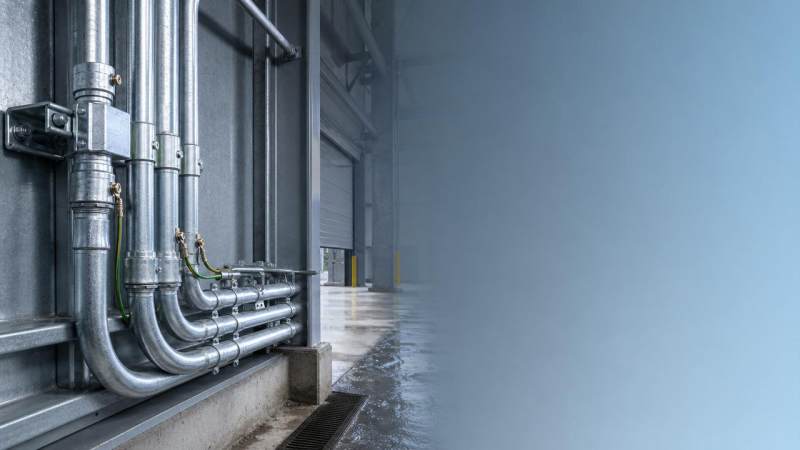
Galvanized pipe electrical applications often look acceptable at first glance because galvanized steel offers good surface protection and strong impact resistance. However, environment-specific variables change performance quickly. Zinc coatings can deteriorate faster in salt-laden air, acidic washdown zones, or locations where standing water remains on threads and joints.
A checklist is useful because electrical allowance is rarely based on one property alone. Code acceptance, corrosion category, installation method, and maintenance access all matter. In steel-intensive buildings, pipe supports, brackets, channels, and conduit routing should be reviewed as one system instead of separate parts.
Core checklist for galvanized pipe electrical use
- Confirm the governing electrical code first. Verify whether galvanized rigid steel conduit or pipe is explicitly permitted, conditionally limited, or restricted in the intended environment.
- Assess moisture exposure carefully. Distinguish between dry indoor space, damp areas, wet locations, direct weather exposure, and washdown zones with frequent condensation.
- Check corrosive agents on site. Identify salt spray, fertilizers, chlorides, sulfur compounds, acids, alkalis, and industrial fumes that can attack zinc coatings.
- Review thread protection and fittings. Ensure couplings, locknuts, and elbows maintain coating integrity because exposed cut threads often become the first corrosion points.
- Verify grounding continuity. Confirm the galvanized pipe electrical path meets bonding requirements and remains reliable after vibration, repainting, or partial corrosion.
- Measure mechanical risk. Consider impact, abrasion, traffic, and equipment movement, since galvanized steel may be preferred where plastic conduit lacks durability.
- Evaluate temperature and humidity cycles. Repeated wet-dry changes accelerate corrosion at joints, supports, and contact points with dissimilar metals.
- Inspect contact with concrete or soil. Determine whether direct burial, encasement, or alkaline exposure requires extra coating, wrapping, or a different conduit material.
- Match service life with maintenance access. If inspection or replacement is difficult, choose the material with the best long-term corrosion allowance for that location.
- Document the selection basis. Record code references, coating assumptions, support spacing, and environmental classification to avoid disputes during construction or export review.
Where galvanized pipe electrical use is commonly allowed
Dry indoor industrial and commercial areas
In dry interior spaces, galvanized pipe electrical systems are commonly acceptable when they meet code and proper installation standards. Typical examples include equipment rooms, workshops, warehouses, mezzanines, and structural steel platforms. Here, galvanized steel performs well because mechanical protection is often more important than high chemical resistance.
These areas still require attention to threaded ends, support brackets, and bonding points. Surface damage during handling should be repaired if required by the specification. Good housekeeping also matters, since trapped dust and moisture around supports can start localized corrosion.
Outdoor but non-aggressive environments
Galvanized pipe electrical routing may also be allowed outdoors where weather exposure exists but corrosion severity remains moderate. This can include covered loading zones, roof-level utility lines, and external wall runs away from marine spray or chemical emissions.
In these cases, drainage, sealing, and support design become critical. Water must not collect inside the system or remain on horizontal threads. Hot-dip galvanized supports and compatible fasteners improve durability when used with steel framing.
Heavy-duty mechanical protection zones
Where cables face impact or abrasion, steel conduit can be advantageous. Around machinery, material handling aisles, and fabrication lines, galvanized steel often outperforms lighter materials in physical protection. This is one reason galvanized pipe electrical solutions remain common in industrial steel buildings.
For related support or secondary steel accessories, corrosion resistance should also be considered beyond conduit alone. In applications involving tying, mesh fabrication, barrier separation, or general industrial use, Galvanized Stainless Steel Wire can complement steel systems with flexible, corrosion-resistant performance. It is available in 0.25 mm to 5.0 mm diameters, with zinc coating thickness of 8 to 25 g/m2 and tensile strength of 350 to 550 Mpa.
That product suits construction, wire mesh, packaging, decoration, breeding, and barrier isolation. Its bright surface, good ductility, and resistance to coating damage during bending or stamping make it practical where steel accessories must remain durable and cost-efficient.
Where galvanized pipe electrical use may be limited or not ideal
Coastal and marine atmospheres
Salt-rich air is a major warning sign. Even if galvanized pipe electrical installations are technically permitted by code, long-term durability may be poor near coastlines, ports, offshore support areas, or seawater handling plants. Zinc corrodes faster under chloride attack, especially where surfaces stay damp.
In such environments, stainless systems, nonmetallic conduit, or added protective coatings may provide a better life-cycle result. The decision should be based on corrosion category, maintenance frequency, and failure consequences.
Chemical processing or washdown facilities
Food plants, fertilizer storage, plating lines, wastewater units, and chemical shops can expose galvanized steel to aggressive agents. Detergents, acids, alkalis, and continuous washing may undermine the coating quickly. Under these conditions, galvanized pipe electrical use needs strong technical justification, not assumption.
The same caution applies where steam and condensation stay on the conduit surface for long periods. Moisture alone is manageable in many cases, but moisture combined with chemicals changes the risk level significantly.
Buried or concrete-contact installations
Direct burial and slab penetration conditions require extra review. Soil resistivity, groundwater chemistry, and concrete alkalinity all influence coating life. Galvanized pipe electrical systems in these locations may need wrapping, supplemental coating, or a different material entirely.
Transitions from above-grade steel to underground service are especially vulnerable. Corrosion often starts at entry points, damaged coatings, or dissimilar-metal contacts.
Commonly overlooked risks
- Ignoring cut ends and thread damage. Factory galvanizing helps, but field cutting exposes bare steel and may reduce the expected corrosion resistance sharply.
- Mixing incompatible metals. Contact between galvanized steel, copper-rich runoff, or certain stainless fasteners can accelerate galvanic attack in wet conditions.
- Assuming “outdoor rated” means universally durable. Weather tolerance does not equal resistance to fertilizer dust, coastal chlorides, or acidic industrial air.
- Overlooking drainage design. Low points, sagging runs, and poorly sealed entries allow internal water accumulation that weakens the system over time.
- Treating code compliance as the only target. A permitted galvanized pipe electrical installation can still be a poor material choice for service life and maintenance cost.
Practical execution steps for steel projects
- Classify the environment before selecting conduit, supports, and fastening hardware.
- Compare galvanized steel with stainless, PVC-coated, or nonmetallic alternatives using expected service life.
- Specify protection for threads, field cuts, and contact points with concrete or dissimilar metals.
- Coordinate the electrical routing with structural steel details to avoid water traps and inaccessible maintenance points.
- Request material compliance documentation for coatings, dimensions, and relevant standards before installation.
For global steel supply projects, material consistency is as important as technical selection. Hongteng Fengda, a structural steel manufacturer and exporter from China, supports construction and industrial projects with reliable steel products, customized solutions, and production aligned with ASTM, EN, JIS, and GB standards. Stable quality control helps reduce sourcing uncertainty when corrosion performance and compliance matter.
Conclusion and next action
So, is galvanized pipe electrical use allowed in all environments? No. It is often suitable in dry indoor areas, many general outdoor applications, and high-impact zones, but it becomes questionable in marine, chemical, buried, and severe wet-corrosive conditions. The right answer comes from a structured review of code, corrosion exposure, grounding, and service life.
Before finalizing any galvanized pipe electrical specification, build a simple environment checklist, inspect all contact conditions, and compare alternatives based on whole-life performance. That approach improves safety, extends durability, and supports better steel material decisions across industrial and construction projects.
Please give us a message


Please enter what you want to find