For after-sales maintenance teams, extending the service life of Galvanized Steel Wire Rope is essential to reducing downtime, improving safety, and lowering replacement costs. From proper inspection and lubrication to load control and storage practices, understanding the key maintenance factors can help keep wire ropes performing reliably in demanding industrial and construction environments.
What maintenance teams really need to know first
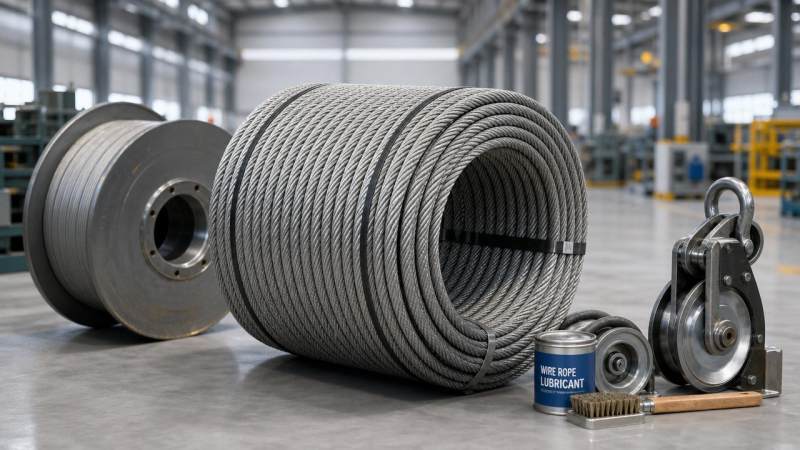
The service life of a galvanized wire rope usually depends less on one single factor and more on daily maintenance discipline. Most premature failures come from overload, poor lubrication, corrosion, bending fatigue, and delayed inspection.
For after-sales maintenance personnel, the key task is not simply replacing ropes after visible damage appears. It is identifying early wear patterns, correcting operating conditions, and preventing small defects from becoming safety risks.
If you want longer rope life, focus on five priorities first: correct selection, routine inspection, proper lubrication, controlled working loads, and suitable storage. These actions usually deliver far better results than reactive replacement alone.
Why galvanized wire rope still fails before its expected lifespan
Galvanized coating improves corrosion resistance, but it does not make wire rope immune to damage. In real use, ropes often work under repeated bending, vibration, shock loading, moisture, dirt, and abrasion.
Many maintenance teams assume corrosion is the only concern. In fact, internal fatigue, broken wires, crushed strands, and worn contact surfaces are often more immediate reasons for retirement, especially in cranes, elevators, mining, and loading equipment.
Another common issue is mismatch between the rope and the application. A rope used in marine service, drilling, lifting, or forestry may face very different stress conditions. If the construction or coating level is unsuitable, service life drops quickly.
Installation errors also matter. Poor spooling, wrong sheave diameter, twisting during installation, or sudden loading at startup can create internal damage long before the outer surface shows obvious warning signs.
How to inspect wire rope before problems become expensive
Inspection is the most practical way to extend rope life because it helps maintenance staff act early. A good inspection routine should combine visual checks, touch inspection, operating observation, and written service records.
Start with external condition. Look for broken wires, flattened areas, strand looseness, rust staining, diameter reduction, birdcaging, kinks, and heat damage. If one section looks different from the rest, investigate it immediately.
Pay close attention to high-stress zones. These include points passing over sheaves, drum contact areas, end terminations, and sections exposed to repeated bending. Damage usually develops faster in these locations than on straight spans.
Measure rope diameter at regular intervals. A reduction in diameter can indicate internal core failure, excessive wear, or structural distortion. Even if the surface still looks acceptable, diameter loss may signal a serious reduction in strength.
Listen and observe during operation. Unusual noise, vibration, jerking, or uneven winding often points to alignment problems, inadequate lubrication, or internal rope damage. These signs are valuable because they appear before full failure occurs.
Keep records after every inspection. Note installation date, application, load conditions, lubrication schedule, observed defects, and replacement decisions. Over time, these records help teams predict wear trends and improve maintenance planning.
What lubrication actually does, and how to do it correctly
Lubrication is often overlooked because galvanized ropes already have corrosion protection. However, galvanizing mainly protects the wire surface. Lubrication is still necessary to reduce friction between wires and strands during bending and movement.
A rope that lacks lubrication may suffer internal wear even when its outer surface looks clean. This is especially common in lifting systems, cranes, elevators, and drawing equipment where repeated movement creates constant metal-to-metal contact.
Choose a lubricant that can penetrate the rope and is compatible with the operating environment. It should protect against moisture, reduce internal friction, and avoid attracting excessive dust or abrasive particles.
Before applying new lubricant, remove dirt, hardened grease, and contaminants where possible. Applying lubricant over thick debris may trap abrasive particles inside the rope structure and accelerate wear instead of reducing it.
Apply lubricant evenly and avoid excess. Too little will not protect the rope, while too much may drip, collect contaminants, or interfere with nearby equipment. Follow a scheduled interval based on duty cycle and environmental exposure.
In wet, marine, mining, or outdoor applications, lubrication intervals usually need to be shorter. Frequent exposure to water, mud, salt, and dust can quickly reduce the protective effect of both the zinc layer and lubricant film.
How load control and operating habits affect rope life
Even high-quality ropes fail early when they are operated beyond design limits. After-sales maintenance teams should regularly confirm that actual working loads, shock loads, and startup loads stay within the intended safe range.
Repeated overload does not always produce immediate failure. More often, it shortens fatigue life, deforms strands, weakens the core, and increases the number of broken wires. This hidden damage can remain unnoticed until a sudden incident occurs.
Shock loading is particularly harmful. Abrupt starts, sudden stops, snagging, and dropped loads create dynamic forces much higher than normal steady lifting loads. Reducing these events can significantly extend service life.
Operators should also avoid side pulling, improper fleet angle, and uneven drum winding. These conditions create localized wear, crushing, and twisting that maintenance teams later have to correct at much higher cost.
Where possible, coordinate with operations staff. Rope life improves when operators understand that smooth handling, proper reeving, and load discipline are not just operational issues but core maintenance strategies.
Why storage and handling matter before installation even begins
Wire rope can lose useful life before it ever enters service. Poor storage conditions may expose it to standing water, corrosive chemicals, ground moisture, direct contamination, or mechanical damage during transport and handling.
Store rope in a dry, ventilated area off the ground. Cover it from rain and dirt, but avoid sealing it in a way that traps condensation. Long-term storage should include periodic checks for corrosion and lubricant condition.
When moving rope, use proper lifting tools and avoid dragging it across rough surfaces. Dragging damages the galvanized layer, introduces dirt, and may deform the rope structure before installation.
During uncoiling, prevent loops from forming. Pulling rope incorrectly from a coil or reel can create kinks, twists, and permanent structural distortion. Once a rope is kinked, its strength and expected life are permanently reduced.
How to choose the right rope structure for the job
Maintenance results improve when the original rope specification matches the application. Different constructions offer different balances of flexibility, abrasion resistance, strength, and fatigue performance.
In many industrial applications, common constructions include 6X7+FC, 6X7+IWS, 6X9W+FC, 6X9W+IWR, 6X19+FC, 6X19+IWS, 6X19+IWR, and 8x19S+FC. Selection should depend on bending frequency, load type, and environment.
For example, a rope in cranes, tower cranes, container cranes, elevators, mining, drilling, cableways, or marine service may require different priorities. Some applications need more flexibility, while others demand better abrasion resistance or core support.
Diameter and tensile strength also matter. Typical product ranges can include diameters from 1.0 mm to 22 mm and normal tensile strength from 1470 MPa to 1960 MPa. Choosing higher strength alone does not automatically guarantee longer life.
Maintenance teams involved in replacement planning should also review coating level against corrosion severity. Thin, medium, and thick zinc coating groups are suited to mild, medium, and severe corrosion conditions respectively.
When buyers or maintenance teams need a reference for application fit, construction options, and compliance, it helps to review a product source such as Galvanized Steel Wire Rope with clear specifications and standard information.
Relevant standards and certifications may include GB/T 20116-2008, DIN, EIPS, ISO 9001, and ABS. These references do not replace application review, but they help maintenance teams verify baseline manufacturing and quality expectations.
When should a rope be repaired, monitored, or replaced?
One of the hardest practical questions is deciding when a rope has reached retirement criteria. Waiting too long increases safety risk, but replacing too early increases operating cost unnecessarily.
Replacement decisions should be based on a combination of factors, not one symptom alone. These include number and distribution of broken wires, wear depth, corrosion severity, deformation, diameter reduction, and the rope’s actual service conditions.
A rope with localized severe damage usually deserves immediate action even if the rest looks acceptable. Typical critical defects include kinks, birdcaging, crushed strands, core protrusion, severe corrosion pits, and heat damage.
If the rope shows moderate wear but remains within acceptable limits, increase inspection frequency and review operating conditions. In many cases, correcting lubrication, alignment, or loading habits can slow further deterioration.
Maintenance teams should avoid informal judgment based only on appearance. A rope can look serviceable on the surface while suffering serious internal degradation. If the application is safety-critical, use stricter inspection and replacement criteria.
Practical checklist for extending service life in the field
To make maintenance action easier, use a simple field checklist. Confirm correct rope selection, verify installation quality, inspect high-wear areas, measure diameter, lubricate on schedule, and check drum and sheave condition.
Review load history and ask operators about shock events, abnormal noise, or handling changes. Small operational changes often explain sudden rope deterioration better than material issues alone.
Check the environment as well. Water, salt, mud, cement dust, chemicals, and poor ventilation can all accelerate wear. If conditions become harsher than originally planned, the maintenance schedule should change too.
Finally, build replacement planning into normal service management. Ordering ropes before emergency failure reduces downtime, improves safety, and gives teams time to confirm the correct specification for the next service cycle.
Conclusion
Extending the life of galvanized wire rope is mainly about disciplined maintenance, not luck. The biggest gains come from early inspection, correct lubrication, controlled loading, proper storage, and matching the rope to the real application.
For after-sales maintenance teams, the goal is to catch wear before it becomes dangerous or expensive. A well-managed rope lasts longer, performs more safely, and supports more predictable maintenance costs across industrial and construction operations.
In short, Galvanized Steel Wire Rope delivers its best value when product choice and field maintenance work together. If teams treat inspection and operating control as routine priorities, service life can be extended in a measurable and practical way.
Please give us a message


Please enter what you want to find