Quality risks in a high tensile steel rod can directly affect structural safety, production stability, and project compliance. For quality control and safety managers, spotting issues early is essential to avoid failures, delays, and costly rework. This guide explains the key inspection points, common defects, and practical ways to evaluate high tensile steel rod quality before it reaches critical applications.
What should quality teams check first in a high tensile steel rod?
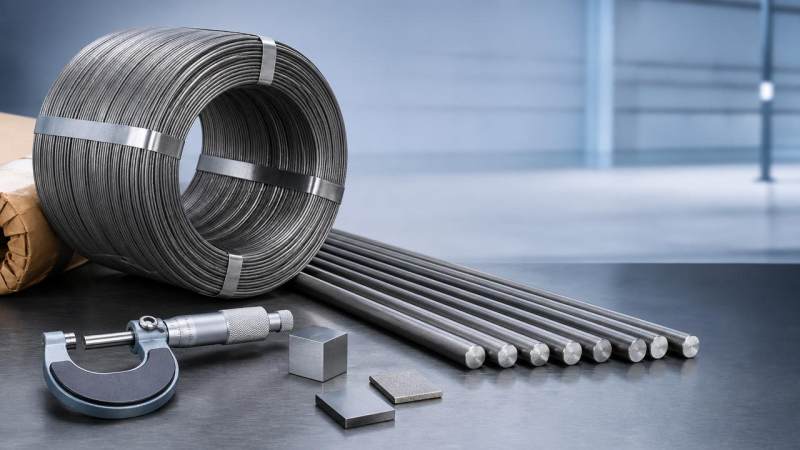
A high tensile steel rod is often selected for demanding load-bearing, anchoring, reinforcement, drawing, and fabricated steel applications where strength and consistency matter more than simple visual appearance. For QC and safety managers, the first priority is not only confirming the nominal grade, but verifying whether the delivered rod matches the mechanical, chemical, and dimensional requirements stated in purchase documents and applicable standards.
In steel procurement, quality risks usually do not begin with catastrophic failure. They begin with small deviations: out-of-round diameter, unstable tensile performance, poor surface condition, decarburization, inconsistent heat treatment, or traceability gaps. These issues can lead to downstream cracking, poor weldability, unstable forming results, coating defects, reduced fatigue life, and non-compliance during project audits.
Before approving any batch of high tensile steel rod, inspection should focus on a few practical questions:
- Does the rod meet the specified tensile strength, yield behavior, and elongation range required for the end use?
- Is the surface free from seams, laps, rust scale, pits, or micro-cracks that can trigger failure during bending or tensioning?
- Are diameter tolerance, straightness, and coil condition suitable for automated processing or safe manual handling?
- Can the supplier provide consistent heat numbers, mill test reports, and inspection records linked to the actual shipment?
This first-pass review helps teams separate cosmetic issues from real safety risks. In many cases, a rod that looks acceptable at unloading can still perform poorly in fabrication or service if the internal metallurgy is unstable.
Which defects create the biggest safety and compliance risks?
Not all defects carry the same consequence. For a high tensile steel rod used in structural or industrial systems, the most dangerous quality problems are those that reduce load reliability, increase brittle behavior, or interfere with further processing. QC teams should classify defects by severity rather than treating every nonconformance equally.
Surface-related risks
- Longitudinal seams or laps may open during bending, threading, or tensile loading.
- Pitting or scale can reduce effective section and accelerate corrosion, especially in humid or outdoor storage conditions.
- Scratches from poor handling may become stress concentration points in high-load applications.
Metallurgical and processing risks
- Decarburization can lower surface hardness and weaken fatigue resistance.
- Non-uniform microstructure may cause variable mechanical performance within the same batch.
- Improper cooling or heat treatment can increase brittleness or reduce ductility.
Dimensional and traceability risks
- Diameter variation affects fit, tensile capacity, and processing settings.
- Poor coil uniformity can cause feeding problems in drawing or straightening equipment.
- Missing heat identification prevents root-cause investigation if a field issue occurs later.
The table below summarizes common high tensile steel rod defects, their likely causes, and their practical impact on safety or manufacturing performance.
For safety-critical projects, these risks should trigger either batch segregation, additional testing, or supplier corrective action. Accepting a marginal batch to save time often creates larger delays later in fabrication or site installation.
How to inspect a high tensile steel rod before release or installation
A practical inspection workflow should combine document review, visual examination, dimensional checks, and performance verification. The right sequence helps QC teams catch obvious issues early and reserve laboratory testing for the batches that need deeper analysis.
Step-by-step inspection workflow
- Confirm the purchase specification, including grade, diameter, surface condition, quantity, end use, and required standards such as ASTM, EN, JIS, or GB where applicable.
- Match bundle tags, heat numbers, and mill test certificates to the incoming lot. If identification is unclear, quarantine the material before use.
- Check the surface under adequate lighting for seams, rust, pits, scale, mechanical damage, or contamination that may affect coating, forming, or fatigue performance.
- Measure diameter and ovality at multiple positions. One-point measurement is not enough for a high tensile steel rod intended for tight-tolerance processing.
- Review mechanical test data. If the application is critical, take witness samples for independent tensile or bend testing.
- Evaluate storage condition and packaging. Moisture exposure and damaged wrapping can turn a compliant batch into a corrosion problem before production begins.
This type of structured control is especially important for exporters and project buyers working across multiple standards. A capable steel supplier should not only ship material, but also support pre-shipment verification, clear documentation, and responsive quality communication.
Which test methods and data points matter most?
When evaluating a high tensile steel rod, quality managers need test data that connects directly to the rod’s real application. A generic certificate is less useful than data aligned with actual service conditions such as drawing, bending, anchoring, fastening, or dynamic loading.
The table below shows key inspection and testing points that usually deserve attention during incoming control or supplier qualification for high tensile steel rod procurement.
For some projects, additional checks such as hardness, bend performance, decarburization depth, or metallographic examination may be justified. This is common when the high tensile steel rod will be cold formed, threaded, welded, or exposed to cyclic loading.
In related applications where high-strength steel wires are further stranded into lifting, marine, drilling, or elevator systems, corrosion resistance and tensile range become equally critical. For example, Galvanized Steel Wire Rope is widely used in mining, cranes, elevators, agriculture, oil and gas, and cableway systems. Typical configurations include 6X7+FC, 6X19+IWR, and 8x19S+FC, with diameter options from 1.0 mm to 22 mm and normal tensile strength from 1470 MPa to 1960 MPa. For QC teams, this is a useful reminder that upstream wire or rod quality strongly influences the reliability of downstream rope products, especially when zinc coating weight, strand uniformity, and corrosion class must match the service environment.
How can buyers compare suppliers and reduce sourcing risk?
The quality of a high tensile steel rod depends not only on the product itself, but on the supplier’s process discipline. A low-priced offer may hide weaker inspection routines, unstable raw material sources, or incomplete export documentation. For quality and safety managers, supplier evaluation should be built around evidence rather than promises.
Supplier assessment checklist
- Can the manufacturer produce against international standards such as ASTM, EN, JIS, and GB when the project requires multi-market compliance?
- Are production and inspection records consistent across batches, or do tensile results vary widely over time?
- Does the supplier support OEM or customized dimensions when the application needs special tolerances or processing behavior?
- Can the exporter maintain dependable lead times without sacrificing inspection discipline during urgent shipments?
- Is there a clear channel for technical clarification, sample review, nonconformance handling, and pre-shipment quality confirmation?
For global buyers, working with a structural steel manufacturer that combines production capacity, export experience, and strict quality control reduces both technical and commercial risk. Hongteng Fengda supports international projects with structural steel products and customized solutions, backed by modern manufacturing facilities and practical understanding of cross-market standard requirements. For QC teams, that means fewer gaps between specification, production, and delivery.
What standards, certifications, and records should be reviewed?
Compliance is often where hidden risk appears. A high tensile steel rod may pass basic visual inspection but still fail a project audit if traceability, standards alignment, or supporting documentation is incomplete. Quality managers should define document review as part of acceptance, not as an afterthought.
Records worth checking before approval
- Mill test certificate linked to heat or batch number
- Mechanical property report with tensile data relevant to the ordered grade
- Chemical composition report where required by contract or end-use regulation
- Dimensional inspection records for diameter and tolerance verification
- Packing list and identification marks confirming lot segregation and shipment traceability
If the steel rod will later be converted into galvanized wire or rope systems, related downstream standards may also matter. In those supply chains, buyers often pay close attention to coating consistency, corrosion class, and quality management controls such as ISO 9001, as well as application-specific references like DIN, GB/T 20116-2008, EIPS, or ABS where relevant to the product and service environment.
Common mistakes when evaluating a high tensile steel rod
Many quality failures are caused by incorrect assumptions rather than missing equipment. The most common mistake is treating all high-strength rods as functionally interchangeable. In reality, two products with similar nominal strength may behave differently during threading, cold bending, welding, or exposure to impact and vibration.
- Do not rely on tensile strength alone. Ductility, surface quality, and dimensional stability also determine whether the rod is safe to process and use.
- Do not skip sampling because the supplier is familiar. Even stable suppliers can experience rolling, heat treatment, or packaging variation.
- Do not ignore storage conditions. Condensation, contamination, and rough handling can degrade a compliant batch before installation.
- Do not approve substitutions without verifying end-use requirements. A cheaper steel alternative may increase total cost through scrap, rework, and site risk.
The right approach is to align inspection depth with failure consequence. A high tensile steel rod used in a low-risk fabrication aid does not need the same scrutiny as material intended for critical anchoring, lifting components, or structural load transfer.
FAQ: practical questions from QC and safety managers
How do I know whether a high tensile steel rod is suitable for my application?
Start from the actual service condition, not only the catalog description. Check required load, fabrication method, exposure environment, and governing standard. Then compare these needs with tensile properties, dimensional tolerance, surface condition, and traceability records. If the rod will be bent, threaded, drawn, or welded, request supporting data beyond basic tensile strength.
Which incoming defects should trigger immediate rejection or quarantine?
Material should be isolated if heat numbers are missing, mechanical results do not match the ordered grade, diameter is outside tolerance, or visible seams and cracks are present. Serious corrosion, mixed bundles, or damaged packaging in moisture-sensitive storage conditions also justify further review before release.
Is visual inspection enough for a high tensile steel rod?
No. Visual inspection is essential, but it only reveals part of the risk. Some of the most significant issues, such as inconsistent metallurgy, decarburization, or unstable tensile behavior, require document review or testing. For critical applications, combine visual checks with dimensional inspection and at least selective mechanical verification.
How can we reduce delays when quality problems appear in imported steel shipments?
The most effective method is preventive control: agree on standards early, confirm tolerances before production, review sample or pre-shipment data, and make lot traceability mandatory. Choosing an experienced exporter with stable production planning and responsive technical support also reduces the time lost in clarification, replacement, or corrective action.
Why choose us for structural steel and quality-focused sourcing support?
For quality control and safety teams, the best supplier is one that helps prevent risk before the material reaches your line or site. Hongteng Fengda is a professional structural steel manufacturer and exporter from China, supplying angle steel, channel steel, steel beams, cold formed steel profiles, and customized structural steel components for global construction, industrial, and manufacturing projects.
Our strength is not limited to production. We support buyers with specification confirmation, standard matching, OEM discussions, and practical quality communication across ASTM, EN, JIS, and GB requirements. With modern manufacturing facilities and strict quality control, we help customers reduce sourcing uncertainty, manage lead times, and avoid preventable rework or compliance issues.
If you are evaluating a high tensile steel rod or related steel products, you can contact us for specific support on the points that matter most to your team:
- Parameter confirmation for strength, tolerance, and application fit
- Product selection for structural, industrial, or customized steel needs
- Delivery schedule planning for urgent or phased project supply
- Certification and standards alignment for export or project compliance
- Sample support, quotation communication, and OEM solution discussion
When the cost of a quality failure is high, early technical review is far cheaper than late correction. A clear inquiry with application details, standard requirements, and expected delivery timing is the fastest way to receive a practical sourcing recommendation.
Please give us a message


Please enter what you want to find