Damage to a galvanized sheet coating should be repaired promptly because exposed steel can corrode quickly in wet, salty, industrial, or poorly ventilated environments.
For maintenance personnel, successful repair depends less on the product label and more on correct damage assessment, surface preparation, application thickness, and inspection.
Minor scratches can often be protected with zinc-rich paint, while larger damaged areas may require zinc thermal spraying or replacement of affected components.
This guide explains how to select an on-site galvanized sheet repair method, prepare the surface correctly, and verify that restored protection will perform reliably.
The practical goal is not to make every repair visually invisible, but to restore sacrificial zinc protection and prevent corrosion from spreading beneath coatings.
First, Assess Whether the Galvanized Sheet Can Be Repaired
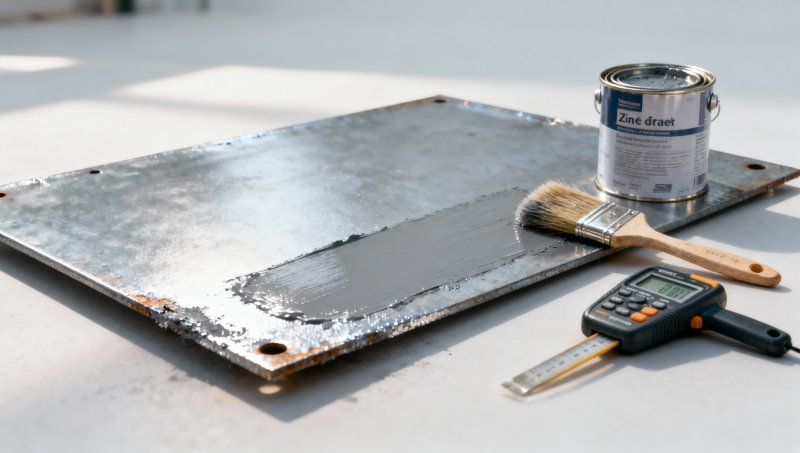
Before starting repairs, identify whether the damage affects only the zinc coating, reaches the steel substrate, or has already caused measurable corrosion and section loss.
Light scratches, handling marks, cut edges, drilled holes, and small abrasions are common issues that can usually be repaired on site successfully.
Deep gouges, peeling coatings, white rust deposits, red rust, weld damage, and chemical contamination require closer evaluation before choosing a repair material.
Inspect the damaged galvanized sheet under adequate lighting and remove loose dirt so maintenance teams can see the actual coating condition clearly.
Measure the damaged area where possible, because many project specifications limit the maximum repairable area before re-galvanizing or component replacement becomes necessary.
Also check surrounding areas for blistering, lifting, underfilm rust, or coating discoloration, since visible damage may indicate a broader moisture or chemical exposure problem.
If structural steel has significant corrosion, deformation, cracking, or lost thickness, treat the issue as a structural maintenance concern rather than only a coating repair.
Understand the Protection Mechanism Before Selecting a Repair Method
Galvanized sheet protects steel through both barrier protection and sacrificial protection, meaning zinc corrodes preferentially and helps protect nearby exposed steel surfaces.
A suitable repair material should therefore contain sufficient metallic zinc or provide equivalent long-term corrosion resistance for the actual operating environment.
Ordinary decorative paint may cover exposed steel temporarily, but it does not necessarily provide the cathodic protection expected from a proper galvanized coating repair.
Zinc-rich repair coatings are commonly selected because they are practical for field work, available in aerosol or brush grades, and suitable for localized damage.
However, zinc content alone does not guarantee performance, because poor adhesion, contamination, insufficient dry film thickness, and incorrect curing can cause early failure.
For severe exposure, such as coastal infrastructure, chemical plants, ports, or continuously wet equipment, maintenance teams should consider higher-performance repair systems and project specifications.
Always confirm whether the client, engineer, or applicable standard requires a specific repair process, coating thickness, inspection method, or approved product manufacturer.
Choose the Right On-Site Repair Material for the Damage
Zinc-rich paint is generally the most practical option for small scratches, cut edges, drill holes, and localized coating loss on galvanized sheet.
These products may be supplied as aerosols, single-pack coatings, or two-component epoxy systems, with different zinc loading, durability, and application requirements.
Brush-applied zinc-rich paint is useful for detailed work around bolts, corners, weld seams, and narrow damaged zones where spray equipment is impractical.
Aerosol zinc coatings can be efficient for small repairs, but wind, overspray, uneven coverage, and limited film build can reduce consistency outdoors.
Two-component zinc-rich epoxy coatings are often preferable where better adhesion, chemical resistance, and controlled dry film thickness are required for industrial projects.
Zinc thermal spraying, also called metallizing, can restore substantial zinc thickness on larger repair areas when qualified equipment and trained operators are available.
Zinc-based solder alloys or zinc-rich sticks may be used in specialized situations, but they require controlled heating and are less common for routine field maintenance.
When repairs cover a large percentage of the galvanized sheet surface, replacing the component or returning it for re-galvanizing may offer better long-term value.
Prepare the Damaged Area Thoroughly Before Applying Zinc
Surface preparation is the most important step in an on-site galvanized sheet repair because repair materials cannot adhere reliably to oil, rust, salts, or loose coating.
Begin by removing dust, grease, marker ink, cutting fluid, and other contaminants with a compatible solvent cleaner or approved alkaline cleaning method.
Use clean lint-free cloths and change them frequently, because wiping contaminated material across the surface can spread oils instead of removing them.
Remove loose white corrosion products, red rust, flaking zinc, welding slag, and damaged paint using hand tools, power tools, or localized abrasive cleaning.
For small repairs, a wire brush, abrasive pad, sanding disc, or needle scaler can create a clean and lightly roughened surface for adhesion.
Avoid excessive grinding that removes sound zinc coating beyond the damaged zone, because this enlarges the repair area and increases unnecessary maintenance work.
Feather the edges of intact surrounding coating so the repair layer transitions smoothly and does not leave an exposed edge vulnerable to moisture entry.
After preparation, remove abrasive dust and inspect the surface again; the steel should be clean, dry, stable, and free from visible corrosion residues.
Apply Zinc-Rich Repair Coating at the Correct Thickness
Read the technical data sheet before application because zinc-rich repair coatings differ in mixing ratio, pot life, thinning limits, recommended film thickness, and curing conditions.
For two-component products, mix the base and curing agent exactly as specified, then allow any required induction time before applying the first coat.
Apply the coating beyond the visibly damaged area, overlapping onto sound galvanized sheet to create a continuous protective transition around exposed steel.
Use a brush for localized details, a roller for accessible flat surfaces, or spray equipment when a larger repair area requires consistent coverage.
Do not apply excessively heavy coats in one pass because solvent entrapment, sagging, cracking, and poor curing can reduce coating performance.
Multiple thin coats are usually more reliable when the specified dry film thickness cannot be achieved evenly in a single application.
Measure wet film thickness during application when practical, then verify dry film thickness after curing using a calibrated coating thickness gauge.
The repair should meet the relevant specification or manufacturer recommendation, particularly where the galvanized sheet will face marine, industrial, or high-humidity service conditions.
Pay Special Attention to Cut Edges, Welds, and Fastener Areas
Cut edges are often the highest-priority repair locations because cutting removes zinc and leaves exposed steel directly vulnerable to moisture and oxygen.
Deburr sharp cut edges before coating, since burrs can create thin spots, trap moisture, and make it difficult to achieve continuous zinc-rich coverage.
Welded areas need careful treatment because welding burns away nearby zinc coating and can leave slag, spatter, oxidation, and rough surface profiles.
Remove welding residues thoroughly before applying repair material, and ensure the weld has cooled enough to meet the coating manufacturer’s recommended application temperature.
Bolted connections should be inspected for coating damage beneath washers, around drilled holes, and at locations where installation tools scratched the galvanized sheet.
Do not coat bolt threads or critical friction surfaces unless the connection design and project specification explicitly allow it, especially for slip-critical structural joints.
For field-drilled holes, coat the exposed hole perimeter and inner surface where accessible, using a small brush or suitable spray extension nozzle.
Control Weather, Temperature, and Site Conditions During Repair
Even the correct repair coating can fail prematurely when it is applied onto wet steel, condensation, dust, or surfaces outside the approved temperature range.
Check ambient temperature, steel temperature, relative humidity, and dew point before work begins, especially during early mornings, evenings, or changing weather conditions.
The steel surface should normally remain several degrees above the dew point to prevent invisible condensation from forming beneath the repair coating.
Do not apply zinc-rich coatings during rain, heavy fog, strong windblown dust, or conditions likely to cause contamination before the coating reaches handling strength.
Where outdoor work cannot be delayed, use temporary screens, shelters, controlled ventilation, and approved heating methods to create stable application conditions.
Do not use uncontrolled direct flame heating on galvanized sheet because excessive heat can damage adjacent zinc coating, create safety hazards, and distort thin material.
Record site conditions in maintenance documentation when repairs are critical, repeated, or subject to client inspection, warranty requirements, or third-party quality control.
Inspect the Finished Repair Before Returning Equipment to Service
Visual inspection should confirm that the repaired area is fully covered, evenly applied, free from pinholes, and properly overlapped onto intact galvanized sheet.
Look for runs, dry spray, bare spots, cracking, poor edge coverage, trapped debris, and inconsistent color that may indicate insufficient coating thickness or adhesion.
After the specified cure time, use a dry film thickness gauge where appropriate to verify that the repair coating meets the required protection level.
For critical structures, consider adhesion testing or holiday detection when permitted by the coating system, service environment, and relevant inspection procedures.
Document the repair location, damage type, preparation method, product batch, application date, weather conditions, and inspection results for future maintenance planning.
Photographs before and after repair are particularly useful for asset owners, contractors, and maintenance teams managing large quantities of galvanized steel components.
If the repaired coating fails inspection, remove defective material, prepare the surface again, and reapply rather than accepting a visibly incomplete protective layer.
Know When Repair Is Not the Best Long-Term Solution
On-site repair is efficient for localized damage, but it should not be used to conceal widespread coating failure, severe corrosion, or material degradation.
Replacement may be more appropriate when damage covers a large area, repeated repairs are required, or corrosion has spread beneath the surrounding galvanized coating.
Re-galvanizing may also be considered for removable components when original coating thickness, appearance, and full-surface protection are important for service life.
Evaluate access costs, shutdown time, coating durability, environmental exposure, safety requirements, and expected asset life before selecting repair, replacement, or re-galvanizing.
For structural applications, consult the responsible engineer whenever corrosion affects load-bearing capacity, connection performance, fire protection systems, or compliance with project requirements.
Reliable galvanized sheet maintenance is not simply about applying paint; it requires matching the repair method to exposure conditions and the actual condition of the steel.
Conclusion: A Good Repair Restores Protection, Not Just Appearance
Damaged galvanized sheet coating can usually be repaired on site when the affected area is localized, the steel remains sound, and preparation is completed properly.
Zinc-rich repair coatings are the standard practical solution for many scratches, cut edges, weld zones, and handling marks on galvanized steel components.
The most important factors are removing contamination and corrosion, selecting a compatible zinc-based material, applying the required thickness, and allowing proper curing before service.
Maintenance teams should inspect repaired areas carefully and document critical work, particularly for structural steel exposed to marine, industrial, or continuously damp conditions.
When damage is extensive or corrosion has progressed beyond the coating, replacement or re-galvanizing is usually a more dependable decision than repeated local repairs.
Please give us a message


Please enter what you want to find