Cutting a sheet of galvanized steel without damaging the zinc coating is mainly about controlling heat, friction, vibration, and handling. The zinc layer is thin but durable in normal service; it is far more likely to be damaged by an overheated abrasive cut, a dragging workpiece, or rough edge finishing than by the cutting action itself. Choose the cutting method for the sheet thickness and cut shape, support the material properly, and protect every fresh edge after cutting.
The goal is not to leave the zinc coating completely untouched. Any cut exposes the steel at the edge. The practical goal is to avoid peeling, burning, excessive burrs, and wide areas of damaged coating beside that edge. When the cut is clean and the exposed edge is treated appropriately, galvanized sheet can perform reliably in roofing, ductwork, wall panels, equipment covers, light structural fabrication, and many other applications.
How to Cut a Sheet of Galvanized Steel with Minimal Coating Damage
For straight cuts in thin material, hand shears, electric shears, nibblers, or a properly set guillotine shear are usually the best choices. These methods cut mechanically, so they introduce little heat into the zinc coating. For curved cuts, a nibbler or fine-tooth jigsaw blade is often more controlled than forcing snips around a tight radius. For thicker sheet, a band saw, cold saw, or carefully selected plasma process may be appropriate, but the risk of coating damage rises as heat increases.
A practical rule helps with most jobs: use the coldest cutting process that can produce the required accuracy and edge quality. A fast cut is not necessarily a good cut if it leaves scorched coating, hardened burrs, or a distorted panel that must be reworked.
Before starting, inspect the sheet. Check for white rust, scratches, dents, wet storage stains, or protective film. If the material already has damage, mark it clearly so it is not mistaken for damage caused during fabrication. Also confirm the coating type and sheet grade if the finished part will be bent, welded, painted, or used outdoors. A standard zinc-coated sheet, a zinc-aluminum coated sheet, and a prepainted galvanized product should not be treated as exactly the same material.
Choose the Tool by Thickness and Cut Type
The best tool depends less on brand preference and more on the job in front of you: sheet thickness, required tolerance, production volume, and whether the cut will remain visible after installation.
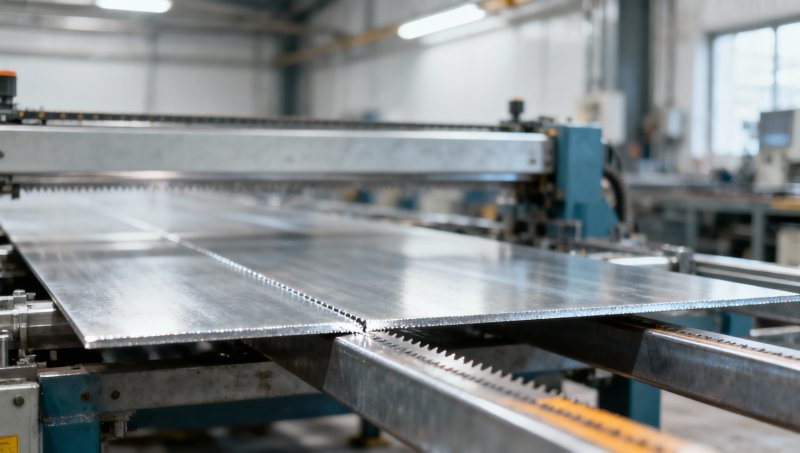
For light-gauge galvanized sheet, a guillotine shear is difficult to beat for straight cuts. A correctly maintained shear produces a narrow, clean edge without overheating the zinc. Problems appear when the blade clearance is wrong or the blade is dull. Instead of shearing cleanly, the machine tears the sheet, rolls the edge, and produces a burr that can later crack coating during handling.
Hand snips are useful, but they are often misused. Long snips can create a wavy edge because the operator repeatedly bends the sheet while advancing the cut. That is acceptable for concealed trimming but not for a visible cladding line or a part that must fit tightly against another component. When appearance and fit matter, use a shear, nibbler, or guided power tool.
Heat Is the Main Enemy of the Zinc Coating
Galvanized steel is protected because zinc acts as a barrier and provides sacrificial protection near small exposed areas. Excessive grinding heat changes that situation. A darkened or burned strip beside the cut is a warning sign that the coating has been affected beyond the normal exposed edge. Heavy sparks can also embed hot particles into nearby surfaces, leaving small rust points later.
An abrasive cutoff wheel can still be used in field work, particularly where access is limited. It should be treated as a controlled exception, not the default method for thin galvanized sheet. Use a thin, suitable metal-cutting wheel, make one steady pass rather than dwelling on the cut, and keep the tool moving. Do not force the wheel. Pressure raises temperature, increases burr formation, and makes the cut less accurate.
Never cool a hot cut by pouring water directly onto it unless the process and surrounding conditions have been assessed. Rapid cooling can pull contaminants toward the fresh edge, and trapped moisture around stacked parts creates its own corrosion risk. Let the material cool in clean, dry air before inspection and repair.
Set Up the Sheet So It Cannot Scratch Itself
Many coating complaints begin before the tool touches the metal. Galvanized sheet dragged across a steel bench, laid on grinding dust, or slid over sharp support edges can be scratched over a much wider area than the cutting line. Those marks may be more serious than the actual cut edge.
Use clean supports with no embedded swarf. Timber battens, polymer-covered supports, or clean rubber strips help keep the sheet off abrasive debris. Support the offcut as well as the retained piece. If the offcut drops at the end of the cut, it can tear a thin edge, bend the panel, or scrape the finished face.
When clamping is needed, place soft pads under clamp feet or use protective jaw covers. Clamp pressure should prevent movement, not crush the coating. This matters especially with prepainted galvanized sheet, where a small clamp mark may show clearly after installation.
Marking also deserves attention. Use a fine marker, removable layout pencil, or a non-contaminating scriber where the mark will be removed with the offcut. Avoid deep scoring lines on exposed faces. A deep scratch through zinc creates a corrosion initiation point, and it may also guide an unintended crack when the sheet is later bent.
A Reliable Cutting Sequence
A good result usually comes from a repeatable sequence rather than exceptional tool skill.
- Confirm the material and finish. Identify the sheet thickness, coating condition, visible face, and whether the edge will be exposed to weather.
- Mark the cut accurately. Keep the cut line clear of areas that will be bent or joined unless the drawing requires otherwise.
- Protect the finished face. Position the sheet so the appearance-critical surface is not dragged over supports or exposed to falling chips.
- Secure and support both sections. The sheet must stay flat during the cut. Vibration is a common cause of chipped coating and jagged edges.
- Use a sharp, appropriate tool. Dull blades do not merely slow production; they pull, tear, and burr the zinc-coated edge.
- Cut at a steady rate. Do not stop repeatedly in one location, especially with powered tools. Pausing builds heat and leaves a notch.
- Deburr lightly. Remove sharp projections with a fine file, deburring tool, or non-aggressive abrasive. Do not grind away a broad strip of coating.
- Clean and inspect. Remove chips, dust, and cutting residue before stacking or applying any edge repair.
The word “lightly” matters during deburring. Some operators see a burr and immediately reach for a grinder. That can turn a narrow exposed edge into a wide unprotected band. A hand file or fine flap wheel used with restraint is often enough. The edge should be safe to handle and suitable for assembly, not polished to the point that surrounding zinc has been removed.
What to Do with the Freshly Cut Edge
Every cut edge exposes the steel substrate. In many ordinary indoor applications, a clean mechanical cut in galvanized steel does not automatically require repair. Zinc can provide localized sacrificial protection near a small exposed edge, particularly where the environment is dry and the edge is not constantly wet.
That does not mean every edge can be ignored. Repair is sensible when the sheet will see persistent moisture, salt-laden air, industrial contaminants, standing water, soil contact, or an aggressive cleaning regime. It is also sensible after thermal cutting, heavy grinding, or any operation that visibly removes coating beside the line of cut.
Use a compatible zinc-rich repair coating, zinc repair paint, or another approved repair system specified for the project. Surface preparation is essential: remove loose burrs and dirt, make sure the edge is dry, and apply the repair material according to its technical instructions. A thick, careless brush mark is not better protection. It can interfere with fit-up, trap moisture, and look poor on visible work.
For painted or architectural sheet, the repair decision should follow the coating supplier’s recommendations and the project specification. Color-matched touch-up products may restore appearance, but they do not automatically reproduce the original factory coating system. On highly visible facade panels, it is often better to revise the cutting plan or order parts pre-cut than to rely on touch-up work.
Methods That Commonly Cause Trouble
The most frequent mistake is assuming that galvanized sheet can be cut exactly like bare carbon steel. It can be cut with many of the same tools, but the finish demands more discipline.
Burning through a thin sheet with an oxy-fuel torch is generally a poor choice for a clean fabricated part. The heat is broad, distortion can be significant, and the zinc coating near the cut will be severely affected. Fumes are also a serious concern. Do not cut galvanized steel in poorly ventilated spaces, and use suitable local extraction and respiratory protection where the process can generate metal fumes.
Another weak practice is cutting directly over concrete or a dirty steel table. The sheet picks up grit, the coating gets scuffed, and the operator may not notice the damage until the part is installed. Small metal chips should be swept or vacuumed away instead of being brushed across the panel face.
Do not assume that a burr is harmless because it is small. Burrs hold moisture, catch gloves and sealants, and can prevent panels from seating correctly. In assemblies using gaskets or sealant tape, an uneven cut edge may compromise the seal long before visible corrosion becomes the issue.
When Pre-Cut Material Makes More Sense
Field cutting is practical for adjustment, short runs, and simple fabrication. It becomes less attractive when a project needs repeated parts, clean visible edges, close tolerances, or consistent hole and notch locations. In those cases, ordering accurately processed sheet or components can reduce waste and coating-related rework.
For structural and fabricated steel projects, Hongteng Fengda supplies standard and customized steel components alongside angle steel, channels, beams, and cold-formed profiles. Where galvanized sheet or related fabricated parts must match project drawings, the useful discussion is not simply “can it be cut?” It is which cutting process, edge condition, tolerances, and coating repair expectations are required before production begins. This is particularly relevant where supplied material must meet ASTM, EN, JIS, or GB requirements specified by a project.
That conversation should happen early. A supplier can manufacture to a drawing, but an unclear instruction about exposed edges, visible faces, or post-fabrication coating treatment often creates avoidable disputes later.
Quick Checks Before the Part Leaves the Work Area
Run a gloved hand carefully along the edge to identify burrs, then visually inspect both sides under good light. Look for burned coating, flaking zinc, deep scratches, distorted corners, trapped chips, and sharp projections. Confirm that any repaired area is dry before packaging or stacking. Keep freshly cut pieces separated where possible; metal-to-metal movement during transport can damage the face that was carefully protected during cutting.
A clean-cut sheet of galvanized steel should have a controlled edge, minimal coating disruption beside the cut, and no loose debris left on the surface. The most dependable approach is straightforward: use a cold mechanical cutting method whenever possible, keep blades sharp, prevent abrasion during handling, and repair only the areas that genuinely need protection. That combination prevents most premature corrosion and avoids the costly rework caused by rough field cutting.
Common Questions
Can I cut galvanized sheet with an angle grinder?
Yes, but it is not the preferred option for thin sheet or visible work. Use a thin cutting wheel, avoid prolonged contact, clean off residue, and inspect the edge for heat damage. A shear or nibbler usually produces a better result.
Do all cut edges need zinc-rich paint?
No. Clean mechanically cut edges in dry, low-corrosion service may not require repair. Edges exposed to moisture, salts, harsh industrial conditions, or substantial heat damage should be assessed and repaired with a compatible system.
Will cutting galvanized steel create dangerous fumes?
Mechanical cutting methods create far less fume than welding, torch cutting, or thermal cutting. Any process that heats zinc significantly requires proper ventilation and suitable fume controls.
Why does the edge turn white after cutting?
White deposits can be zinc oxidation products, often encouraged by moisture trapped during storage or handling. Dry the material, improve separation and airflow between sheets, and check whether the coating has been physically damaged.
Please give us a message


Please enter what you want to find