When a technical evaluator reviews structural steel beams destined for European construction projects, weldability validation isn’t a checkbox—it’s the foundation of EN 1090-2 compliance. A single non-conforming weld can trigger rejection at site inspection, delay project handover, or compromise structural integrity under service loads. For Steel Beam exporter to Europe partners like Hongteng Fengda, this means weldability must be demonstrably verified—not assumed—across material grade, joint design, procedure, and execution. It’s not enough to supply beams that meet EN 10025 mechanical properties; the material must also behave predictably under thermal stress, retain toughness in sub-zero conditions, and accept filler metals without cracking or embrittlement.
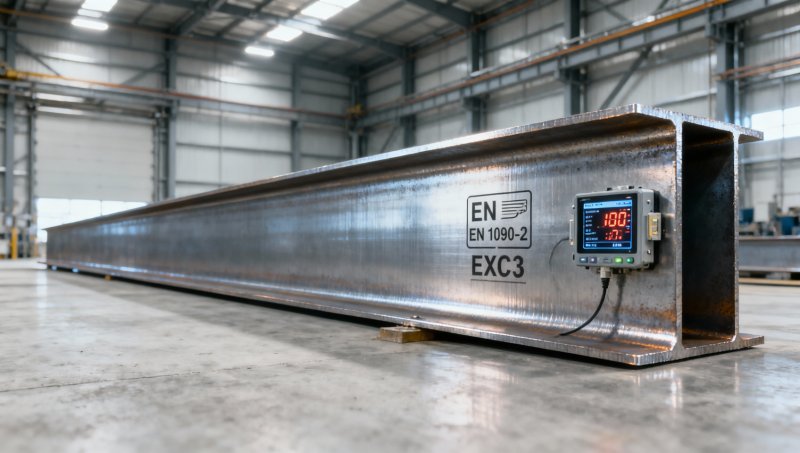
The core requirement lies in Execution Classes EXC2–EXC4. As execution class increases, so do demands: EXC2 requires basic WPQR (Welding Procedure Qualification Record) and welder certification; EXC3 adds mandatory Charpy impact testing at specified temperatures; EXC4 mandates full traceability of filler metals, preheat control logs, interpass temperature monitoring, and post-weld heat treatment (PWHT) documentation where applicable. Technical evaluators don’t assess compliance by reviewing a certificate alone—they examine the *system* behind it: how weldability is validated before, during, and after production.
Material-Level Weldability Validation Starts with Base Steel Selection
EN 1090-2 Annex C defines weldability as “the ability of the material to be welded to produce sound joints without cracks or other defects.” This hinges on chemical composition, particularly carbon equivalent (CEV), and metallurgical stability under thermal cycling. Not all hot-rolled structural steels are equally weldable—even within the same nominal grade. For example, Q345B and Q345E share yield strength but differ significantly in impact energy retention at –20°C and CEV limits. Q345E, with stricter phosphorus/sulfur controls and lower CEV, is routinely selected for EXC3/EXC4 applications where low-temperature toughness is critical.
Hongteng Fengda validates base material weldability through mill test reports aligned with EN 10025-2 and EN 10025-3, supplemented by internal CEV verification against ILO (International Institute of Welding) formulae. Where required, we perform supplementary Charpy V-notch tests at –20°C or –40°C on representative heats—especially for grades like Q390D, Q420E, or Q620D—ensuring minimum absorbed energy meets EN 1090-2 Table C.1 thresholds. This step eliminates reliance on generic grade data sheets and confirms actual batch-level performance.
Welding Procedure Qualification (WPQR) Must Reflect Real Production Conditions
A WPQR qualified on 10 mm plate using GMAW doesn’t automatically cover 50 mm beam flanges welded with SAW—yet many exporters assume it does. EN 1090-2 requires WPQRs to be qualified for specific thickness ranges, joint configurations (e.g., T-joints vs. butt joints), welding positions (PA, PB, PF), and heat input bands. For structural beams used in building frames or crane rails, typical qualification covers:
- Butt welds on web-to-flange connections (position PB/PF)
- Fillet welds ≥6 mm throat size for bracing attachments (position PA/PB)
- Thickness range from 8 mm to max production thickness (e.g., 60 mm)
- Heat input between 0.5 kJ/mm and 2.5 kJ/mm, depending on CEV
Each WPQR includes macro- and micro-examination, tensile, bend, and impact testing per EN ISO 15614-1. Crucially, filler metal traceability is built into the record: batch numbers, manufacturer certificates, and storage humidity logs are retained—not just the EN ISO 2560/2561 classification.
Production Weld Testing: Beyond Visual Inspection
Visual inspection (VT) per EN ISO 17637 catches surface discontinuities—but misses underbead cracks, lack of fusion, or hydrogen-induced cracking. For EXC3 and EXC4, non-destructive testing (NDT) is mandatory on critical welds. Hongteng Fengda applies NDT based on execution class and joint category:
- EXC2: 10% VT on fillet welds; 100% VT on butt welds
- EXC3: 100% VT + 10% UT (ultrasonic testing) on butt welds; 100% VT + 10% MT (magnetic particle) on fillet welds
- EXC4: 100% VT + 100% UT on butt welds; 100% VT + 100% MT on fillet welds; plus hardness testing across HAZ if PWHT applied
UT acceptance criteria follow EN ISO 5817 Level B (for EXC3) or Level A (for EXC4), with zero tolerance for planar indications >1 mm in height. All NDT personnel hold valid PCN or EN 473/ISO 9712 Level 2 certification—and records include probe calibration logs, scan coverage maps, and digital image archives.
Traceability and Documentation: The Audit Trail That Holds Up
EN 1090-2 compliance collapses without auditable traceability. Every beam supplied to Europe carries a unique identification number linked to:
- Base material heat number and mill certificate
- Welding procedure reference (e.g., WPQR-HF-2024-078)
- Welder ID and certification expiry date
- Filler metal batch number and EN ISO 2560 classification
- Preheat and interpass temperature logs (with time-stamped readings)
- NDT report IDs and technician certification numbers
This chain ensures that if a weld fails during site testing, root cause analysis can pinpoint whether the issue originated from material chemistry drift, filler metal moisture absorption, or operator deviation—not just “weld quality.” Third-party witnessed tests (e.g., by TÜV or Bureau Veritas) further strengthen credibility, especially for EXC4 projects involving bridges or high-rise façades.
Where Hot Rolled Coil Hrc Fits In
While structural beams are the primary focus, weldability validation extends to supporting components. For instance, Hot Rolled Coil Hrc used in custom-fabricated bracing, cladding anchors, or secondary framing must also meet EN 1090-2 requirements when integrated into EXC2+ assemblies. Grades like Q345C, Q390D, or S355JR—available in our Hot Rolled Coil Hrc range—undergo the same CEV verification and Charpy testing protocols as beam sections. Their thin-gauge formability (0.17–3.5 mm) introduces additional considerations: higher cooling rates increase HAZ hardness, requiring tighter control over heat input and post-weld cooling rates.
What Technical Evaluators Should Verify Before Acceptance
Before approving delivery, technical evaluators should request and cross-check:
- WPQR validity scope—does it match actual joint geometry, thickness, and position?
- Charpy test reports showing test temperature, specimen orientation (transverse/longitudinal), and absorbed energy values—not just “meets EN 10025”
- Filler metal certificates confirming EN ISO 2560 classification *and* batch-specific tensile/impact data
- NDT reports with clear indication sizing, location sketches, and acceptance/rejection rationale per EN ISO 5817
- Welder certification cards showing renewal dates and tested positions—cross-referenced against weld map annotations
No single document proves compliance. It’s the consistency across these records—and their alignment with EN 1090-2’s defined execution class—that determines whether weldability has been rigorously validated, not merely declared.
Please give us a message


Please enter what you want to find