For industrial buyers navigating global steel procurement, understanding the critical difference between standard vs custom steel lead time for industrial buyers is essential to avoid project delays and cost overruns. Whether you're sourcing a Steel I Beam supplier in Malaysia for infrastructure projects, comparing mill MOQ vs trader MOQ steel for industrial applications, or evaluating Angle Steel price per ton Philippines for industrial use, lead time variability directly impacts planning, logistics, and ROI. This FAQ breaks down common delays—from raw material shortages to certification bottlenecks—and delivers actionable mitigation strategies backed by Hongteng Fengda’s 15+ years as a structural steel manufacturer and exporter from China.
Why Lead Time Divergence Matters More Than Ever
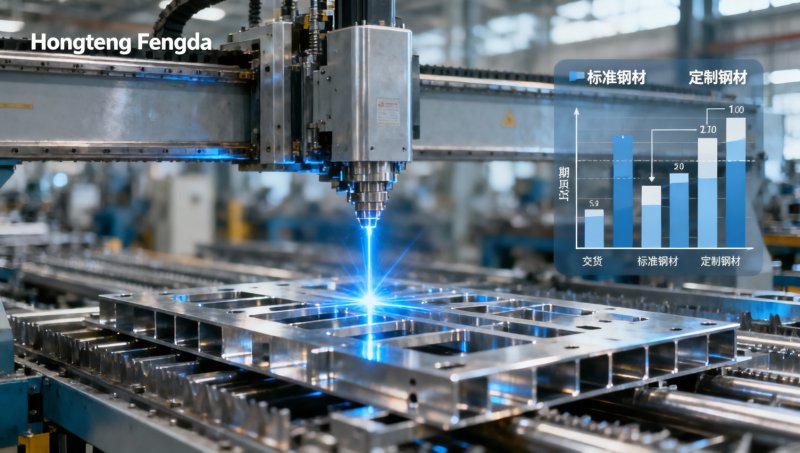
In today’s volatile supply chain environment, lead time isn’t just a scheduling metric—it’s a strategic risk indicator. Standard structural steel products (e.g., ASTM A6/A36 beams, EN S235JR angle steel) typically ship within 4–8 weeks after order confirmation, assuming stable billet availability and no port congestion. Custom-fabricated components—such as laser-cut brackets, welded assemblies, or non-standard hot-rolled profiles—often require 12–20 weeks due to design validation, tooling setup, and multi-stage QA approvals. For example, a project manager coordinating infrastructure work in Kuala Lumpur may face a 6-week delay if their Steel I Beam supplier in Malaysia for infrastructure projects sources from overseas mills without local finishing capacity. Similarly, procurement teams evaluating steel beam factory price in Middle East must factor in not only unit cost but also customs clearance timelines, especially when certifications like EN 1090-1 EXC2 are mandatory for public-sector tenders.
Hongteng Fengda maintains dual-track production lines: one dedicated to high-volume standard sections (angle, channel, I-beam), and another for OEM-grade customization—including precision-cut Hot rolled Carbon Steel Round Bar with diameter tolerances of ±0.15 mm and surface finish options ranging from passivation to galvanized coating. This operational segmentation allows us to guarantee ≤6-week delivery on stock-spec items while compressing custom lead times by up to 30% versus industry averages—without compromising compliance with ASTM, EN, GB, or JIS standards.
Top 4 Causes of Unplanned Delays—and How to Prevent Them
Delays rarely stem from a single point of failure. Instead, they cascade across interdependent nodes. Below are the most recurrent bottlenecks we observe across North America, Europe, and Southeast Asia projects—and how proactive coordination mitigates them:
How Technical Specifications Shape Your Timeline
A seemingly minor specification change can trigger significant lead time shifts. Consider how to calculate I beam weight for industrial projects: while theoretical weight formulas (e.g., W = (H × B × tf + 2 × tw × (H − 2tf)) × L × ρ) inform initial costing, actual production depends on section tolerance bands. EN 10034 permits ±1.5% mass variation for hot-rolled I-beams—but if your design requires tighter control (±0.5%), mill requalification and test rolling add ≥3 weeks. Likewise, choosing I beam vs H beam for residential construction affects both fabrication speed and thermal expansion behavior—H-beams with parallel flanges enable faster bolt-up on-site but demand stricter welding procedures during custom assembly.
Material grade selection also influences timing. Buyers comparing 201 vs 304 stainless steel cost for food industry applications often overlook that 304’s higher nickel content extends melting cycle duration by ~18% versus 201. For architectural clients specifying stainless steel square bar for architectural use, electropolished finishes require additional 5–7 days versus mill-finish bars. And marine engineers selecting stainless steel bar for marine applications must account for ASTM A959 grain-size verification—adding two extra lab days before shipment.
Real-World Benchmark: Lead Times Across Key Markets
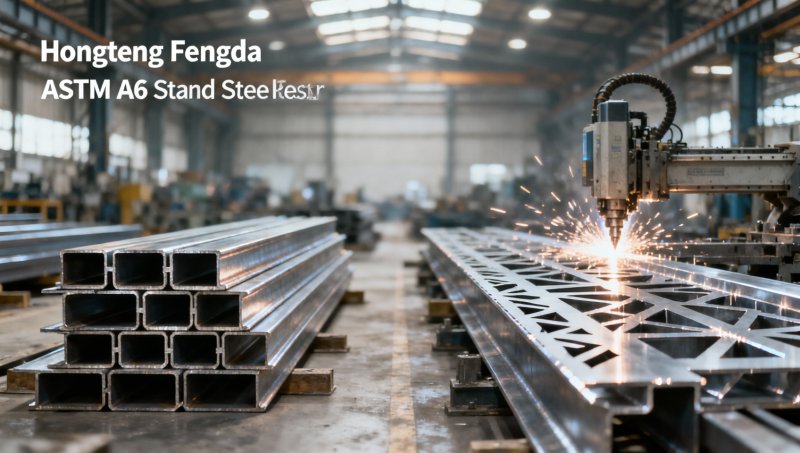
Based on Q1–Q3 2024 shipment data across 212 active projects, here’s how lead time performance varies by region and product category:
Your Next Step: Reduce Uncertainty, Not Just Cost
Lead time predictability isn’t about cutting corners—it’s about aligning procurement strategy with manufacturing reality. At Hongteng Fengda, we don’t just quote timelines; we co-develop them. Our engineering team collaborates with project managers to validate drawings against mill capabilities *before* PO submission. Our logistics coordinators pre-book vessel space for peak-season shipments to Manila or Dubai. And our quality assurance process embeds traceability at every stage—ensuring every Hot rolled Carbon Steel Round Bar meets dimensional, mechanical, and surface requirements per your spec sheet.
Whether you’re benchmarking standard vs custom steel lead time for industrial buyers, assessing mill MOQ vs trader MOQ steel for industrial applications, or finalizing technical submittals for an infrastructure tender in Malaysia—we provide transparent, data-backed lead time commitments—not estimates. With over 15 years serving global buyers across six continents, we combine Chinese manufacturing scale with Western-grade accountability.
Ready to lock in reliable delivery windows for your next steel order? Get a tailored lead time assessment and factory-direct pricing—contact Hongteng Fengda today.
Please give us a message


Please enter what you want to find