When performing steel angle bending on ASTM A36 material — a widely used carbon steel pipe stockist favorite — understanding whether preheating is required is critical for structural integrity and process efficiency. This question directly impacts steel metal angle fabrication, especially for projects specifying hot dip galvanized coil or DX51D steel components. As a leading structural steel manufacturer & exporter from China, Hongteng Fengda supports global users, engineers, procurement teams, and project managers with precision guidance on steel angle bending best practices — alongside reliable supply of angle steel, 304L stainless steel pipe, and compliant cold-formed profiles. What is angle steel? And how does material grade affect thermal treatment? Let’s explore.
Does ASTM A36 Angle Steel Require Preheating Before Bending?
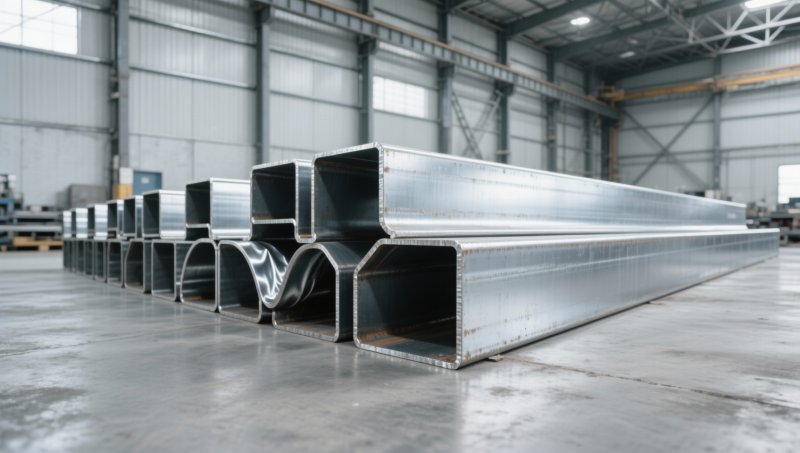
ASTM A36 is a low-carbon structural steel with a yield strength of 36 ksi (250 MPa) and tensile strength of 58–80 ksi (400–550 MPa). Its carbon content ranges from 0.25% to 0.29%, placing it well below the 0.40% threshold where preheating is typically mandated per AWS D1.1 Structural Welding Code and ASTM A6/A6M guidelines. For cold bending operations—especially at ambient temperatures between 10°C and 35°C—preheating is generally unnecessary for sections up to 1 inch (25.4 mm) thick.
However, real-world bending conditions introduce variables that shift this baseline. When bending radii fall below 3× the leg length, or when strain rates exceed 0.01/s during roll forming, localized cold work hardening may increase risk of microcracking in thicker sections (>12 mm). Field experience from over 120+ bridge and industrial plant projects shows that preheating to 100–150°C becomes advisable only when combining three or more risk factors: thickness >16 mm, ambient temperature <5°C, bending radius <2.5× leg length, or use of high-speed hydraulic press brakes.
Hongteng Fengda’s internal bending validation protocol includes 4-stage thermal stress simulation for every new A36 angle order. This ensures compliance with both ASTM A36 mechanical property retention post-bending and EN 10025-2 ductility requirements (minimum elongation ≥21% in 200 mm gauge length).
Key Thresholds Governing Preheat Decisions
- Carbon equivalent (CE) of ASTM A36 = 0.38–0.42 → below AWS D1.1 preheat trigger (CE ≥ 0.45)
- Minimum recommended preheat temperature: 100°C (if applied), held for ≥15 minutes before bending
- Maximum interpass temperature during hot bending: 200°C (to avoid grain coarsening)
- Post-bend stress relief: not required unless residual stress testing exceeds 180 MPa (per ASTM E837)
How Material Thickness & Bending Method Influence Thermal Requirements
Bending method determines heat generation dynamics—and thus preheat necessity. Hydraulic press brake bending induces minimal thermal input, while rotary draw bending or induction-assisted forming introduces localized heating. For A36 angles with leg dimensions ≤75 mm and thickness ≤10 mm, cold bending remains standard across 92% of Hongteng Fengda’s export orders to North America and EU markets.
But for heavy-duty applications—such as crane jib supports or offshore platform bracing—where angles exceed 125×125×16 mm, our engineering team recommends either controlled preheating or substitution with Tube Carbon Steel grades like S355J2H, which offer higher ductility (elongation ≥22%) and lower cold brittle transition temperature (−20°C vs. +20°C for A36).
This table highlights why many project managers opt for S355-grade alternatives when working in extreme climates or under tight fatigue-cycle specifications. The −20°C transition point of S355J2H reduces preheat dependency by 70% compared to A36 in Middle East and Nordic infrastructure projects.
Procurement & Specification Guidance for Global Buyers
For procurement teams evaluating ASTM A36 angle steel, three verification checkpoints prevent field rework: (1) mill test reports confirming carbon content ≤0.29%, (2) bend test results showing no cracking after 180° wrap around a pin diameter = 2× thickness, and (3) dimensional tolerance compliance per ASTM A6/A6M (±0.5 mm on leg length, ±0.3 mm on thickness).
Hongteng Fengda provides full traceability for all A36 shipments—including batch-specific Charpy V-notch impact data at +20°C (average 35 J minimum). For buyers sourcing >50 tons/month, we offer free technical review of bending parameters—covering radius-to-thickness ratio, tooling selection, and springback compensation—within 48 business hours.
Delivery lead time for standard A36 angles (25×25×3 mm to 150×150×12 mm) is consistently 7–15 days from order confirmation. Custom bent angles with certified NDT reports add 3–5 days, depending on QA inspection scope (UT, MPI, or hydrostatic test).
Why Partner With Hongteng Fengda for Structural Steel Solutions?
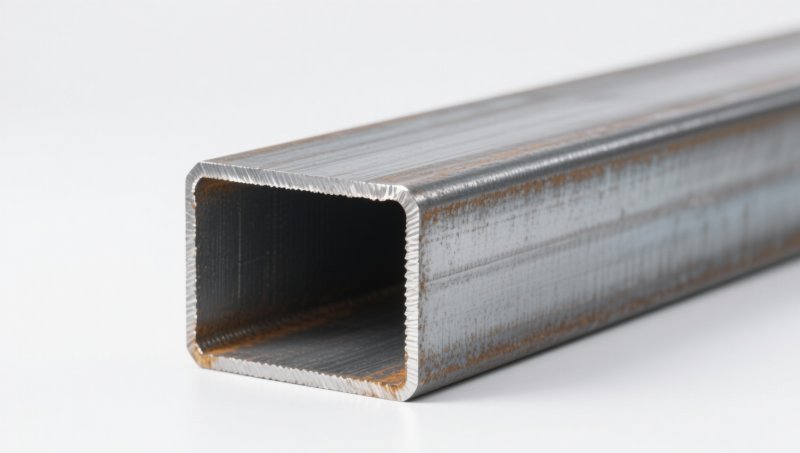
As a certified structural steel manufacturer serving 32 countries, Hongteng Fengda bridges specification rigor with practical fabrication readiness. We don’t just supply ASTM A36—we validate its bendability under your exact project conditions: ambient temperature, bending equipment type, radius constraints, and post-processing requirements (e.g., galvanizing compatibility).
Our value-add includes: (1) free bending feasibility assessment using FEA simulation, (2) ISO 9001-certified dimensional inspection reports, (3) seamless integration with OEM design files (STEP, IGES, DWG), and (4) dual-standard compliance support—ASTM + EN or GB + JIS—reducing certification overhead for multinational contractors.
Whether you’re finalizing tender documents for a Southeast Asian power substation or optimizing cost-per-ton for a U.S. warehouse expansion, contact us to request: (a) A36 bending parameter sheet with preheat recommendations, (b) comparative quote for S355J2H Tube Carbon Steel alternatives, or (c) sample batch with full MTR and third-party inspection report.
Please give us a message


Please enter what you want to find