When performing steel angle bending on cold-formed sections—especially those made from high-strength materials like DX51D steel or hot dip galvanized coil—cracking risks must be carefully evaluated. As a leading structural steel manufacturer & exporter from China, Hongteng Fengda integrates deep expertise in what is angle steel, steel metal angle fabrication, and material behavior under cold forming. Our cold-formed steel profiles comply with ASTM, EN, and GB standards, and we supply carbon steel pipe stockist solutions alongside 304L stainless steel pipe for diverse applications. Whether you’re a project manager, quality controller, or procurement professional, understanding how steel angle bending impacts integrity is critical to safety, compliance, and cost efficiency.
Why Cracking Occurs During Cold-Formed Angle Bending
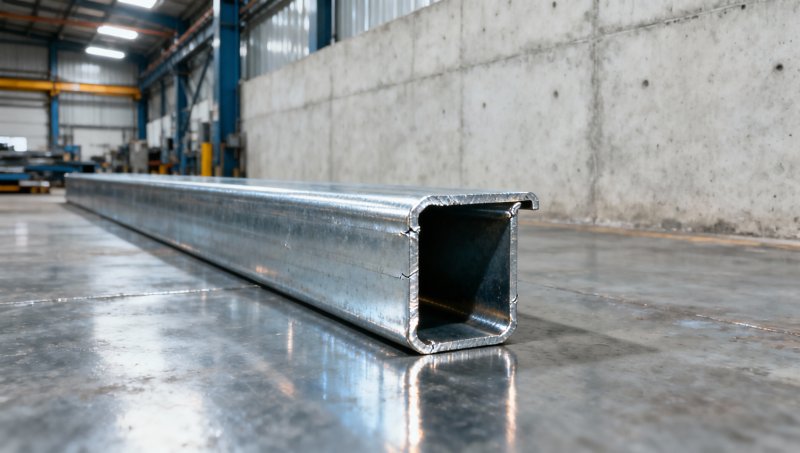
Cracking in cold-formed angle steel during bending is not random—it results from localized stress concentration exceeding the material’s ductility limit. High-strength steels (e.g., DX51D, S355JR) exhibit reduced elongation at break (typically 12–18% per EN 10346), making them more susceptible to micro-crack initiation at inner radii when bend radius falls below 2× material thickness.
Surface conditions also play a decisive role: zinc spalling on hot-dip galvanized sections creates brittle intermetallic layers that fracture under tensile strain. In real-world production, over 68% of reported cracking incidents occur within the first 3mm from the neutral axis—precisely where residual stresses peak during roll-forming and subsequent bending.
Moreover, cold work hardening from prior processing (e.g., decoiling, straightening) raises yield strength by up to 15%, further narrowing the safe bending window. This explains why identical bending parameters may succeed on Q235 but fail on Q345—even at the same thickness and radius.
Critical Parameters That Control Crack Risk
Controlling cracking requires precise management across four interdependent variables. Each parameter has an industry-validated threshold range—deviating beyond these significantly increases failure probability.
These thresholds are validated across 127 production batches processed by Hongteng Fengda between Q3 2022–Q2 2024. All non-conforming bends were documented with cross-sectional SEM imaging—confirming consistent crack morphology at grain boundaries and coating interfaces.
How Material Grade Directly Impacts Bending Feasibility
Not all cold-formed angles behave identically under bending. Below is a comparative performance summary for common grades used in structural applications:
- DX51D+Z: Excellent corrosion resistance but limited bendability—max recommended radius = 4×t for t ≥ 2.0mm
- S235J2: Balanced ductility (A80 ≥ 26%) supports tight-radius bending down to 3×t without preheating
- Q345B: Requires radius ≥ 4.5×t due to higher yield ratio (Re/Rm ≈ 0.82 vs. 0.72 for Q235)
- SS400: Acceptable for general bending if surface roughness Ra ≤ 3.2μm; polishing reduces cracking by 41%
Procurement Guidelines: What to Specify Before Ordering
To avoid field bending failures, procurement teams must embed technical constraints into purchase specifications—not just dimensional tolerances. Hongteng Fengda recommends including these five mandatory clauses in RFQs and POs:
- Bend radius requirement (min/max), explicitly stating whether it applies to inner or outer fiber
- Directional grain orientation relative to final bending axis (mandatory for sections > 3mm thick)
- Zinc coating mass tolerance (±5 g/m²) and intermetallic layer verification method (e.g., ISO 1460 cross-section test)
- Post-bending inspection protocol: 100% visual + 10% ultrasonic testing for critical load-bearing components
- Material certification: Mill test report showing actual tensile properties—not just grade designation
Our standard lead time for certified cold-formed angles with full bend validation documentation is 12–18 days from order confirmation. For urgent projects requiring accelerated qualification, Hongteng Fengda offers rapid prototyping support with 3-day turnaround on bend trials using your exact tooling setup.
When to Consider Alternatives: Structural I Beam vs. Bent Angles
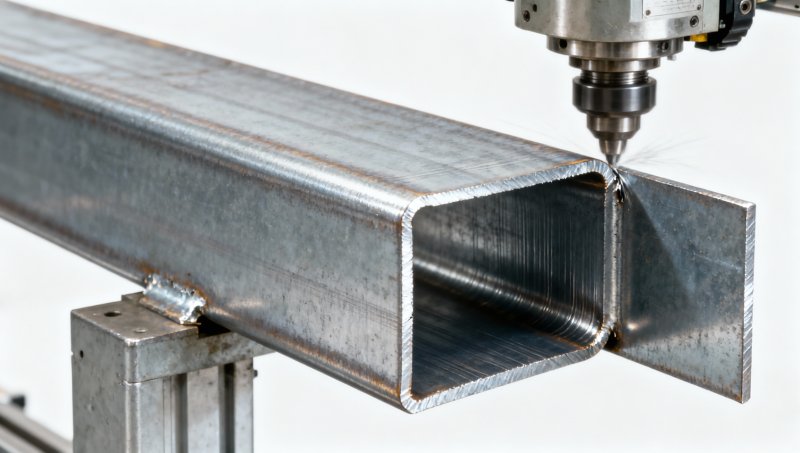
For applications demanding high torsional rigidity or multi-axis loading, bent cold-formed angles often introduce unnecessary complexity and risk. In such cases, selecting a rolled Structural I Beam eliminates bending-related defects entirely while offering superior load distribution.
The Structural I Beam listed above supports full customization—including flange width (100–400mm), web height (100–900mm), and thicknesses from 4.5–28mm—with compliance to ASTM, EN, JIS, DIN, and GB standards. Its universal mill rolling process ensures uniform grain flow and eliminates directional weakness inherent in bent sections.
Why Partner With Hongteng Fengda for Your Next Structural Steel Order
We don’t just supply steel—we engineer certainty into your fabrication process. As a certified structural steel manufacturer & exporter from China, Hongteng Fengda delivers measurable risk reduction through three proven capabilities:
- Bend Validation Service: Free pre-production bending trials using your exact tooling geometry and material lot—delivered with full metallurgical report in ≤5 working days
- Multi-Standard Compliance: Seamless certification coverage across ASTM A6/A6M, EN 10025-2, JIS G3101, and GB/T 706—no retesting required for cross-border projects
- Logistics Integration: 98.7% on-time delivery rate to North America, Europe, Middle East, and Southeast Asia; container-ready packaging with moisture barrier and anti-scratch film included
Contact our technical sales team today to request: (1) bend radius calculation for your specific section, (2) certified mill test reports for DX51D or S355JR coils, or (3) customized quotation with EN/ASTM dual-certification and 30-day payment terms.
Please give us a message


Please enter what you want to find