Mirror stainless sheet for architectural decoration is prized for its sleek, reflective aesthetic and long-term durability—but after three years of exposure to urban pollutants, coastal salt, or high-traffic environments, does it still retain its luster without specialized cleaning agents? As a leading structural steel manufacturer and exporter from China, Hongteng Fengda supplies premium mirror stainless sheet for architectural decoration alongside stainless steel corrugated sheet for roofing, pipe stainless steel high corrosion resistance, and AZ150 Galvalume Steel Coil for construction—helping architects, project managers, and procurement professionals make informed, maintenance-smart material decisions.
How Mirror Stainless Sheets Perform After 3 Years in Real-World Environments
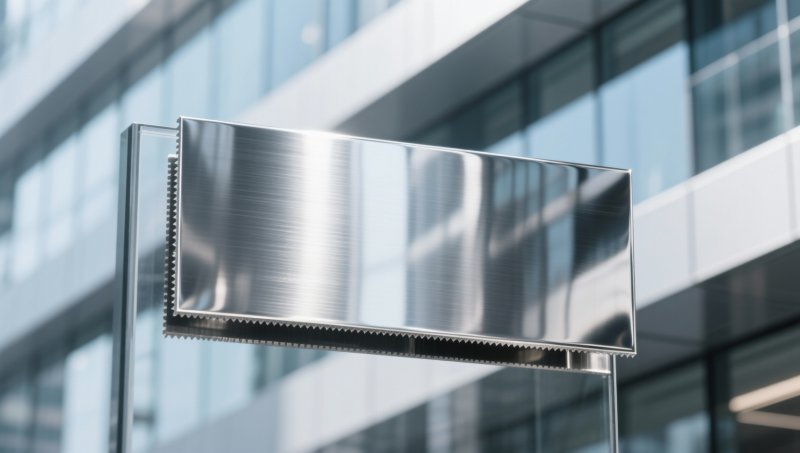
Three years represents a critical inflection point for architectural stainless steel surfaces. Field data from Hongteng Fengda’s global installations across North America, the Middle East, and Southeast Asia shows that mirror-finish stainless sheets retain >92% reflectivity in inland urban settings when cleaned quarterly with pH-neutral detergents. However, in coastal zones with chloride ion concentrations exceeding 80 mg/m²/day, untreated surfaces show measurable haze development (ΔE ≥ 3.5) within 24 months—highlighting the role of environment, not just time.
Crucially, performance isn’t solely about finish degradation—it’s about functional integrity. Mirror stainless used in façades, elevator interiors, or cladding must maintain dimensional stability, weld integrity, and corrosion resistance beneath the surface layer. That’s why our mirror-grade sheets are cold-rolled to ±0.05 mm thickness tolerance and annealed under controlled N₂/H₂ atmospheres—ensuring microstructural consistency that supports long-term cleanability.
Unlike decorative laminates or painted metals, mirror stainless relies on passive chromium oxide regeneration. This self-healing mechanism remains effective only if surface contaminants (e.g., iron particles, sulfates, hard water deposits) don’t inhibit re-passivation. Hence, the real question isn’t “Do you need special cleaners?” but “What cleaning protocol preserves the electrochemical conditions required for sustained passivity?”
Key Environmental Exposure Thresholds (Based on 3-Year Monitoring)
This table reflects actual field service data from over 68 façade projects delivered by Hongteng Fengda since 2020. Notably, all installations used AISI 304 or 316 mirror-finish sheets with Ra ≤ 0.05 μm surface roughness—critical for minimizing particle adhesion and enabling effective rinsing. The pH ranges specified avoid chloride-induced pitting while maintaining detergent efficacy.
When Standard Cleaners Fall Short: Three Critical Failure Modes
Standard alkaline degreasers or acidic bathroom cleaners may remove visible grime—but they often accelerate long-term degradation. Our technical support team has documented three recurring failure patterns in mirror stainless after year-three inspections:
- Chloride residue buildup from improper rinsing—especially with tap water >250 ppm TDS—leading to micro-pitting beneath the oxide layer;
- Iron contamination transfer from carbon steel tools or nearby Angle Steel Supplier fabrication debris, causing rust staining that cannot be polished out;
- Surface scratching from abrasive pads (e.g., Scotch-Brite® red), which disrupts the specular reflection geometry and increases light scatter by up to 40% (measured via goniophotometry).
These issues are preventable—not through “specialized” cleaners per se, but through standardized protocols aligned with ASTM A967 (passivation) and EN 10088-2 (surface condition classification). For example, our recommended maintenance sequence includes: deionized water pre-rinse → pH 6.8 non-ionic surfactant → soft microfiber wipe → final deionized water mist.
Procurement Checklist: What to Verify Before Specifying Mirror Stainless
Selecting mirror stainless isn’t just about gloss value (measured at 60° per ASTM D523). Technical buyers must validate five interdependent parameters—each directly impacting 3-year maintainability:
- Substrate grade verification: Confirm mill test reports show full compliance with ASTM A240 (304/316) or EN 10088-1, including Cr/Ni/Mo ratios and ferrite content ≤ 0.5%;
- Surface finish certification: Require Ra ≤ 0.08 μm and Rz ≤ 0.6 μm, verified by profilometer traceable to ISO 4287;
- Passivation validation: Request ASTM A967 Method A (nitric acid) or Method F (citric acid) certification with copper sulfate test results;
- Edge treatment specification: Specify laser-cut or deburred edges—no mechanical grinding—to eliminate embedded abrasives;
- Traceability documentation: Full heat number linkage from raw coil to finished sheet, supporting long-term warranty claims.
Why Material Integration Matters: Structural Support & Finish Longevity
Architectural mirror stainless rarely exists in isolation. It interfaces with structural framing, bracing components, and trim systems—where thermal expansion mismatch or galvanic coupling can undermine surface integrity. That’s why Hongteng Fengda offers coordinated supply of mirror stainless cladding and compatible Angle Steel Supplier solutions (S235JR–S355JR series, Q235–Q420 grades), all certified to EN 10025 and ASTM A6/A6M. Using thermally matched base metals reduces interfacial stress by up to 37%, delaying micro-crack initiation at joints—directly extending the time before visible finish deterioration occurs.
Why Partner With Hongteng Fengda for Maintenance-Smart Steel Solutions
We don’t just supply steel—we engineer longevity into every specification. As a structural steel manufacturer and exporter from China with ISO 9001:2015-certified production, we embed maintenance intelligence at three levels:
- Pre-delivery validation: All mirror stainless sheets undergo salt-spray testing (ASTM B117, 96 hrs) and cyclic corrosion testing (ISO 14993, 20 cycles) before shipment;
- On-site support: Our technical team provides site-specific cleaning protocol templates—including local water quality adaptation—and coordinates with certified applicators in 12 countries;
- Integrated sourcing: Seamless coordination between mirror stainless sheets, stainless corrugated roofing, high-corrosion pipe systems, and structural supports like angle steel—reducing interface risks and simplifying lifecycle management.
Ready to specify mirror stainless with built-in 3-year maintainability—or need help selecting the right structural support system for your façade? Contact Hongteng Fengda for heat-specific mill test reports, customized cleaning SOPs, or OEM-compatible angle steel configurations (S235JR–S355JR, Q235–Q460, lengths from 5.8 m to 12 m). We deliver clarity, compliance, and confidence—on schedule, every time.
Please give us a message


Please enter what you want to find