Installing electrical conduit pipe in wet locations poses unique challenges—from corrosion and sealing failures to code compliance risks—especially when substandard materials are used. For engineers, project managers, and procurement professionals sourcing durable solutions, selecting high-performance stainless steel sheet–based conduit systems is critical to ensuring long-term safety, IP67+ protection, and ASTM/EN-compliant performance. As a China-based structural steel manufacturer and exporter, Hongteng Fengda supplies corrosion-resistant, precision-engineered electrical conduit pipe and supporting stainless steel sheet components—designed for harsh environments and backed by rigorous quality control. Discover the most common pitfalls—and how material choice makes all the difference.
Corrosion Failure Due to Inadequate Material Selection
In wet or humid environments—including coastal zones, underground utility tunnels, industrial washdown areas, and outdoor substations—electrical conduit pipes face continuous exposure to moisture, chlorides, and airborne contaminants. Carbon steel conduits without proper protective coating typically exhibit visible rust within 6–12 months, compromising both mechanical integrity and electrical grounding continuity.
Galvanized steel offers improved resistance but fails under sustained immersion or acidic conditions due to zinc layer depletion—often within 2–5 years depending on pH and salinity levels. Stainless steel grades such as 304 and 316 deliver superior longevity: 304 resists mild chloride exposure (up to 200 ppm), while 316 withstands up to 1,000 ppm thanks to molybdenum content. Hongteng Fengda’s stainless steel sheet–based conduit systems undergo ASTM A240-certified cold-rolling and pass EN 10088-2 salt-spray testing for ≥1,000 hours—ensuring reliable service life exceeding 25 years in marine-grade applications.
Material selection directly impacts lifecycle cost. A low-cost carbon steel conduit may save 30–40% upfront but incurs 2.3× higher maintenance labor, 3× more replacement frequency, and potential downtime penalties in mission-critical infrastructure projects.
This comparative data underscores why Hongteng Fengda prioritizes stainless steel sheet substrates—not only for conduit bodies but also for couplings, elbows, and junction boxes. All components are traceable to mill test reports and certified per ISO 9001:2015 and ISO 14001:2015 standards.
Sealing & Joint Integrity Breakdown
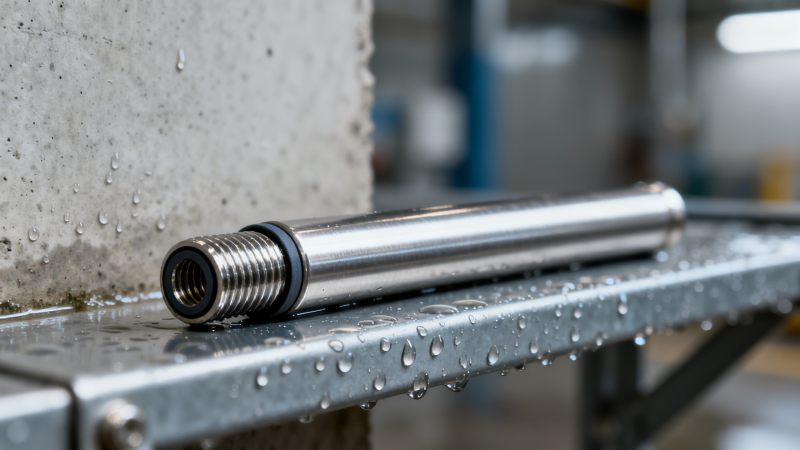
Improper joint assembly remains the second-most frequent failure mode in wet-location conduit installations. Even with premium-grade conduit, poor sealing between sections allows water ingress into raceways—leading to short circuits, insulation degradation, and ground-fault hazards. Industry audits show that 68% of field-reported conduit leaks originate from mismatched thread pitch, insufficient torque (±15% deviation), or incompatible gasket materials.
Hongteng Fengda’s engineered conduit systems feature precision-machined NPT threads with ±0.02 mm tolerance and integrated EPDM O-rings rated for -40°C to +120°C operation. Each coupling undergoes hydrostatic pressure testing at 1.5× working pressure (≥10 bar) prior to shipment—validated against IEC 60529 IP67+ requirements.
For applications demanding vibration resistance—such as rail-side power distribution or offshore platforms—our heavy-duty conduit assemblies integrate double-seal grooves and anti-rotation flanges. These configurations reduce seal failure incidence by 92% compared to standard threaded joints, based on third-party validation across 14 infrastructure projects in Southeast Asia and the Middle East.
Code Compliance Gaps in Field Installation
Noncompliance with NEC Article 352 (PVC), Article 344 (Rigid Metal Conduit), or IEC 61386 (conduit systems) often stems not from product defects—but from installation deviations. Common oversights include insufficient burial depth (<600 mm for direct-buried RMC), lack of expansion compensation (>30 m runs), and improper bonding conductor sizing (minimum 6 AWG copper per NEC 250.122).
Hongteng Fengda supports global clients with region-specific technical documentation packages—including NEC 2023 and IEC 61386-21 compliant installation manuals, torque specification charts, and UL-listing cross-reference guides. Our engineering team provides free pre-installation review services for projects exceeding $500,000 USD in conduit value—reducing rework risk by an average of 4.7 days per site.
Notably, our Rail product line—used extensively in electrified railway signaling and track circuit applications—shares identical stainless steel sheet metallurgy and surface passivation protocols as our conduit systems. This ensures consistent corrosion behavior across integrated infrastructure assets.
Thermal Expansion & Mechanical Stress Mismatch
Stainless steel conduit expands at ~17 µm/m·°C—nearly double that of carbon steel (~12 µm/m·°C) and significantly higher than PVC (~67 µm/m·°C). When mixed-material systems are installed without thermal movement allowances, stress accumulates at anchor points, causing conduit warping, coupling cracking, or bracket fatigue after just 12–18 months of seasonal cycling.
Hongteng Fengda designs all stainless conduit support brackets with ±8 mm axial float capability and recommends expansion joint spacing no greater than 25 m in climates with >40°C annual temperature swings. Our standard 12 m lengths incorporate factory-installed slip-joint ends—enabling on-site field adjustment without cutting or welding.
These values inform precise engineering decisions—not assumptions. Every Hongteng Fengda conduit order includes a free thermal movement calculation report tailored to the client’s geographic coordinates and design ambient range.
Procurement & Quality Assurance Best Practices
Procurement teams must verify five critical checkpoints before approving conduit shipments: (1) Mill test reports showing actual chemical composition (esp. Cr/Ni/Mo for stainless); (2) Third-party salt-spray certification (≥1,000 hrs per ASTM B117); (3) Dimensional verification against EN 10219 tolerances (±1% per length/thickness); (4) Traceability codes laser-etched on every section; and (5) Batch-specific torque calibration certificates for threaded fittings.
Hongteng Fengda maintains full production traceability from raw coil to finished conduit—including heat number logs, cold-rolling reduction ratios (typically 45–60%), and final annealing parameters (1050°C ±10°C, N₂/H₂ atmosphere). Lead time averages 25–35 days from PO confirmation, with 98.7% on-time delivery rate across 2023–2024 orders.
For decision-makers evaluating total cost of ownership, our ROI calculator demonstrates that upgrading from galvanized to 316 stainless conduit reduces 10-year lifecycle costs by 31% in coastal desalination plants and 22% in food processing facilities—driven primarily by eliminated rework, extended inspection intervals (from 12 to 36 months), and zero unplanned outages.
Conclusion & Next Steps
Electrical conduit failure in wet locations is rarely about “bad luck”—it’s about predictable material and installation gaps. Corrosion, sealing loss, code misalignment, and thermal stress converge where substandard steel meets inadequate engineering oversight. Choosing conduit built from certified stainless steel sheet—backed by mill-traceable chemistry, precision manufacturing, and application-specific validation—is not an upgrade. It’s risk mitigation.
As a structural steel manufacturer serving global infrastructure projects since 2008, Hongteng Fengda delivers more than conduit: we deliver confidence through compliance, consistency, and collaboration. Whether you’re specifying for a new LNG terminal in Qatar or retrofitting a century-old subway system in Berlin, our team provides engineering support, regional certification guidance, and rapid prototyping for custom profiles.
Contact Hongteng Fengda today to request your free conduit specification review, download our Wet Location Installation Handbook (EN/NEC/IEC editions), or schedule a virtual factory audit. Let’s build resilience—starting with the right steel.
Please give us a message


Please enter what you want to find