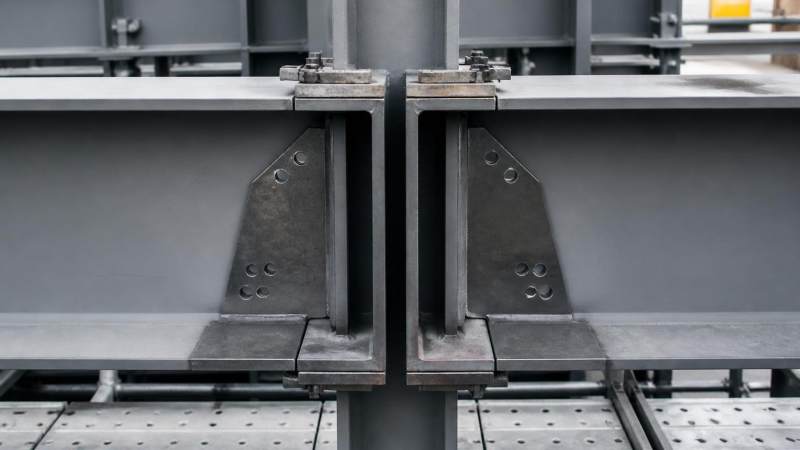
When maintenance crews are called to inspect a steel frame, the problem is often not the design on paper but the fit-up on site. H beam channel connections can look straightforward during planning, yet small mismatches at the connection point may lead to gap variation, misalignment, delayed welding, and extra rework. For after-sales maintenance teams, these issues matter because they affect safety, handover timing, and long-term serviceability.
In many cases, the connection itself is not “wrong.” The real issue is that the H beam and channel steel arrived with different tolerances, surface conditions, or end preparations than the crew expected. That is why troubleshooting fit-up problems early is just as important as repairing them. If the connection is cleaned up too late, the site team may already be dealing with distorted members, difficult weld access, or compromised load transfer.
One practical way to reduce surprises is to check the material package before installation starts. For some projects, maintenance teams also need compatible steel plate support pieces or reinforcement parts. In those situations, a stable supply source matters, especially when the repair involves shaping, bending, or stamping auxiliary components. A correctly selected High Carbon Steel Plate can be useful for parts that need high tensile strength, smooth surface finish, and reliable forming performance, particularly when the repair scope includes custom brackets or cover plates.
Where fit-up problems usually begin
The most common issue is dimensional mismatch. Even when the H beam channel is produced to standard sizes, the real-world connection can still fail to align because of accumulated tolerances from cutting, drilling, transport, and previous modification work. A few millimeters may not sound dramatic, but at the joint line it can change the weld gap, shift the centerline, or force the crew to pull the members into place unnaturally.
Another frequent source of trouble is uneven end preparation. If the beam end is not square, if the channel face has burrs, or if one side was cut differently from the other, the parts will not seat properly. Maintenance teams often see this after previous repair work, especially in structures that have already been modified more than once. The connection may appear acceptable from a distance, but once clamps are applied, the true misfit becomes obvious.
Surface condition also plays a bigger role than many people expect. Mill scale, rust, welding spatter, grease, and paint build-up can all create false contact points. Instead of full bearing, the joint touches only in a few spots. That makes it harder to judge the real gap and can lead to inconsistent welding results. A clean surface is not just a cosmetic requirement; it is part of fit-up accuracy.
The problems maintenance teams notice on site
Gap variation is usually the first complaint. One side of the connection may be tight while the other side opens up, leaving the crew unsure whether to shim, re-cut, or weld as-is. If the gap is too wide, the weld metal may need to bridge too much distance. If it is too tight, the parts may bind during assembly and cause stress before the weld is even made.
Welding access is another pain point. H beam channel connections can leave limited room for torch angle, electrode movement, and inspection. When the flange, web, or channel lip is positioned awkwardly, the welder may have to work from an uncomfortable angle. That usually slows production and increases the chance of incomplete fusion or poor bead shape.
Then there is fit-up distortion. If clamps are overtightened to “force” the parts together, the connection may look correct for a moment but release internal stress later. Maintenance crews may find that the joint springs back, twists, or opens after tack welding. This is one of the reasons temporary fixes often create more work later.
Why the issue keeps returning after repair
Some teams repair the visible gap and still see the same problem during the next inspection. That usually means the root cause was not fully addressed. For example, if the supporting channel itself is bent, replacing only the end weld will not solve the fit-up issue. If the beam seat is out of level, no amount of grinding at the joint will restore a stable connection.
Another overlooked cause is inconsistency in replacement parts. A maintenance job may begin with one piece from stock and another fabricated on site. If those parts do not share the same thickness, hardness, or edge condition, the joint behavior changes. In maintenance work, material compatibility matters as much as size matching. For cold-formed or stamped support components, products with controlled chemical composition and good deep drawing performance are often easier to process and fit reliably.
This is where material selection links directly to maintenance efficiency. In repair environments, steel that offers excellent formability and a smooth surface finish can reduce the effort needed to adapt a part on site. For example, when a replacement plate must be bent or trimmed to match an H beam channel connection, choosing the right stock can prevent extra machining and minimize surface damage during fitting.
A practical check list before welding starts
Before the first tack weld, maintenance teams should confirm three simple things: alignment, contact, and access. Alignment means the centerlines and edge positions match the drawing or the approved field condition. Contact means the members seat properly without hidden rocking points. Access means the welder can reach the entire joint without awkward movement or forced tool angles.
It also helps to check whether the joint was measured under load or in a relaxed state. Some structures move slightly when adjacent members are released, jacked, or supported differently. A connection that looks acceptable in one position may shift once the surrounding frame is stabilized. That is why a quick recheck after temporary supports are adjusted can save a lot of frustration.
When replacement parts are needed, keep the repair scope realistic. Do not chase a perfect factory-style fit on a damaged structure if the surrounding frame already has distortion. In many cases, a controlled shim, a small trim, or a custom support plate is safer than forcing the entire assembly back to an ideal dimension that no longer exists on site.
How to reduce rework in future maintenance
The most effective prevention is better incoming inspection. Record the actual dimensions of the H beam channel before installation, not just the nominal specification. If possible, compare cut length, end squareness, hole position, and visible deformation against the job requirement. For repeat projects, keep a simple fit-up record so the team can see which tolerances tend to create trouble.
Standardizing repair materials also makes a difference. When maintenance teams know which plate thicknesses, profiles, and surface finishes are easiest to fit, they can stock parts that reduce downtime. A stable source of structural steel components from a manufacturer with controlled production and export experience can help keep replacement work consistent across different projects and regions.
It is also worth paying attention to standards. Projects built to ASTM, EN, JIS, or GB requirements may look similar on paper, but detail tolerances and inspection expectations can differ. Maintenance teams should verify the drawing revision and the actual standard used for the original structure before making a repair decision. That small step avoids mismatched assumptions later.
For after-sales maintenance personnel, the best approach is not to treat fit-up as a minor shop-floor issue. In H beam channel connections, fit-up determines whether the joint will weld cleanly, carry load properly, and remain easy to inspect later. If the parts are prepared carefully, the repair is usually faster, safer, and less expensive than a rushed fix.
Reliable connection work starts with reliable material behavior. That is why many teams prefer steel products with stable forming performance, predictable surface quality, and enough strength to handle real site conditions. Whether the job involves a standard channel, a custom reinforcement piece, or a shaped support plate, good fit-up is always the result of good preparation—not luck.
Please give us a message


Please enter what you want to find