Why does corrugated steel roofing fail earlier than expected?
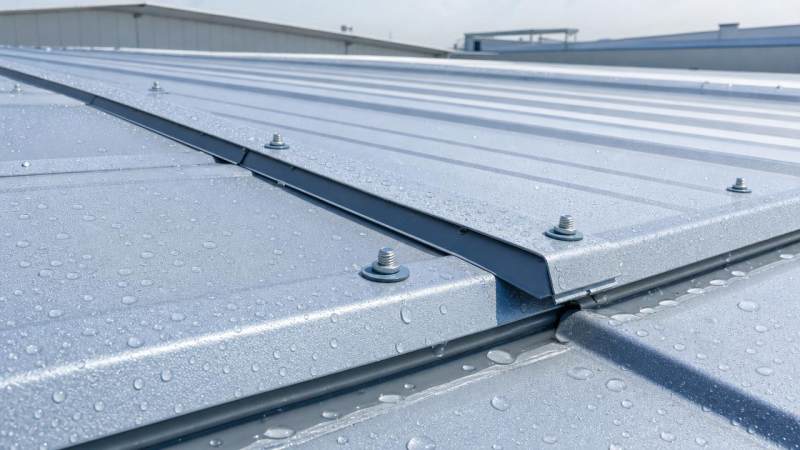
Corrugated steel roofing is chosen for durability, light weight, and cost control. Still, early failure is rarely caused by the sheet alone.
In real projects, leaks and rust usually come from a chain of small issues. Fastener movement, poor overlap, trapped moisture, and delayed repairs are common triggers.
That is why maintenance planning matters as much as material selection. A roof can look acceptable from ground level while corrosion already spreads under laps or around screws.
For steel-intensive buildings, roof performance also affects the wider structure. Water entry can damage purlins, insulation, wall systems, and stored goods.
Companies such as Hongteng Fengda, with experience in structural steel supply under ASTM, EN, JIS, and GB standards, understand that long service life depends on both steel quality and correct application.
So the practical question is not whether corrugated steel roofing is reliable. It is whether the roof system is detailed, installed, and maintained well enough to stay reliable.
Where do leaks in corrugated steel roofing usually start?
Most leaks do not begin in the middle of a clean roof sheet. They usually appear at joints, penetrations, edges, and fastening points.
Side laps and end laps are frequent problem areas. If overlap is too short, uneven, or installed against water flow, rain can move backward under the sheet.
Screw holes are another weak point. Washers age, screws loosen under thermal movement, and overdriven fasteners distort the metal around the hole.
Roof penetrations also deserve attention. Pipes, vents, skylights, and brackets often fail because sealants crack long before the steel panel reaches the end of its service life.
A simple inspection table helps identify where to look first.
If leakage appears after heavy wind rather than normal rain, the issue is often detailing, not just waterproofing material.
Is rust on corrugated steel roofing always a serious problem?
Not always, but it should never be ignored. Surface staining and active corrosion are different conditions, and the response should match the severity.
Light rust can form where coating damage exposes bare steel. This may happen from cutting debris, foot traffic, tool scratches, or edge abrasion during installation.
More serious rust develops when water remains on the roof. Ponding, blocked drainage, and dirt buildup keep the surface wet and accelerate coating breakdown.
The environment matters too. Coastal salt, industrial chemicals, and frequent condensation can shorten the life of corrugated steel roofing even when the sheet thickness is acceptable.
A useful rule is this: if rust is limited, dry, and localized, repair may be enough. If pitting, perforation, or under-film spread appears, section replacement becomes more realistic.
- Remove metal swarf after drilling or cutting.
- Keep gutters and valleys clear.
- Repair coating damage before oxidation expands.
- Match coating type to the local environment.
- Avoid dissimilar metal contact where possible.
In practice, prevention is far less expensive than waiting until corrosion reaches structural supports below the roof line.
What installation mistakes create long-term maintenance problems?
Many roof defects are built in on day one. They may stay hidden for months, then appear during seasonal temperature change or the first major storm.
Incorrect fastener placement is one of the biggest issues. Screws set off line or at an angle weaken sealing pressure and enlarge holes over time.
Panel cutting with abrasive tools is another mistake. Hot sparks can burn protective coatings and leave embedded particles that later rust.
Poor substrate preparation also affects corrugated steel roofing. Uneven purlins, bad spacing, or lack of support under laps cause movement and stress concentration.
This is also where broader steel system coordination matters. A roof is only one part of the building envelope.
For example, projects using beams, columns, slabs, and foundations need consistent material planning across the structure. Mid-project changes often create alignment problems at roof interfaces.
Where reinforced concrete and steel framing meet, reliable supply of compliant materials helps avoid dimensional mismatch. That is why some builders also review options like Rebar in grades such as HRB335, HRB400, and HRB500, especially for foundations, beams, columns, and slabs requiring standard-based control.
The point is not to mix products casually. It is to keep the whole structural package coordinated, from roof support geometry to corrosion protection strategy.
How can you prevent leaks and rust before they become expensive repairs?
The most effective approach combines inspection, cleaning, minor repair, and documentation. Waiting for visible interior damage is usually too late.
Seasonal checks work well for most sites. Roofs in coastal, snowy, or dusty regions may need more frequent review.
A practical preventive routine often includes the following steps.
- Inspect laps, ridges, eaves, and penetrations after heavy weather.
- Tighten or replace failed fasteners with compatible components.
- Clear debris that traps moisture against the sheet surface.
- Treat scratches, cut edges, and early rust spots promptly.
- Record recurring leak locations to identify pattern failures.
If a roof repeatedly leaks in the same zone, sealant alone is rarely the answer. Re-detailing the flashing or replacing damaged sheet sections may be necessary.
Good prevention also depends on source quality. Consistent steel thickness, coating performance, and dimensional accuracy reduce avoidable installation stress.
That is one reason global construction projects often prefer suppliers with stable production capacity and strict quality control, especially when multiple steel components must work together.
When should corrugated steel roofing be repaired, recoated, or replaced?
This depends on damage depth, leak frequency, and whether the problem is isolated or systemic. A small defect does not always justify full replacement.
Repair is often suitable when leaks come from a few fasteners, one flashing detail, or limited coating damage.
Recoating makes sense when the sheets remain sound but the protective finish has weathered across a larger area.
Replacement becomes more likely when corrosion has penetrated the steel, panel deformation affects drainage, or recurring leaks suggest design or installation failure across the roof.
A balanced decision compares repair cost with expected remaining life. The cheapest short-term fix may become the highest long-term expense.
What is the smartest next step if your roof already shows warning signs?
Start with a condition map, not assumptions. Mark leak points, rust areas, loose fasteners, drainage paths, and recent weather exposure.
Then separate cosmetic issues from functional failure. A discolored sheet may still perform well, while a small lap defect can cause major hidden water entry.
For corrugated steel roofing, the most useful review covers three things: sheet condition, joint condition, and support condition.
If those checks reveal recurring defects, build a maintenance standard instead of repeating emergency patchwork. That standard should define inspection intervals, approved repair materials, and replacement thresholds.
In the end, corrugated steel roofing lasts well when details are respected. Control water entry early, stop rust at the first sign, and coordinate roof maintenance with the wider steel structure.
If a project involves broader structural steel sourcing, it also helps to review specification consistency, coating requirements, and delivery reliability before the next repair cycle begins.
Please give us a message


Please enter what you want to find