When precision fabrication demands tighter tolerances than standard cold rolled steel plate specifications allow, even mill certs can fall short—especially for critical structural applications. As a trusted industrial steel supplier from China, Hongteng Fengda helps global engineers, procurement teams, and project managers bridge the gap between ASTM steel pipe standards, stainless steel coil price realities, and real-world dimensional accuracy. This article breaks down how cold rolled steel plate tolerances intersect with application requirements—and why technical validation beyond documentation is essential for safety, compliance, and cost control.
Why Mill Certificates Alone Can’t Guarantee Fabrication Readiness
Mill certificates verify that a cold rolled steel plate meets nominal chemical composition and mechanical properties per ASTM A1011 or EN 10131. However, they do not reflect actual in-process dimensional variation across a coil’s width, length, or thickness—nor do they capture localized surface deviations like waviness, camber, or edge curl. For example, ASTM A1011 permits ±0.008 in (±0.20 mm) thickness tolerance on a 0.125-in (3.18-mm) plate—but high-precision laser cutting or roll-forming operations may require ±0.002 in (±0.05 mm) consistency to avoid misalignment or weld distortion.
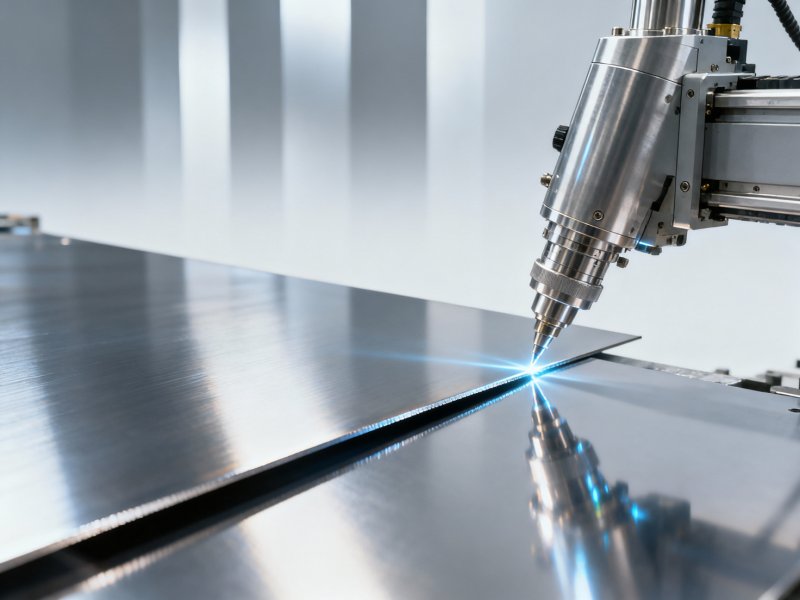
Hongteng Fengda routinely measures 100% of cold rolled coils post-leveling using laser profilometers, capturing thickness deviation maps at 50-mm intervals. In one recent batch of 2.0-mm EN10131 CR4 grade, 12% of measured points exceeded ±0.04 mm—well within mill spec but outside the ±0.025 mm threshold required by an EU-based automotive chassis fabricator. Without physical verification, this variance would only surface during first-article inspection—causing rework delays averaging 7–10 days per order.
The risk compounds when plates are nested for CNC punching or used in multi-layer welded assemblies. A cumulative thickness deviation of just ±0.03 mm across three stacked plates translates into ±0.09 mm positional uncertainty—enough to compromise bolt-hole alignment in structural connections governed by ISO 13920 Class B tolerances.
Tolerance Requirements Across Key Structural Applications
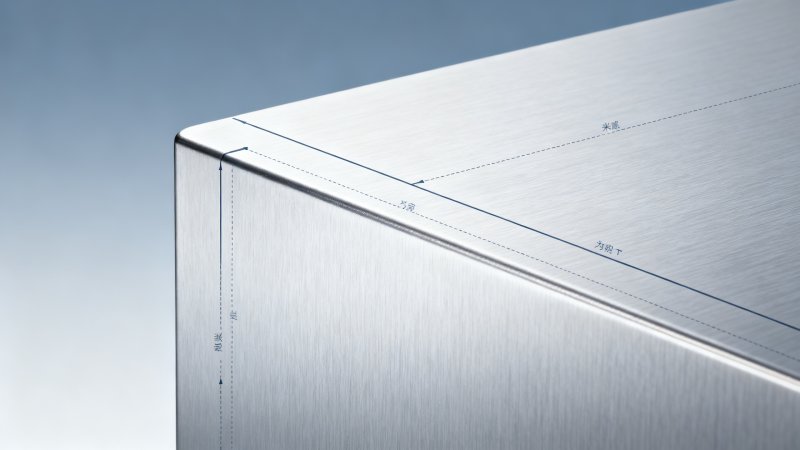
Application-driven tolerance thresholds vary significantly—not just by industry, but by function. A bridge gusset plate subjected to cyclic loading demands tighter flatness control (≤0.2 mm/m) than a non-load-bearing cladding support bracket (≤1.0 mm/m). Similarly, cold-formed purlin sections require strict width tolerance (±0.3 mm) to ensure interlocking compatibility, while structural base plates tolerate ±1.5 mm in plan dimensions.
Below is a comparison of typical cold rolled steel plate tolerance bands versus verified field requirements for common structural components:
These discrepancies underscore why leading contractors—including those executing projects under EN 1090-2 Execution Class EXC3—now mandate third-party dimensional audit reports alongside mill certs. Hongteng Fengda provides optional certified dimensional verification reports traceable to ISO/IEC 17025-accredited labs, covering thickness profile, flatness, camber, and edge straightness at no additional lead time.
How Hongteng Fengda Bridges the Gap Between Spec and Reality
At Hongteng Fengda, tolerance assurance begins upstream—in material selection and process control. Our cold rolling lines feature 6-high Sendzimir mills with real-time AGC (Automatic Gauge Control), maintaining thickness deviation within ±0.015 mm across 1,500-mm-wide coils. Post-rolling, every coil undergoes tension leveling on 21-roll machines calibrated to ≤0.03 mm flatness tolerance—verified via automated optical scanning before packaging.
For clients requiring ultra-tight tolerances, we offer “Precision Grade” cold rolled steel plate with enhanced controls:
- Thickness uniformity: ±0.010 mm (vs. standard ±0.020 mm)
- Flatness: ≤0.15 mm/m (vs. standard ≤0.4 mm/m)
- Camber: ≤0.2 mm/m (vs. standard ≤0.8 mm/m)
- Surface roughness: Ra ≤0.6 µm (critical for adhesive bonding or coating adhesion)
This capability supports OEM structural components for wind turbine towers, railcar underframes, and modular building systems where dimensional repeatability directly impacts fatigue life and assembly speed. We also integrate Wire rod production with synchronized heat treatment and controlled cooling—ensuring HRB400 and HRB500 grades achieve yield strength consistency within ±25 MPa across all diameters from 6 mm to 40 mm.
Procurement Best Practices for Tolerance-Critical Projects
To avoid tolerance-related delays, procurement teams should embed dimensional verification requirements early in RFQs—not as an afterthought. Specify exact measurement methods (e.g., “flatness measured per ASTM A568/A568M Section 11.3 using 1-m straightedge”), sampling frequency (e.g., “100% inspection for orders >50 tons”), and acceptable deviation limits per functional zone (e.g., “±0.03 mm within 50 mm of cut edges”).
Also consider logistics: Cold rolled plates gain residual stress during transport. Hongteng Fengda recommends unloading and resting plates flat on level racks for ≥24 hours before cutting—reducing springback-induced warpage by up to 40%. For urgent deliveries, we offer pre-stress relief annealing (600°C, 2-hour hold) at +3.5% cost premium.
Finally, align certification scope with application criticality. Standard mill certs suffice for general framing. But for seismic bracing or pressure vessel components, specify EN 10204 Type 3.2 certificates with full traceability to heat number, rolling pass, and dimensional test records.
FAQ: Addressing Common Tolerance Validation Questions
How quickly can Hongteng Fengda provide dimensional verification reports?
Reports are issued within 48 hours of coil inspection completion. For urgent orders, same-day reporting is available with prior notice and a 5% expedite fee.
Do you support custom tolerance bands beyond ASTM/EN standards?
Yes—we regularly produce cold rolled plate to proprietary specs for Tier-1 infrastructure contractors, including ±0.005 in thickness tolerance on 3.0-mm coils for offshore platform modules.
Can I request sample testing before placing a full order?
Absolutely. We supply free 300×300-mm test coupons with full dimensional report and metallurgical analysis upon request—lead time: 5–7 working days.
Conclusion: From Paper Compliance to Real-World Performance
Mill certificates confirm conformance to nominal standards—they don’t guarantee fit-for-purpose performance. In structural steel fabrication, tolerance gaps translate directly into labor cost overruns, schedule slippage, and compromised integrity. Hongteng Fengda moves beyond documentation by embedding metrology-grade control into every stage: from coil selection and rolling parameters to leveling, packaging, and final inspection.
Whether you’re specifying cold rolled steel plate for high-rise curtain wall anchors, prefabricated bridge segments, or robotic-welded equipment frames, our engineering team collaborates with your design and QA leads to define and deliver verifiable dimensional performance—not just paper compliance.
Contact Hongteng Fengda today to discuss your next structural steel requirement—and request a free dimensional validation checklist tailored to your project’s execution class and fabrication workflow.
Please give us a message


Please enter what you want to find